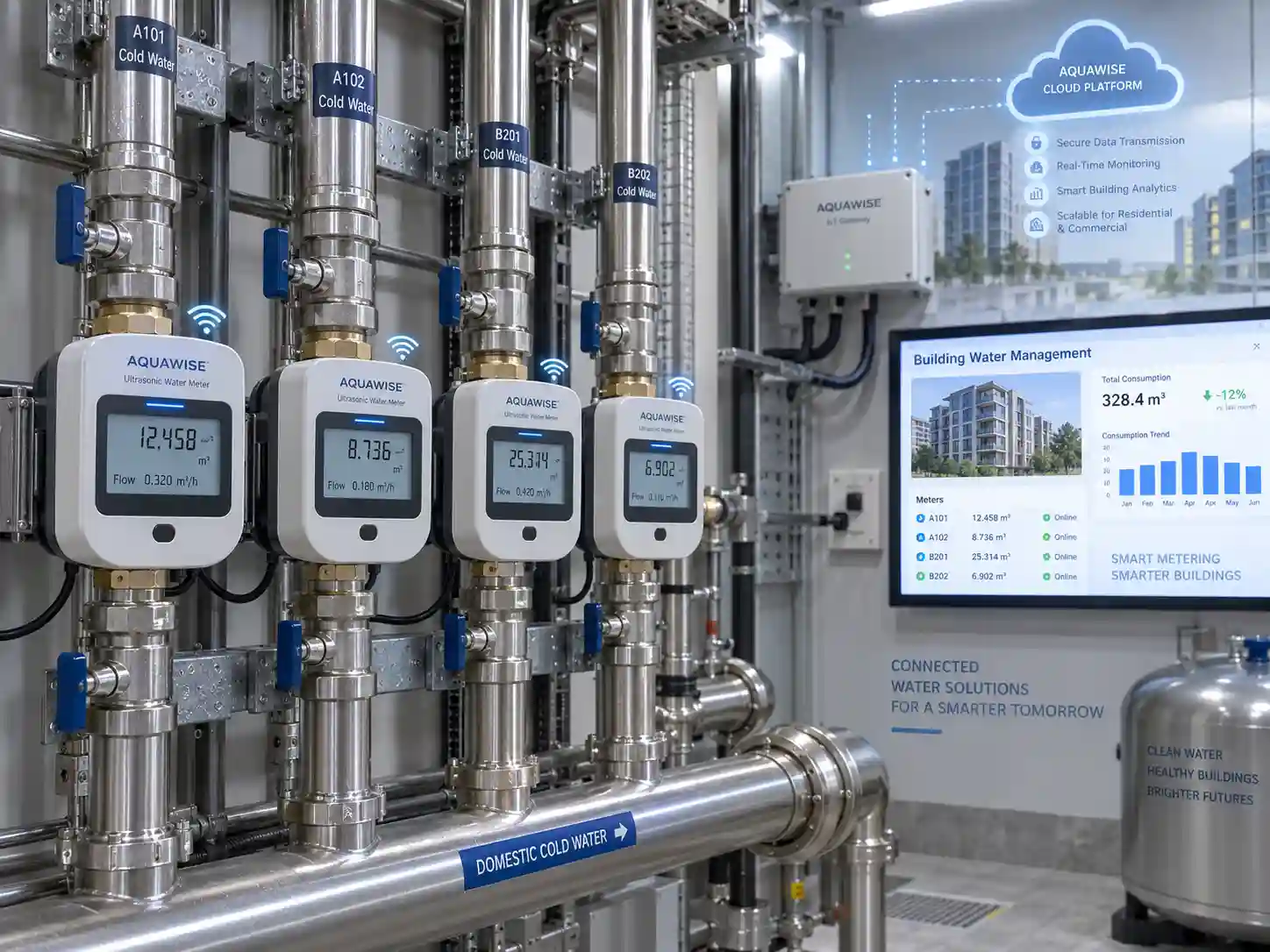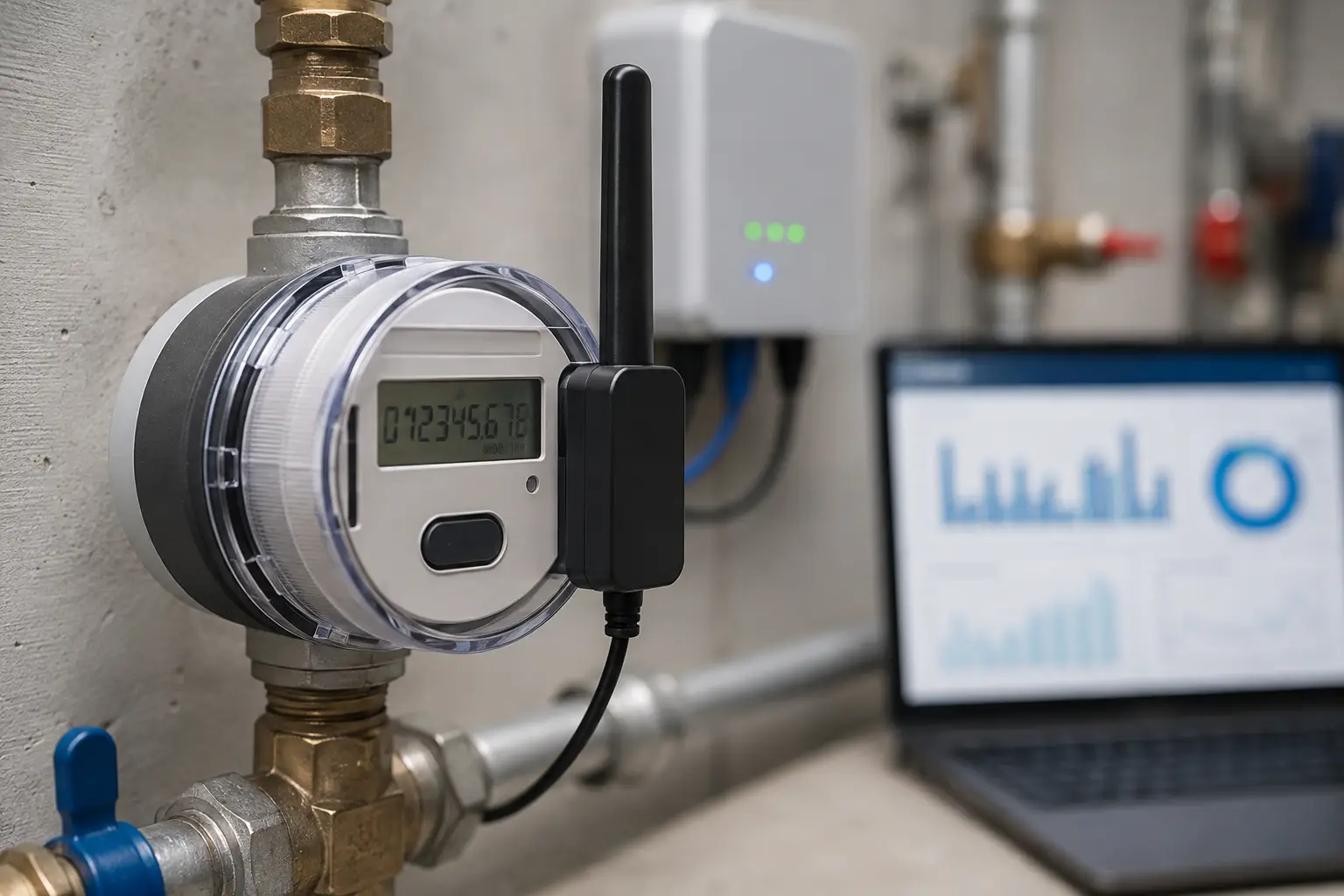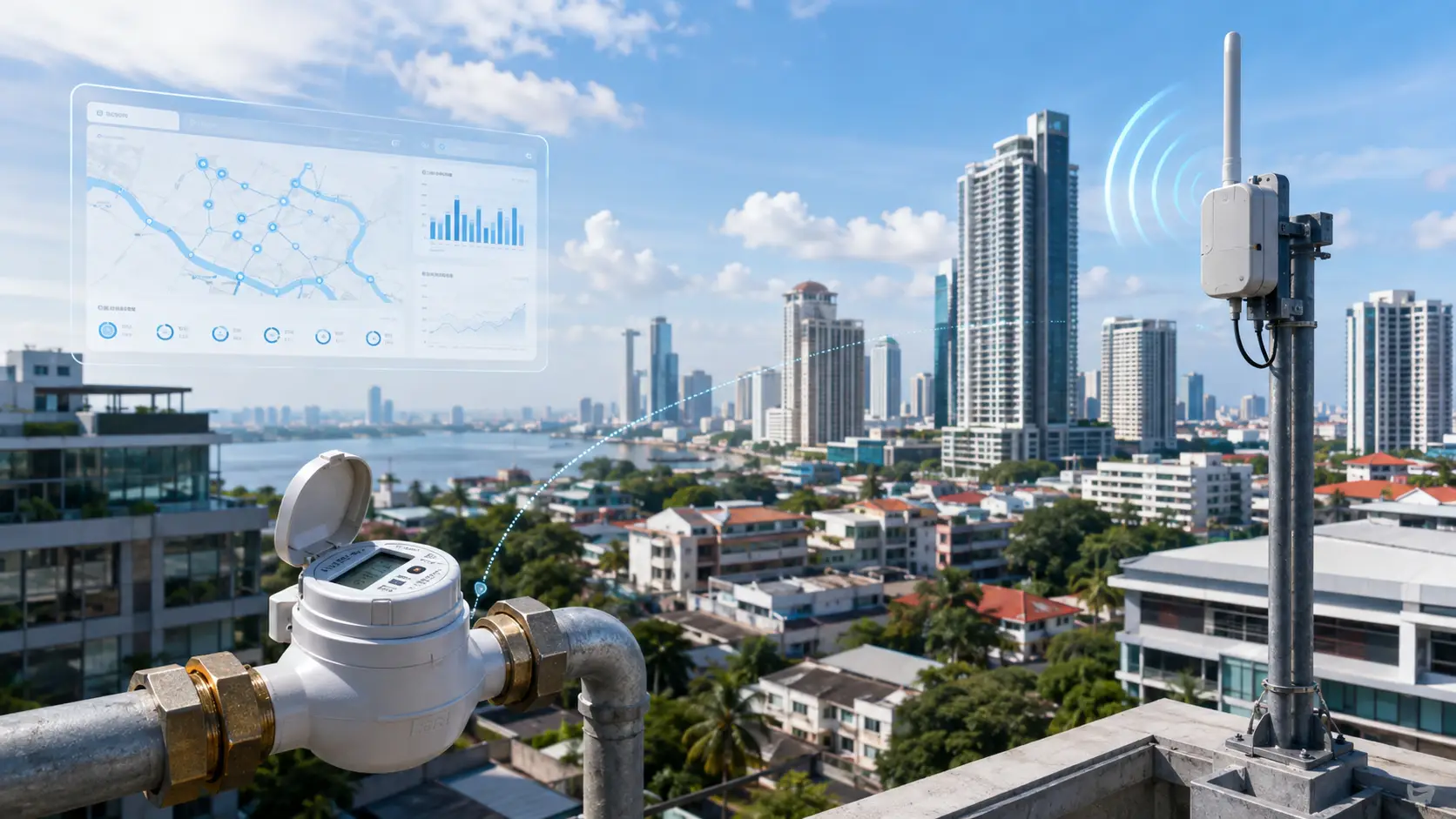


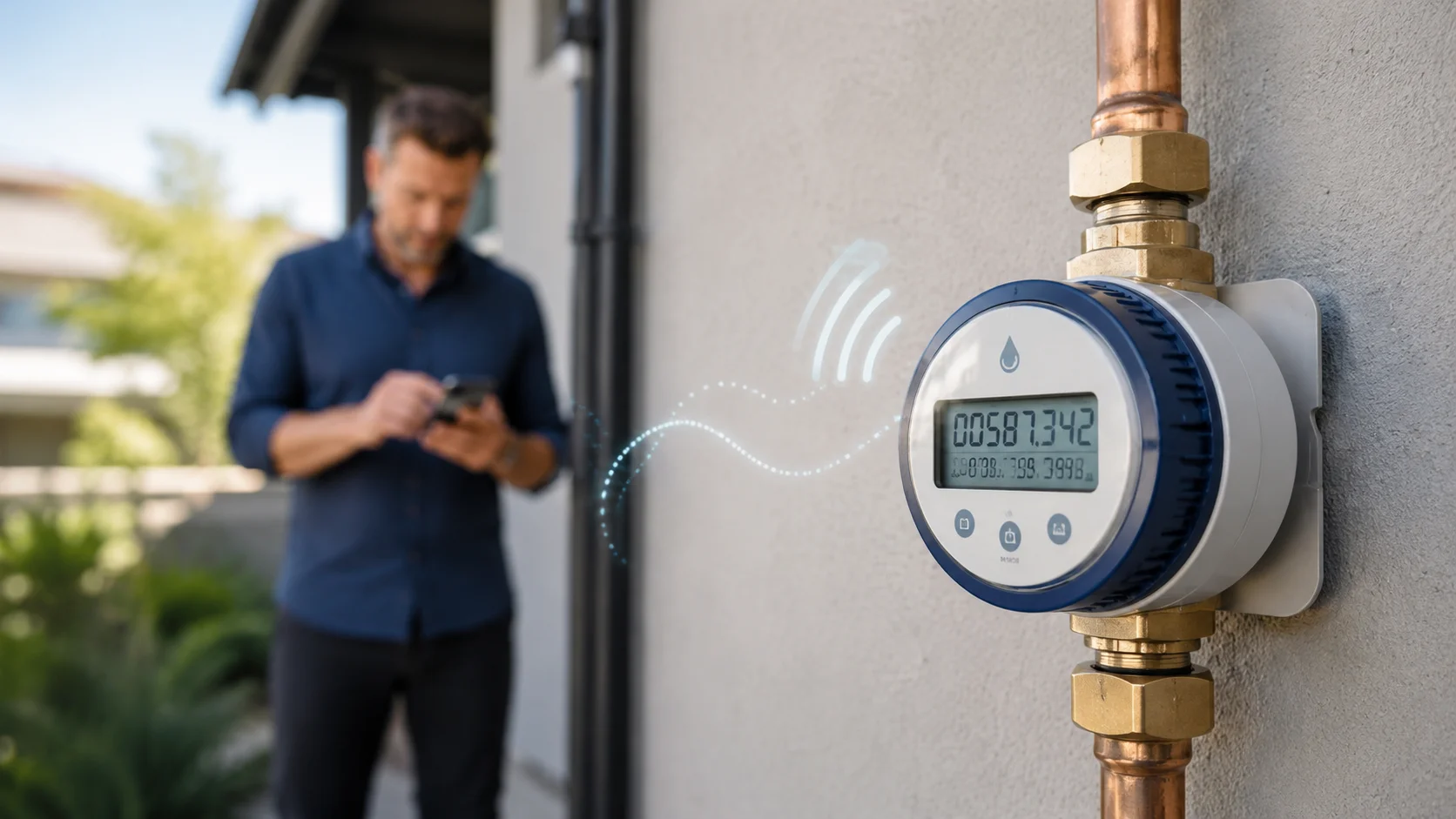
A smart water meter measures how much water passes through a pipe, converts the reading into digital data, and sends that data to a billing or management system. Depending on its configuration, it may also detect leaks, show prepaid credit, report faults, or control a valve.
The meter itself is only one part of the system. Communication equipment, data software, and correct installation matter just as much.
A smart water meter is a water-measuring device with added data storage, communication, or control functions. A traditional meter usually shows a cumulative number that someone must read on site. A smart model can record the same information and send it automatically.
This does not mean every smart meter works in exactly the same way. Some transmit readings once a day. Others report more often. A few are read by a nearby handheld receiver rather than through a permanent network.
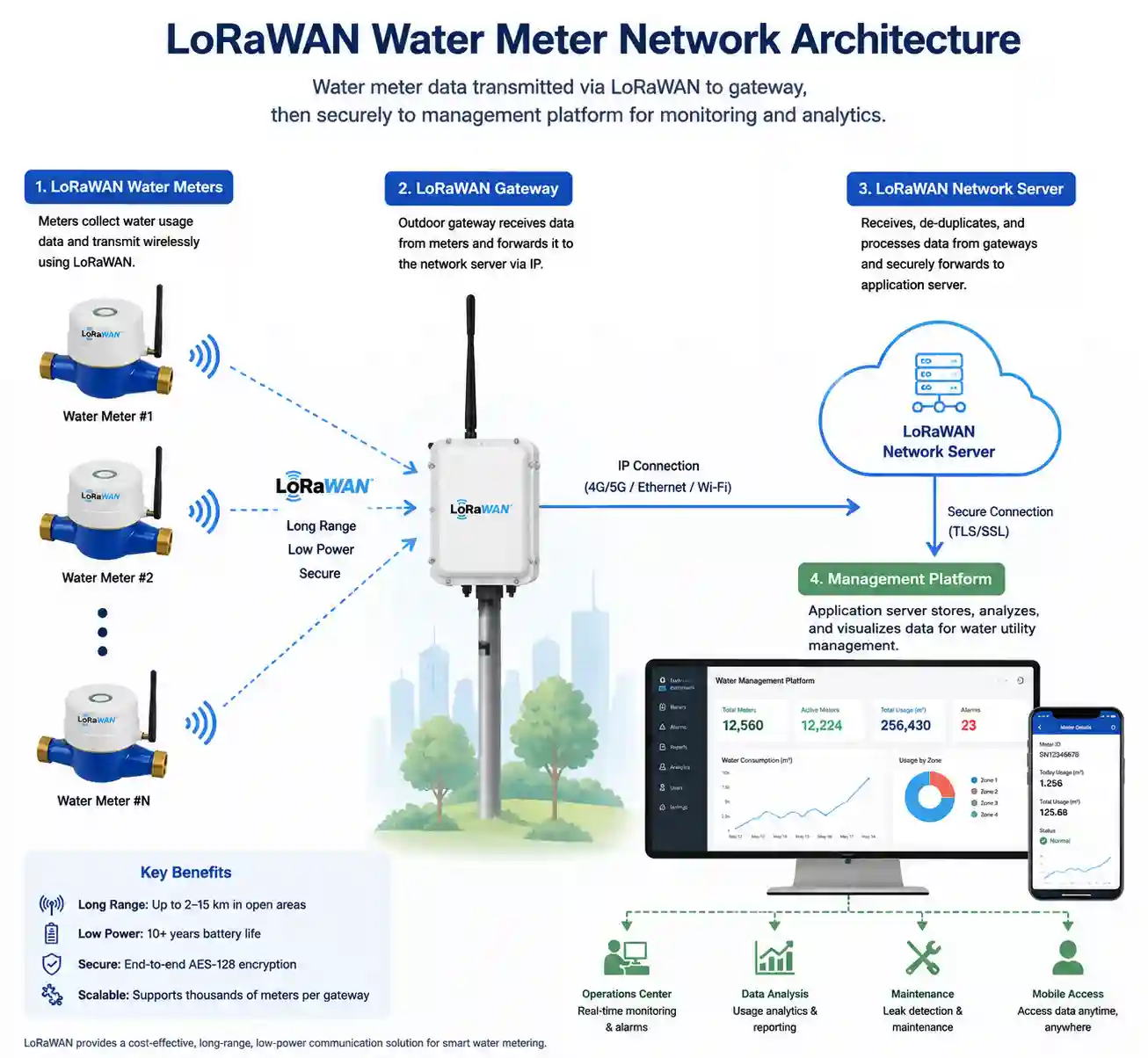
Most smart water metering systems contain four basic parts:
Some models also include an electric ball valve. This allows the system to open or close the water supply after a remote command, low-credit warning, or prepaid account event.
The XT815 series, for example, can store metering data locally for up to 10 years. That is useful when a communication network temporarily fails. The water reading still needs to remain available.
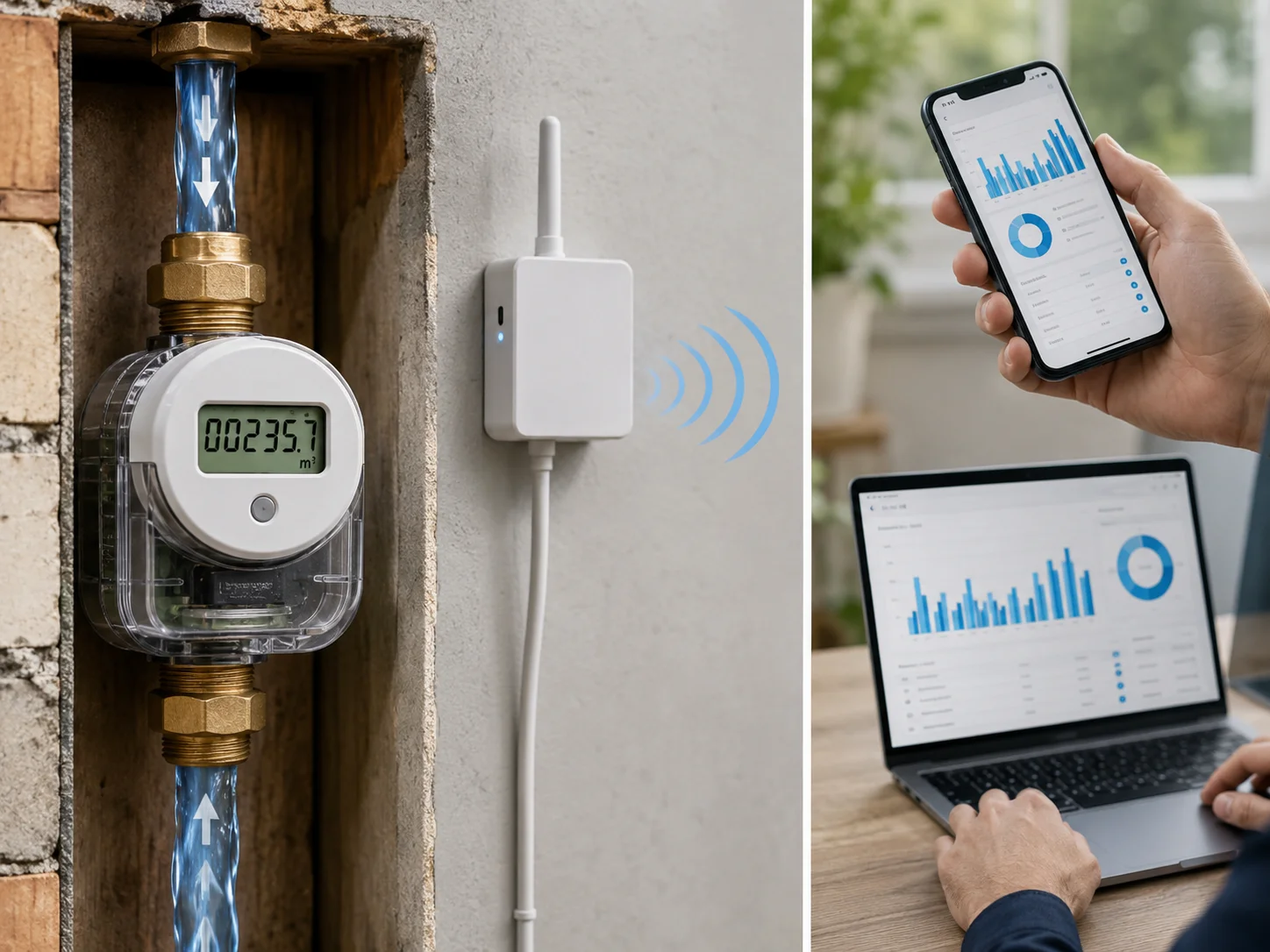
The process starts when water moves through the meter. The device measures that movement, calculates the volume, stores the result, and sends selected data through a communication network.
A simple way to picture it is:
Water Flow → Measurement → Digital Record → Data Transmission → Billing or Alert
A mechanical pulse meter uses an internal impeller. Flowing water turns the moving part, and a sensor converts the movement into electrical pulses. The processor counts those pulses to calculate water volume.
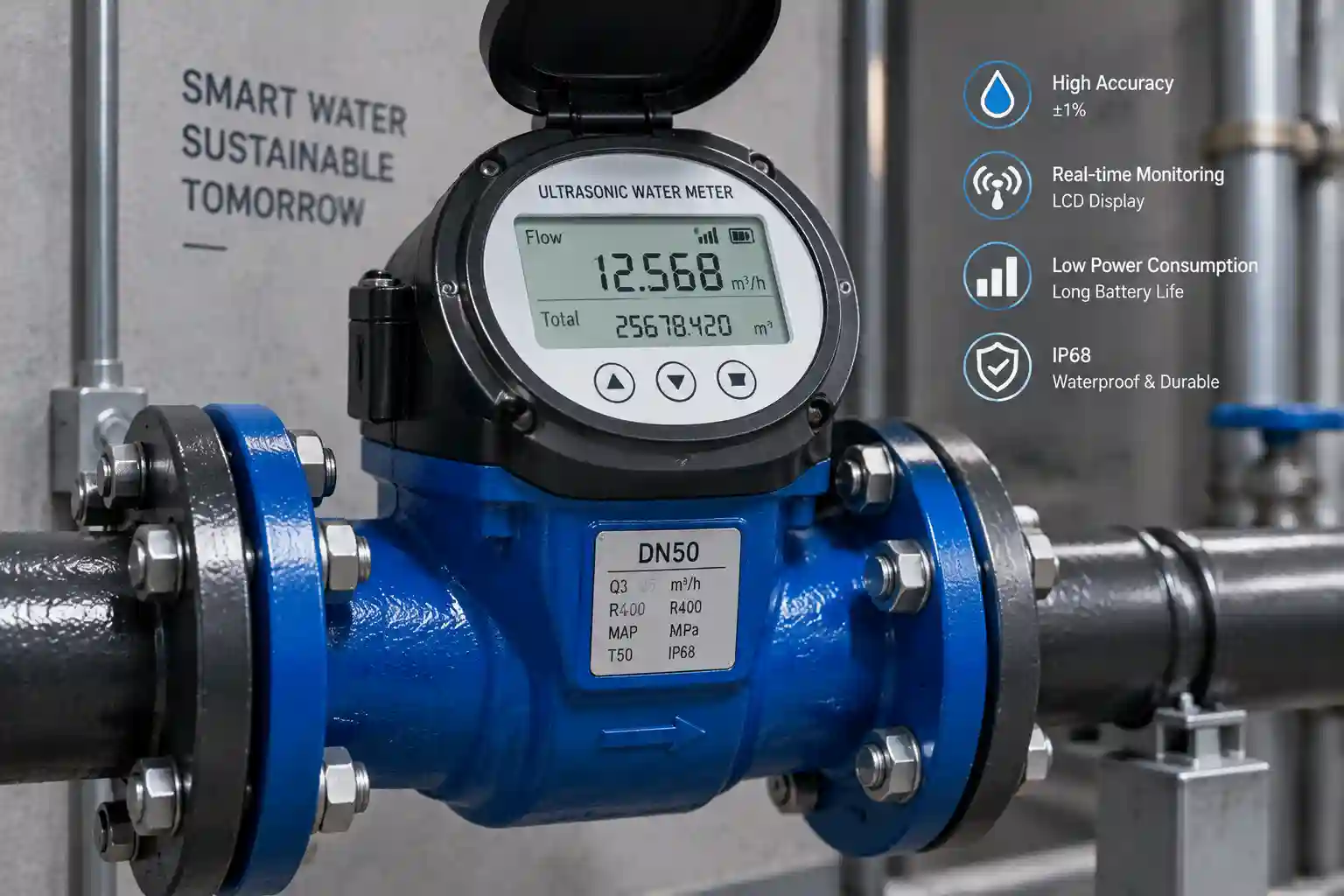
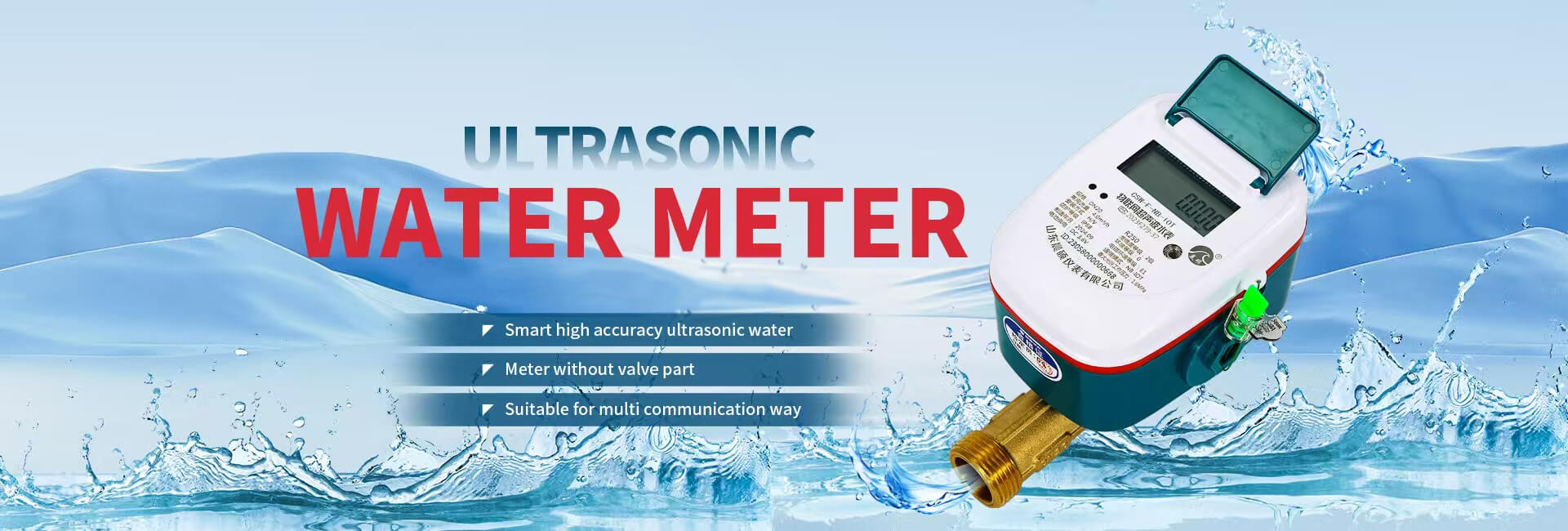
An ultrasonic meter works differently. It sends sound signals through the water in two directions. The meter compares their travel times and calculates the flow rate. Since there are no mechanical moving parts in the measuring channel, this design is well suited to microflow detection and water conditions that may cause scale.
Both designs can be smart. The word “smart” describes the data and communication functions, not the measuring principle.
A smart meter can process more than total water consumption. Depending on the model, its display or management platform may show:
The XT815-U displays volume in increments of 0.0001 m³, while the XT815-M uses 0.001 m³ increments. The ultrasonic version can also display flow in 0.001 m³/h units.
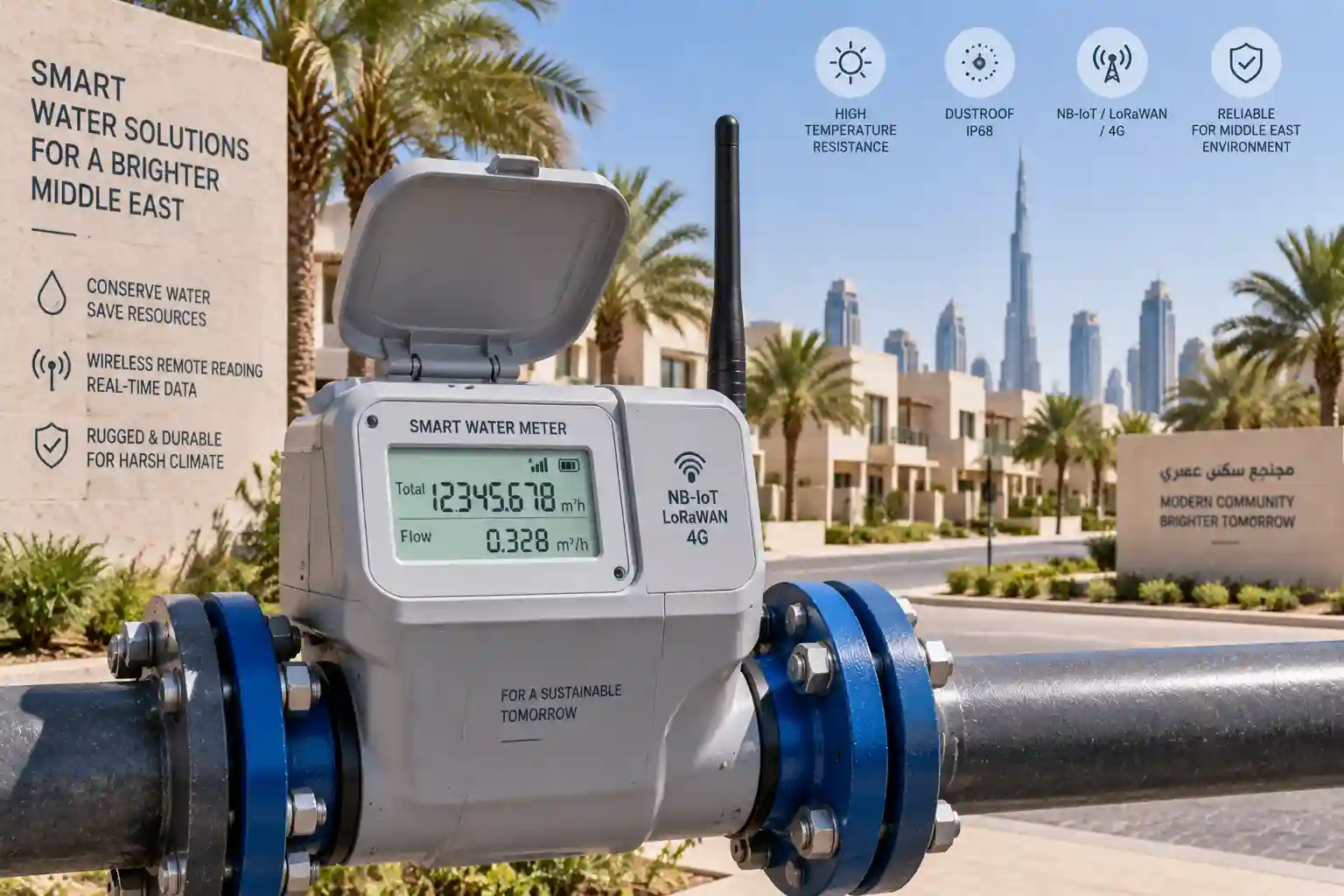
Data may travel through 4G, LoRa, LoRaWAN, or another configured network. The meter does not always need a household internet connection.
Transmission frequency depends on the system. A meter may measure continuously but upload only at scheduled times. This saves battery power and reduces network traffic. With a static current of no more than 20 μA and a lithium battery, the XT815 series is designed for a service period of about 6 to 10 years under suitable operating conditions.
Smart meters can be classified by measuring method, communication type, or payment method. This is where beginners often get stuck. “Ultrasonic,” “prepaid,” and “smart” do not mean the same thing.
| Feature | Mechanical Pulse Type | Ultrasonic Type |
| Measuring Method | Impeller and pulse collection | Ultrasonic transit-time method |
| Moving Parts | Yes | No moving measuring parts |
| Typical Range Ratio | R100 | R250 |
| Main Strength | Mature structure and lower project cost | Microflow detection and wider measuring range |
| Special Alert | Magnetic interference detection | Leak and empty-pipe detection |
| Typical Use | Residential retrofits and bulk projects | High-accuracy or difficult-water applications |
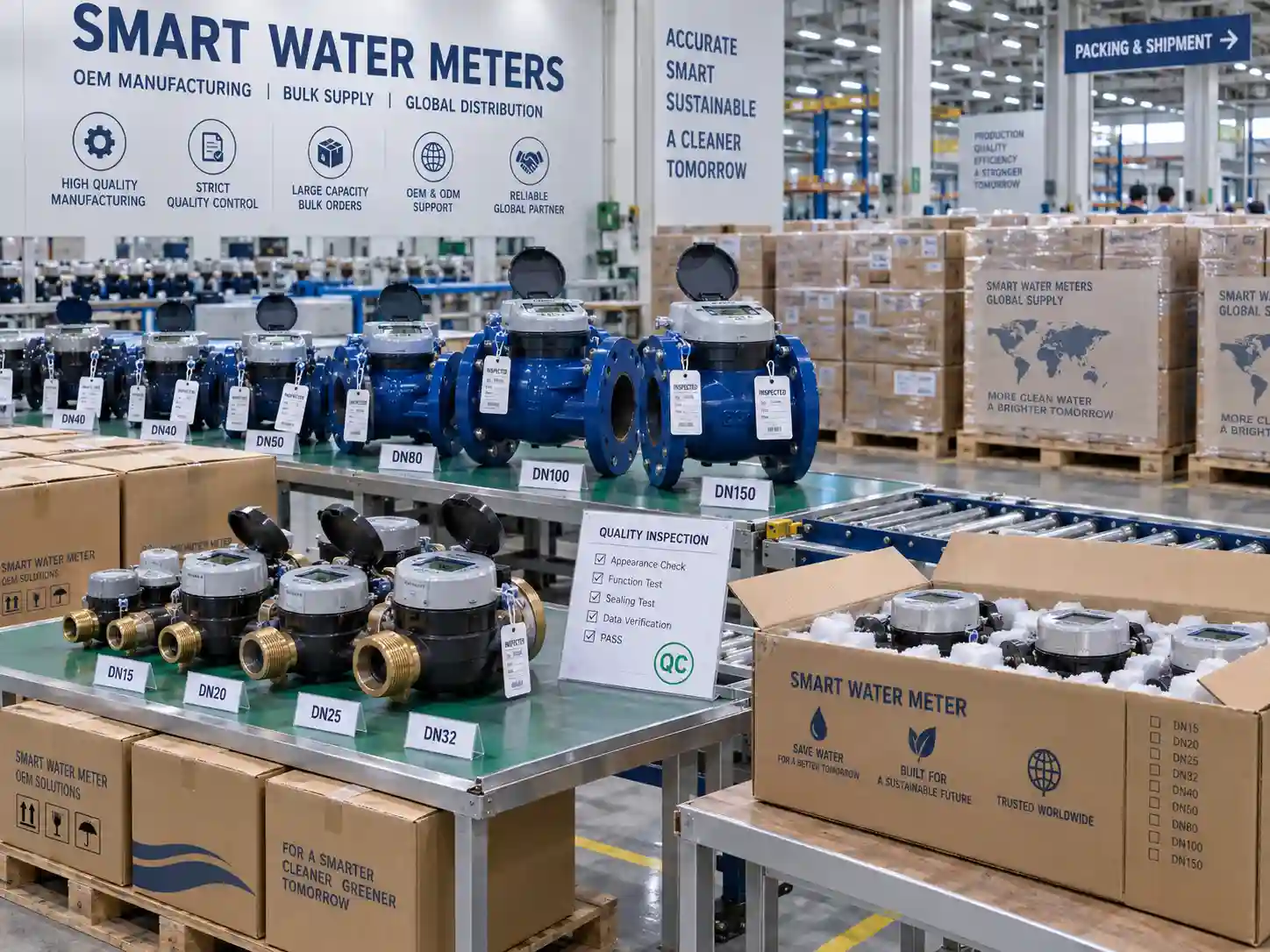
The smart water meter product range includes both approaches. XT815-M is the mechanical pulse model, while XT815-U uses ultrasonic measurement. Common sizes include DN15, DN20, and DN25.
A prepaid smart water meter allows you to purchase water credit before consumption. An STS-compatible system can accept a secure 20-digit TOKEN. The meter checks the code, adds the approved credit, and stores the transaction.
When the balance becomes low, the display can issue a warning. If the credit runs out, a model with an electric ball valve can close the supply. After a valid recharge, the valve can reopen.
A postpaid system records consumption first and creates a bill later. Both payment methods can use smart communication.
The exact feature set depends on the meter and software platform. A basic model may only send readings. A more advanced system can support billing, alarms, prepaid control, and remote maintenance.
Automatic data reporting reduces the need for manual meter reading. It can also send valve status, recharge records, battery warnings, and device faults.
With a connected valve, an authorized operator may open or close the supply remotely. The valve can also be tested locally with a function code. On the XT815 series, entering 103 + Enter starts a valve movement check.
The ultrasonic model can identify continuous low flow that may indicate a leak. It also detects an empty measuring pipe. When air prevents the sound signal from travelling correctly, the meter pauses measurement instead of recording unreliable data.
The mechanical pulse model monitors strong magnetic interference. If a magnetic attack is detected, it can trigger an alarm and close the valve. The source must be removed before the error is cleared.
These features help, but they do not replace a site inspection. A steady flow might come from a leaking toilet, or someone may simply have left a tap open. Data points to the problem. A person still has to check it.
Both devices measure water. The main difference is what happens after the measurement.
| Feature | Traditional Water Meter | Smart Water Meter |
| Measures Water Volume | Yes | Yes |
| Requires On-Site Reading | Usually | Often not |
| Stores Detailed Usage Data | Limited | Yes |
| Sends Data Remotely | No | Depending on configuration |
| Supports Leak Alerts | Usually no | Available on some models |
| Supports Prepayment | Usually no | Available on some models |
| Controls a Valve | Usually no | Available on some models |
A smart meter gives you more timely information. That can support faster billing, earlier leak detection, and easier maintenance. Still, extra electronics bring extra needs. Battery condition, signal coverage, software setup, and valve health must all be managed.
A smart meter cannot correct a poor installation. It may simply transmit a poor reading more efficiently.
Before installation, the pipe should be flushed to remove sand, welding residue, and other debris. The meter arrow must follow the direction of water flow. The body should sit in its approved horizontal or vertical position, without tilting.
The measuring pipe must remain full of water. Air pockets can block the ultrasonic signal and cause inaccurate measurement or no reading at all.
For standard conditions, XT815-U needs at least 10DN of straight pipe upstream and 5DN downstream. If an elbow, valve, or tee disturbs the flow, the upstream section should increase to at least 15DN.
Do not place the meter at the highest point of a pipe. A vertical installation should carry water upward through the meter. An automatic air valve positioned about 0.5 to 1 metre upstream can help remove trapped air.
XT815-M normally requires at least 5DN of straight pipe upstream and 2DN downstream. With nearby flow disturbances, the upstream length should increase to 10DN.
Keep the meter at least one metre from strong magnetic sources. Magnetic objects placed close to the body may trigger the tamper alarm and close the valve.
Start with the project, not the feature list. A residential prepaid project has different needs from a high-accuracy district metering point.
Check these items before making a choice:
For wet chambers and outdoor sites, ingress protection matters. The XT815 series uses an IP68 sealed design and carries a rated water pressure of 1.6 MPa. Even so, prolonged exposure to corrosive wastewater should be avoided.
Shandong Chenshuo Instrument Co., Ltd. develops and produces water metering equipment for residential, commercial, industrial, and utility applications. Its product work covers mechanical, ultrasonic, electromagnetic, remote-reading, and prepaid metering systems.
The XT815 platform shows how those capabilities come together in a practical project. Buyers can select a mechanical pulse or ultrasonic measuring method, then add STS prepaid operation, 4G, LoRa or LoRaWAN communication, electric valve control, and fault reporting. This modular approach helps a project team match the meter to local water quality, network coverage, billing rules, and budget instead of forcing one design into every site.
Technical discussions should cover pipe conditions, flow range, communication settings, TOKEN management, installation layout, and after-sales support before an order is finalized. Project requirements can be submitted through the technical contact page.
Q1: Does a Smart Water Meter Need Wi-Fi or Electricity?
A: Not always. Many meters use 4G, LoRa, LoRaWAN, or another dedicated network. Battery-powered models can operate for several years without a mains electricity connection.
Q2: Can a Smart Water Meter Detect a Water Leak?
A: Some models can detect continuous low flow or unusual consumption. The XT815-U includes microflow monitoring for possible leakage, but the cause still needs a physical check.
Q3: What Is the Difference Between AMR arms, and two-way commands.
Q4: Is an Ultrasonic Water Meter Always a Smart Water Meter?
A: No. Ultrasonic describes how flow is measured. It becomes a smart meter when digital storage, communication, software, or control functions are added.
Q5: Can a Smart Water Meter Be Used for Prepaid Water?
A: Yes. A compatible prepaid meter can accept secure credit, display the remaining balance, warn you when credit is low, and control a built-in valve according to the billing rules.
 Address: Xiao'anzi Industrial Park, Baishabu Town, Lanshan District, Linyi City, Shandong Province
 Call us now:+86 15562945993
 Email:info@sdchenshuo.cn


Shandong Chenshuo Instrument Co., Ltd.