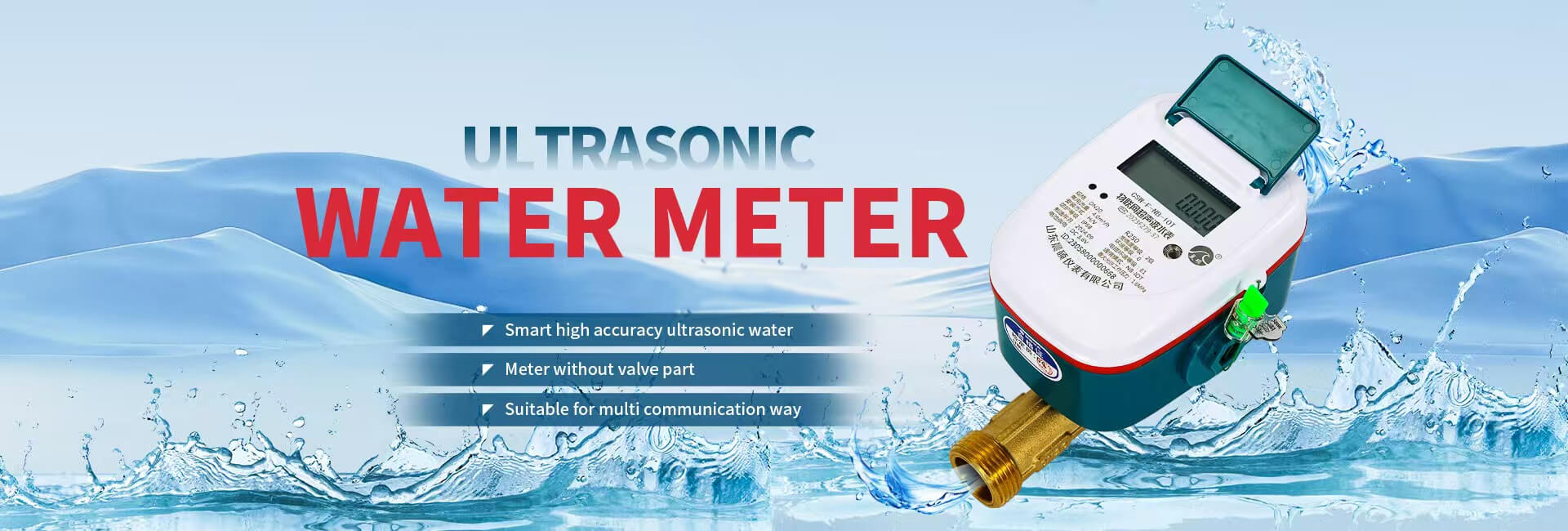


A water meter is under-registering when it records less water than actually passes through its measuring section. Possible causes include low flows outside its specified measuring range, wear or contamination, unsuitable installation, and faults in the measuring system. A low figure on a bill or dashboard can also come from a reading or data-processing problem while the meter itself remains accurate.
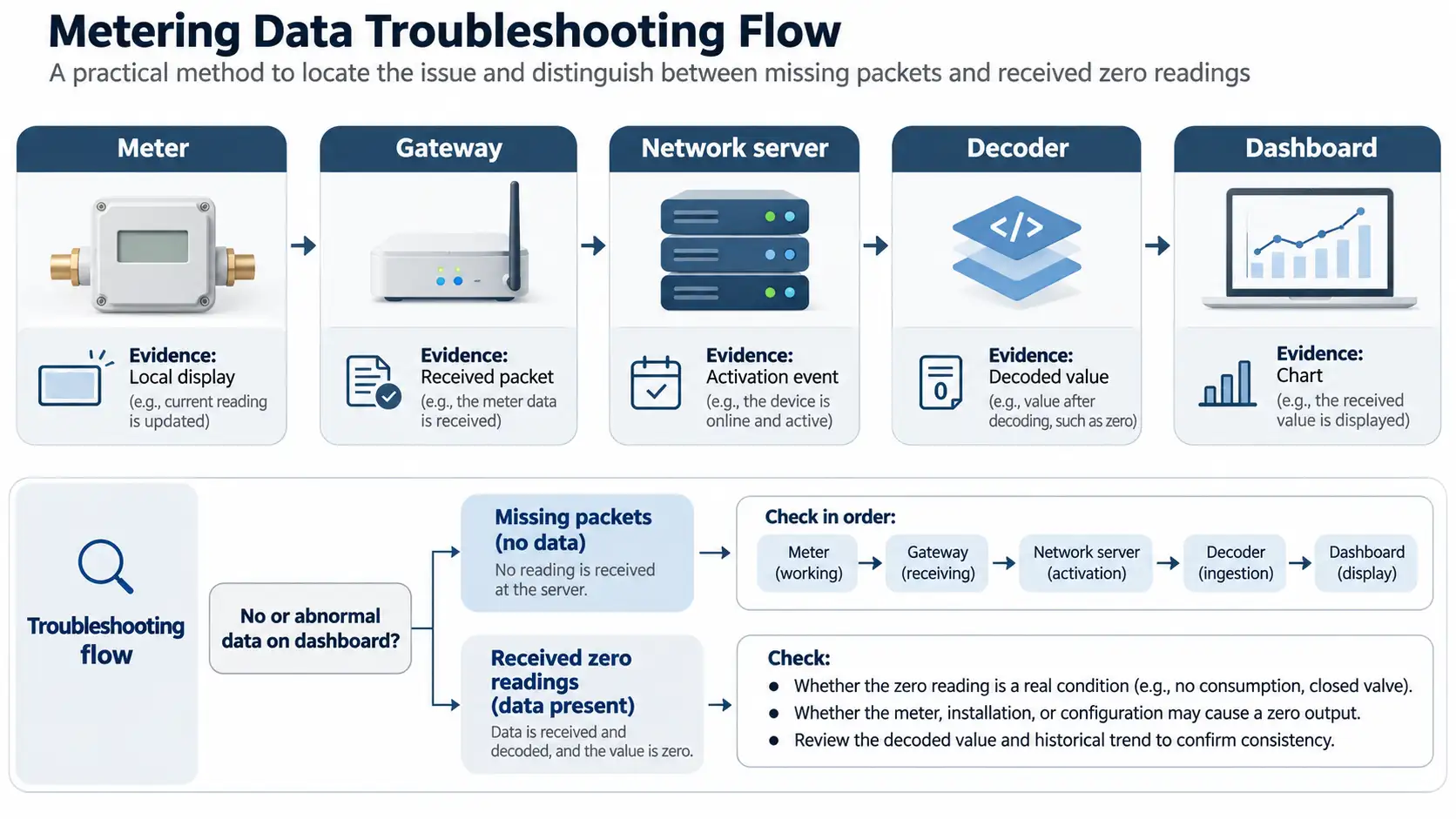
Start by locating the discrepancy. Compare a measured volume with the local register, then compare that register with the remote reading and bill. This sequence helps avoid replacing a serviceable meter because a unit conversion or account record is wrong.

Record the meter serial number, register value, units and observation time. Check whether the bill uses an actual reading or an estimate, and whether the dates match the comparison period. Changes in occupancy, production or irrigation schedules can reduce genuine consumption, so a smaller total alone does not prove a fault.
For a remote-reading installation, compare the cumulative change at the meter with the change received by the application. A DN15 LoRaWAN water meter combines a measuring mechanism with communications; those two functions need separate checks. If the local register advances correctly but the application stays unchanged, investigate transmission, decoding and record assignment before blaming measurement accuracy.
Where a pulse interface is used, verify the configured volume per pulse against the approved interface specification. Also check decimal placement, units, timestamps and replacement-meter opening values. A consistent factor-of-ten discrepancy deserves a configuration check before a mechanical inspection.
| Observation | Possible explanation | Next check |
| Local volume is low against a reliable reference | Measuring-range mismatch, installation problem or meter fault | Repeat controlled tests at relevant flow rates |
| Local register advances but remote value does not | Missing uploads, pulse collection or decoding problem | Trace the local reading through the data path |
| Local and remote readings agree but the bill differs | Dates, estimate, multiplier or account mismatch | Reconcile the billing record |
| Site demand falls without a confirmed reference discrepancy | Genuine demand change or water bypassing the measuring section | Check usage history and the authorized pipe layout |
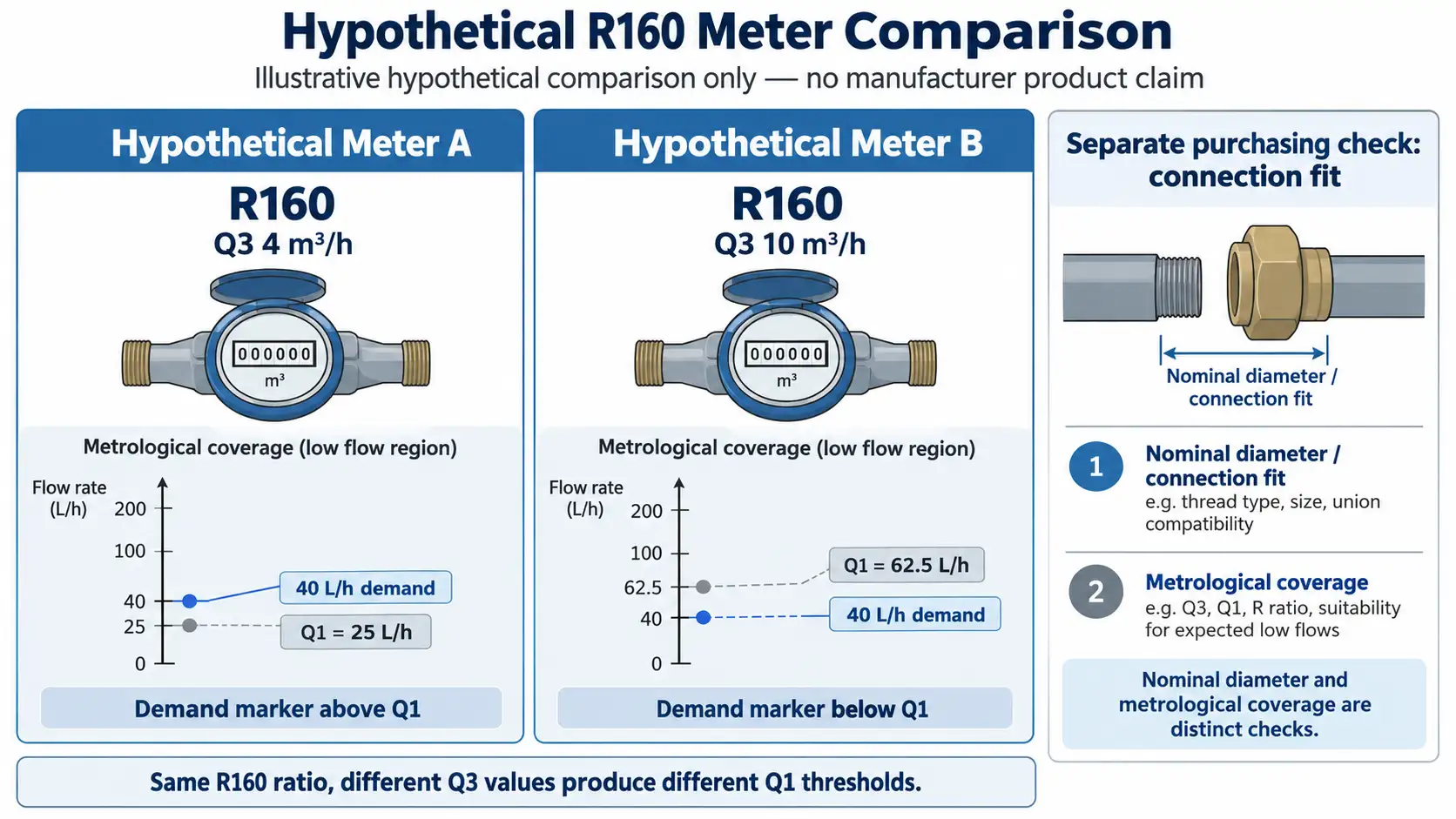
A large connection does not always carry a large flow. A building may have a substantial peak demand but spend much of the day drawing only a small amount. If the selected meter’s Q1 is too high for that routine demand, part of the consumption falls below its specified accuracy range.
Q1 is the minimum flow at which the meter must meet its stated maximum permissible error under the applicable conditions. It is not necessarily the point where the register first starts moving. A meter may register below Q1 without the same accuracy assurance.
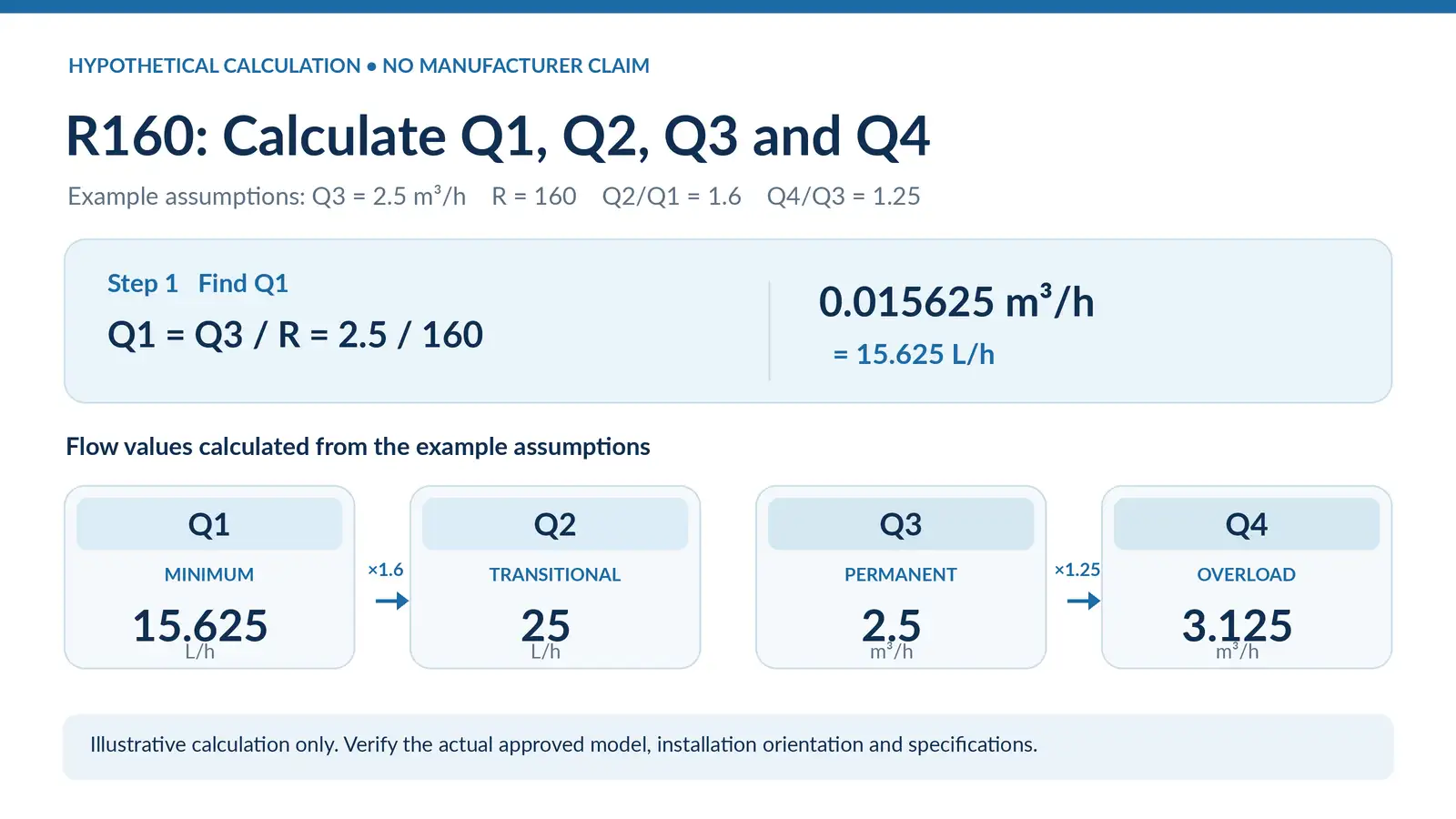
Consider a hypothetical meter with Q3 of 2.5 cubic metres per hour and R160. Because R = Q3/Q1, its Q1 is 0.015625 cubic metres per hour, or 15.625 litres per hour. A steady 8 litres per hour would fall below that Q1. This example explains the selection issue; it does not predict the error of a particular meter.
Check the actual duty profile against the Q3 and Q1 values for different mechanical meter sizes. Do not simply fit a smaller meter to improve low-flow sensitivity. Peak demand, pressure loss and the model’s operating limits still need to be satisfied.
Mechanical meters depend on moving components. Wear, deposits or debris can change how those components respond, particularly at small flows. A register may continue moving during a large draw while responding poorly to a slow refill. That is why one test with a fully open tap cannot describe the entire error curve.
Look for relevant history. Recent pipe work, visible sediment, freezing damage or an abrupt change after maintenance can help the technician choose checks. These clues do not establish the error direction by themselves. Contamination and damage can affect different designs differently; test before assigning a cause.
Avoid dismantling a sealed billing meter to clean it. Have the responsible utility or qualified service team inspect it under the applicable procedure. Preserve its identity and readings before removal, since those records may be needed for a billing investigation.
Check the flow arrow, approved mounting position and whether the measuring section stays full. An orientation allowed for one meter may be unsuitable for another, or may carry a different approved R value. Use the exact model’s installation instructions and approval details.
Nearby elbows, partially closed valves and other disturbances can affect the velocity profile through a meter. Follow the specified upstream and downstream arrangement. There is no single straight-pipe distance that should be copied across all mechanical, ultrasonic and electromagnetic designs.
Air deserves particular attention in ultrasonic installations. The XT815-U ultrasonic water meter can suspend measurement when its measuring tube is empty. Air accumulation can also interfere with signal transmission. Review empty-pipe indications alongside the physical pipe arrangement before treating a zero as proof that no water moved.
Low pressure alone does not establish meter error. It may reduce the actual flow, change how fixtures operate or contribute to an installation condition that needs investigation. Check whether the resulting flow remains within the meter’s range and whether the pipe stays full.

Use a controlled comparison with a suitable calibrated reference or approved test facility. An informal container check may reveal a large discrepancy, but container markings, splashing, simultaneous demand and register resolution can make it unsuitable for a formal accuracy decision. Ask the utility about its testing procedure where billing is disputed.
Relative error = (meter-indicated volume − reference volume) ÷ reference volume × 100.
For a hypothetical controlled draw, a reliable reference measures 100 litres while the meter indicates 96 litres. The calculated error is −4%, which means under-registration at that tested condition. It is not automatically a regulatory failure: the relevant accuracy class, flow zone, temperature and test requirements determine the acceptance limit.
OIML R49 distinguishes lower and upper flow zones and specifies different permissible errors. Check the applicable approval and local in-service rules rather than applying one advertised accuracy figure to every flow. Retain the full test record, including the reference used, so a later reviewer can understand the result.
Correct a data multiplier or account mapping when the local measurement is sound. Address installation defects when the error follows an unsuitable orientation or incomplete filling. If tests show deterioration, compare repair and replacement under the utility’s service and metrology requirements.
A smart replacement can make future checking easier through remote registers and diagnostic information. It still needs an appropriate measuring range and installation. Ultrasonic measurement avoids impeller wear, but air, deposits, power faults and operating conditions still require attention. Specify the measurement performance separately from the communication features.
After corrective work, repeat the comparison and reconcile the local, remote and billing values. Keep the before-and-after readings together. Restored communications alone do not prove restored metrological accuracy.
Yes, wear or deposits can contribute to under-registration in some meters, especially at low flow. Age alone cannot quantify the error. Use test results and the operating history to decide whether replacement is justified.
At the same Q3, a higher approved R gives a lower Q1. Billing also depends on actual demand, installation, meter condition and data handling. Compare the approved orientation and performance before choosing a replacement.
Air can disrupt measurement, particularly where an ultrasonic measuring section must remain full. The effect depends on the design and conditions; it may cause invalid, unstable or suspended readings. Do not assume air always creates the same signed error.
A leak downstream normally adds flow through the meter. A very small leak may fall below its specified accuracy range. Water escaping upstream, or following a bypass, does not pass through that measuring section and requires a different investigation.
No. Keep the seal intact and request the authorized testing or service procedure. Provide the serial number, dated readings and any alarm records so the utility or supplier can investigate the correct device.
For a Chenshuo installation, send those records, the model, flow conditions and installation photographs to request model-specific technical guidance. Include the comparison results so the discussion can focus on measurement, installation or the data path.
 Address: Xiao'anzi Industrial Park, Baishabu Town, Lanshan District, Linyi City, Shandong Province
 Call us now:+86 15562945993
 Email:info@sdchenshuo.cn


Shandong Chenshuo Instrument Co., Ltd.