

Buying water meters from China starts with a quotation, but a useful supplier comparison needs more than a unit price and a catalogue. Buyers need to establish which meter will be delivered, what evidence supports it and how the supplier will handle problems after installation. Those answers should become part of the order specification.
The questions below are designed for distributors, contractors and utility procurement teams. Ask suppliers to answer them against one defined application and configuration. Comparing quotations becomes much easier when every supplier works from the same requirements, sample tests and acceptance conditions.
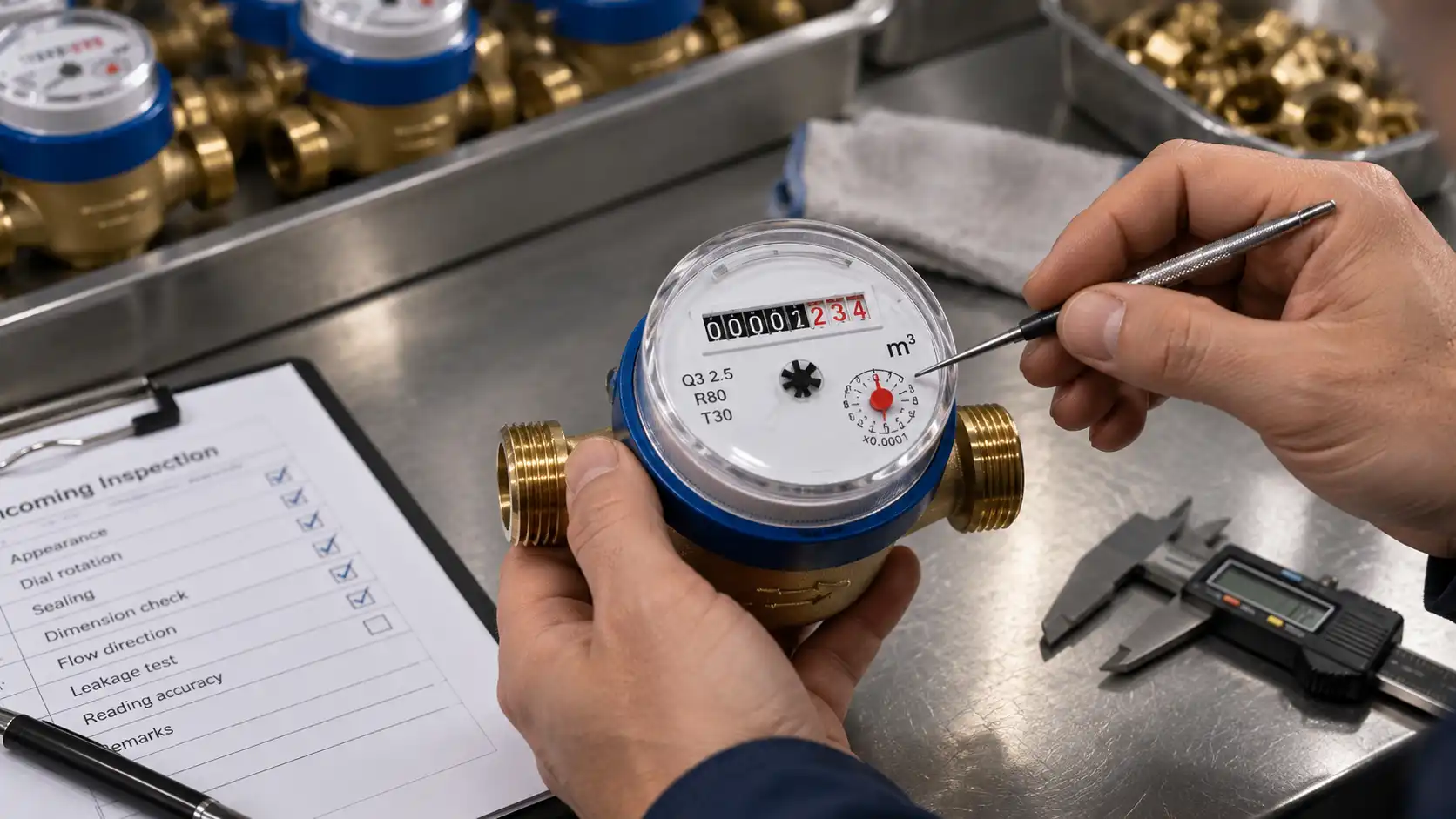
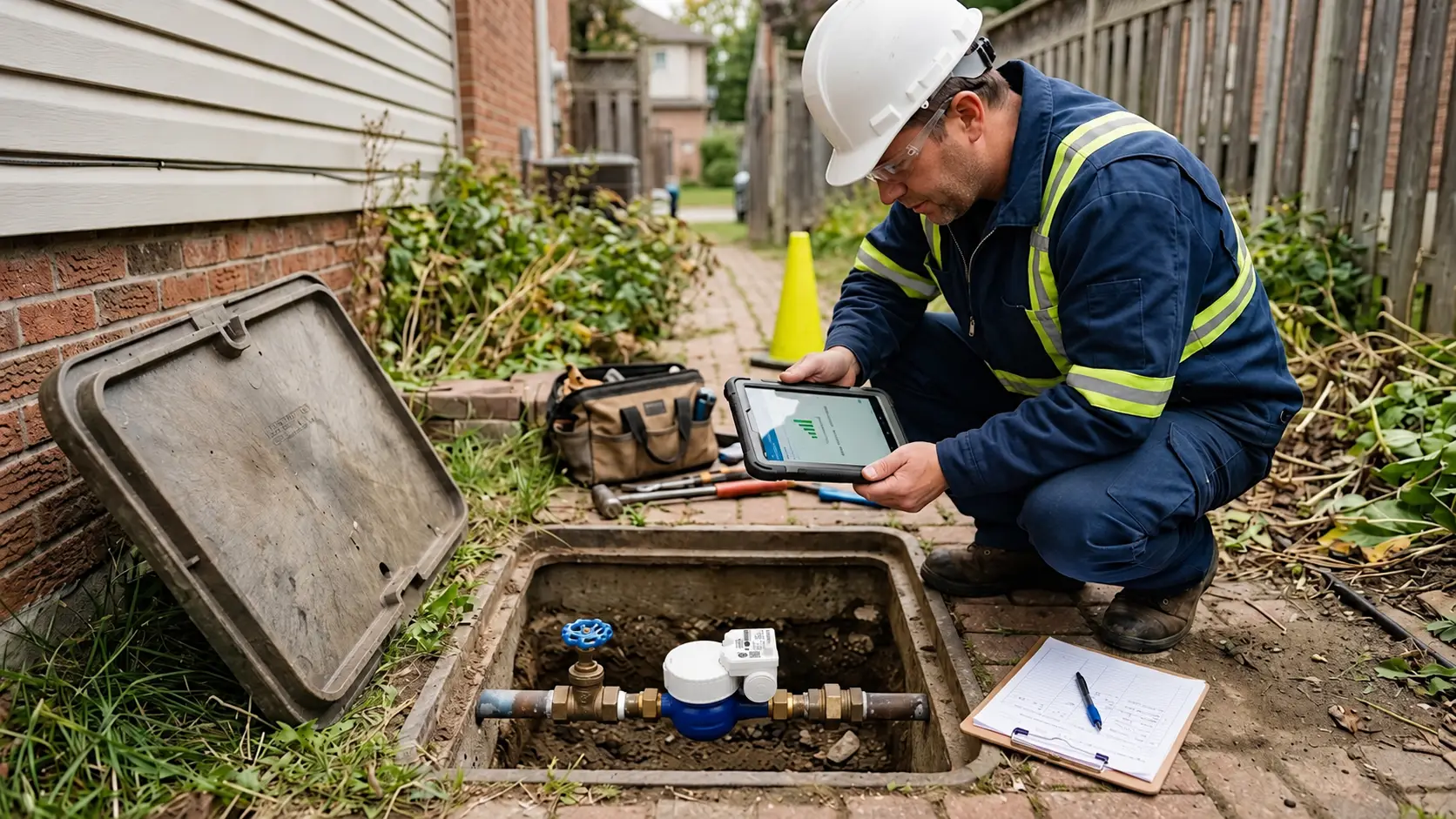
Begin with the water conditions, pipe connection, installation space and expected flow profile. Specify nominal diameter, connection details, installation orientation, temperature and pressure requirements. Include drawings or photographs when replacing existing equipment. A meter can have the correct nominal diameter yet still require changes to the installation because its length or connection differs.
Q3 denotes permanent flow and Q1 denotes minimum flow; their ratio is R. Request these values rather than relying on descriptions such as “high accuracy.” Ask the supplier to identify the relevant operating conditions and provide the technical evidence requested by your project. A higher advertised R value alone does not answer every selection question.
Use a configuration sheet that identifies the measuring technology, body material, display, power supply, valve and communication option. Chenshuo’s guide to bulk water meter purchasing provides a useful starting point for organizing order requirements. Obtain written confirmation of the quoted configuration before comparing commercial terms.
Ask which approvals and test reports cover the exact model offered, then verify them against destination and application requirements. Separate the manufacturer’s quality management certification from product evidence. ISO 9001 addresses a quality management system; it does not by itself establish the accuracy or legal acceptance of the quoted water meter.
Request the certificate or report number, issuing organization, covered models and relevant schedules. Where EU conformity is required, examine the declaration and the applicable assessment documentation. Chenshuo’s water meter standards comparison can help structure the discussion, but the purchasing decision must rest on the actual documents.
Confirm the relationship between the seller, legal manufacturer and production site. A trading company can coordinate an order, but buyers still need traceable responsibilities for production, inspection and warranty support. If a certificate names a different entity, request an explanation before treating it as evidence for the order.
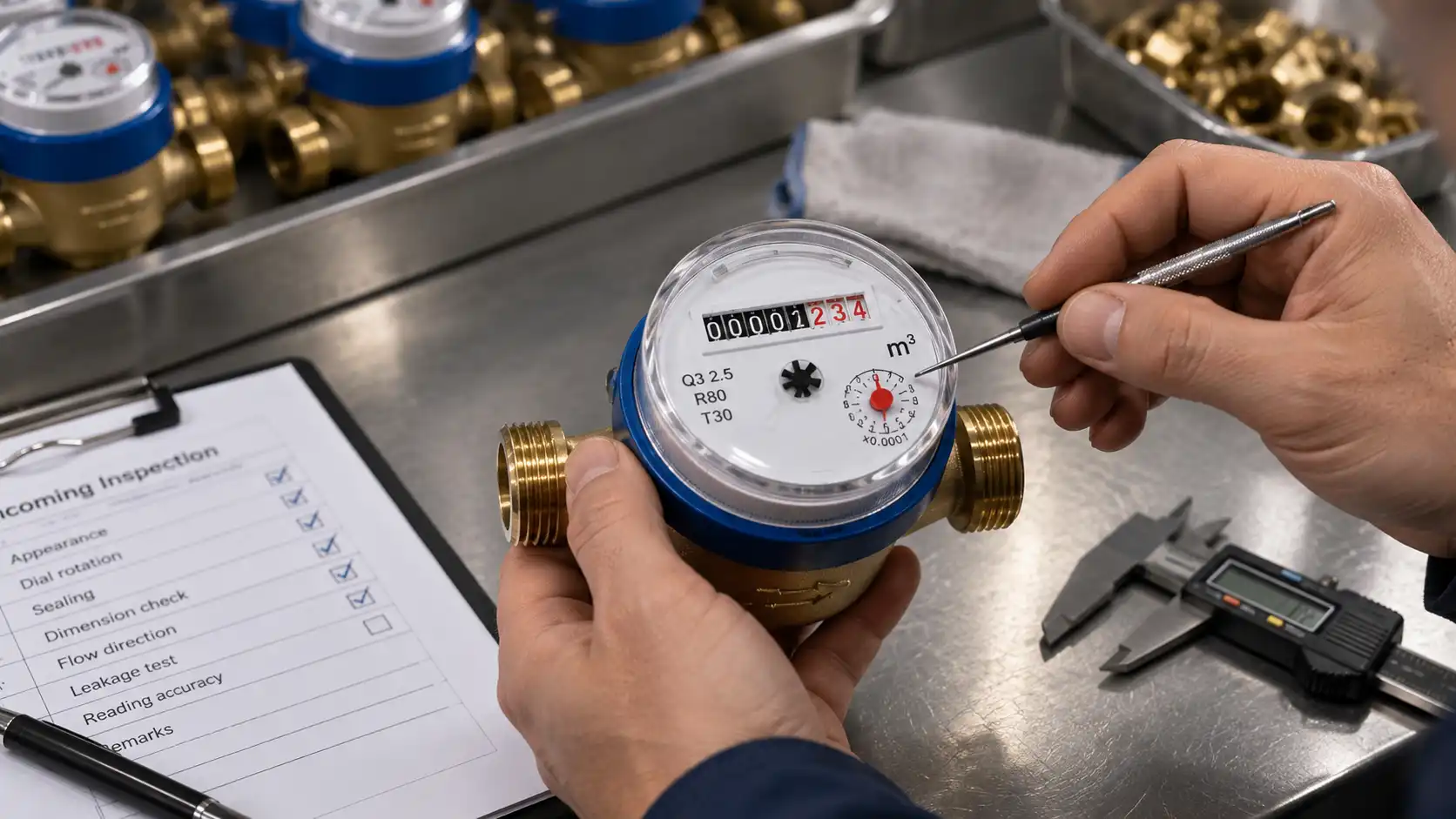
Agree on a sample plan before paying for samples. Identify what you will inspect locally and what requires a qualified test facility. Useful checks include dimensions, connections, display readability, documentation and operation under the intended conditions. A brief bench demonstration should not be treated as a complete metrological evaluation.
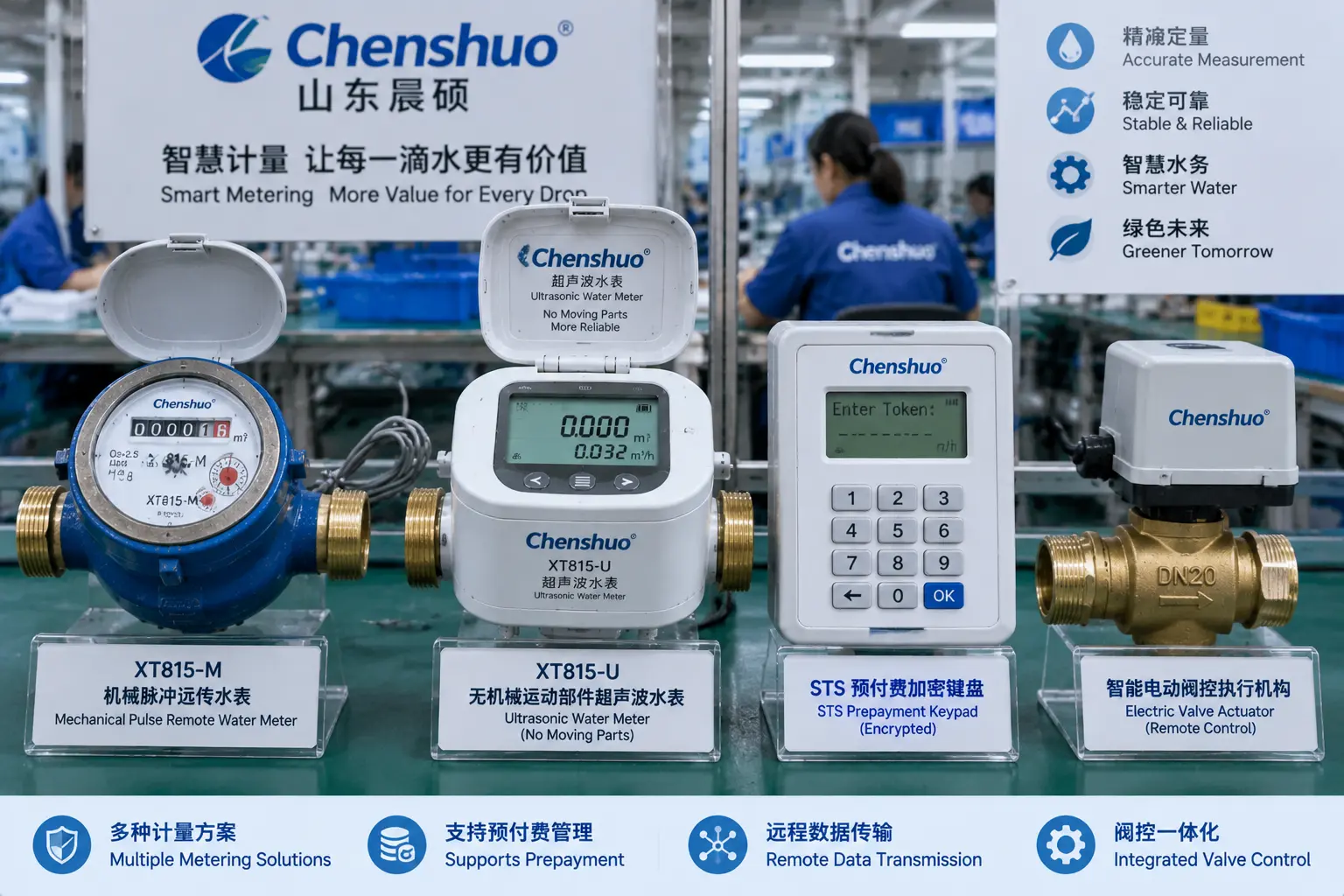
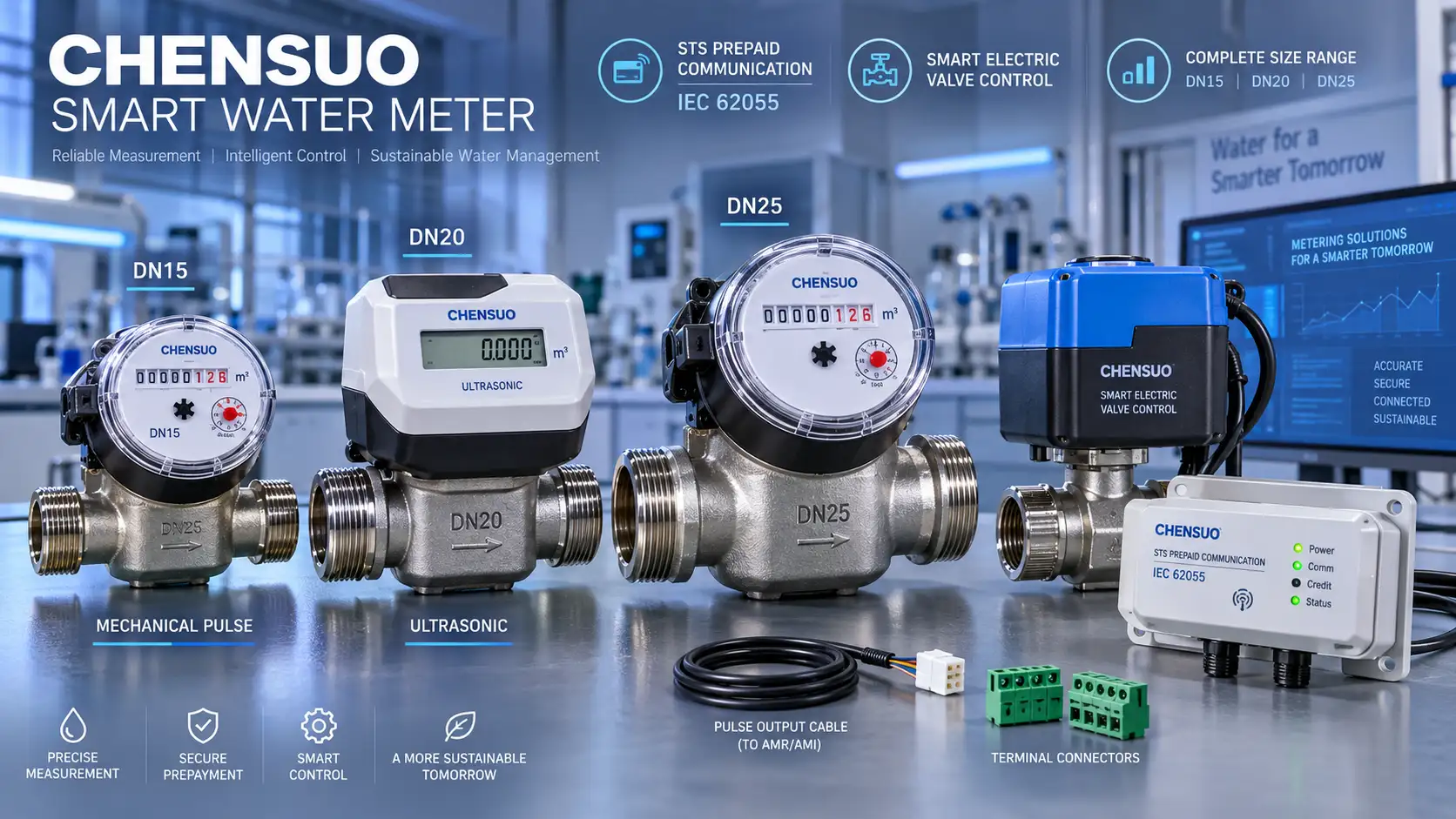
For a prepaid project, examine the recharge process, account or meter association, valve response and recovery from rejected inputs. The XT815-U ultrasonic prepaid water meter illustrates why a specification needs to cover both measurement and payment-related operation. Request the approved operating procedure for the configuration being evaluated.
Record the sample’s serial number, hardware version, firmware version where applicable and agreed settings. Keep photographs and test results with the approved specification. If the sample fails, ask for a documented correction and repeat the affected checks. Approval should identify precisely what was accepted, so the production order has an objective reference.
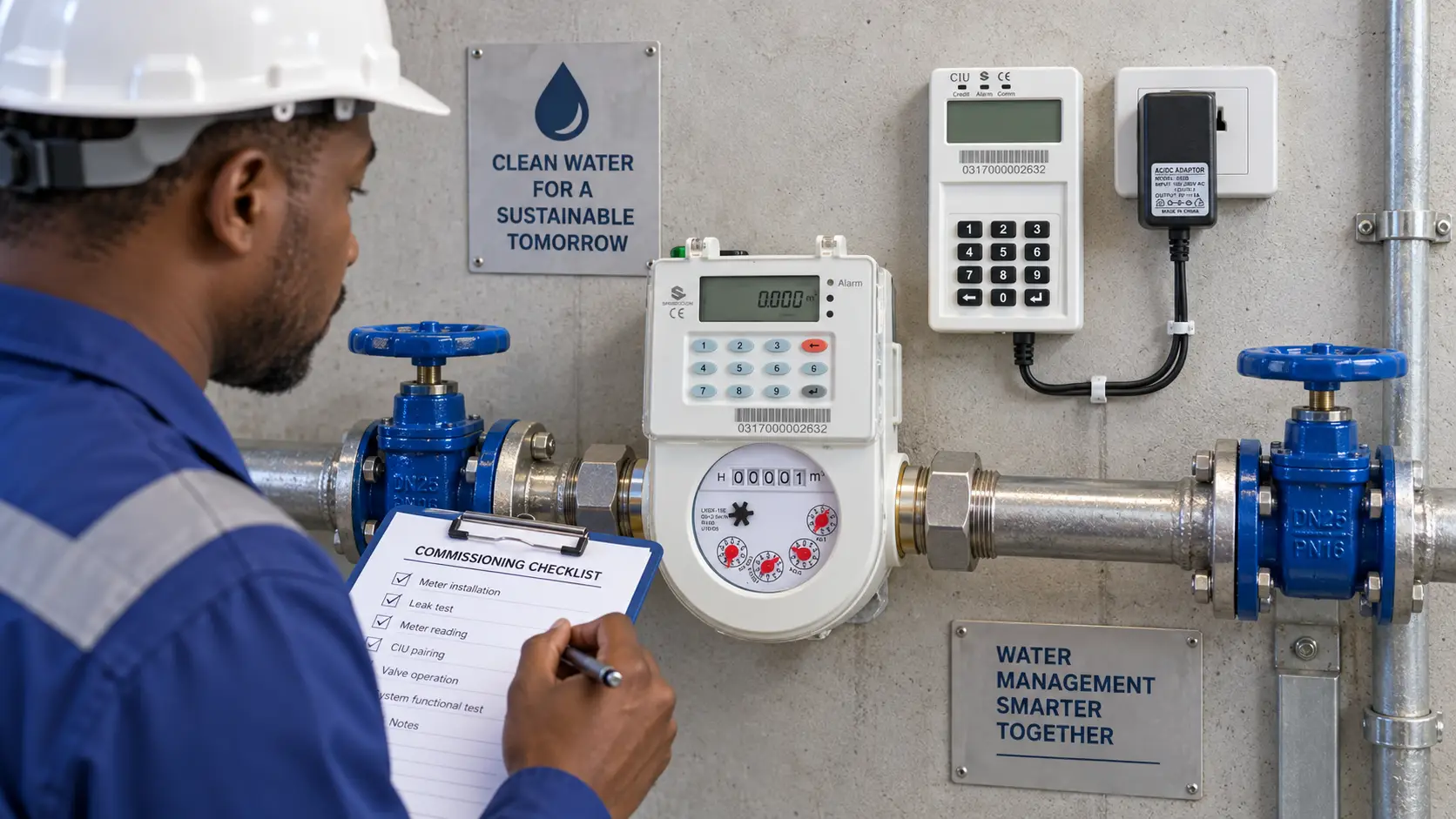
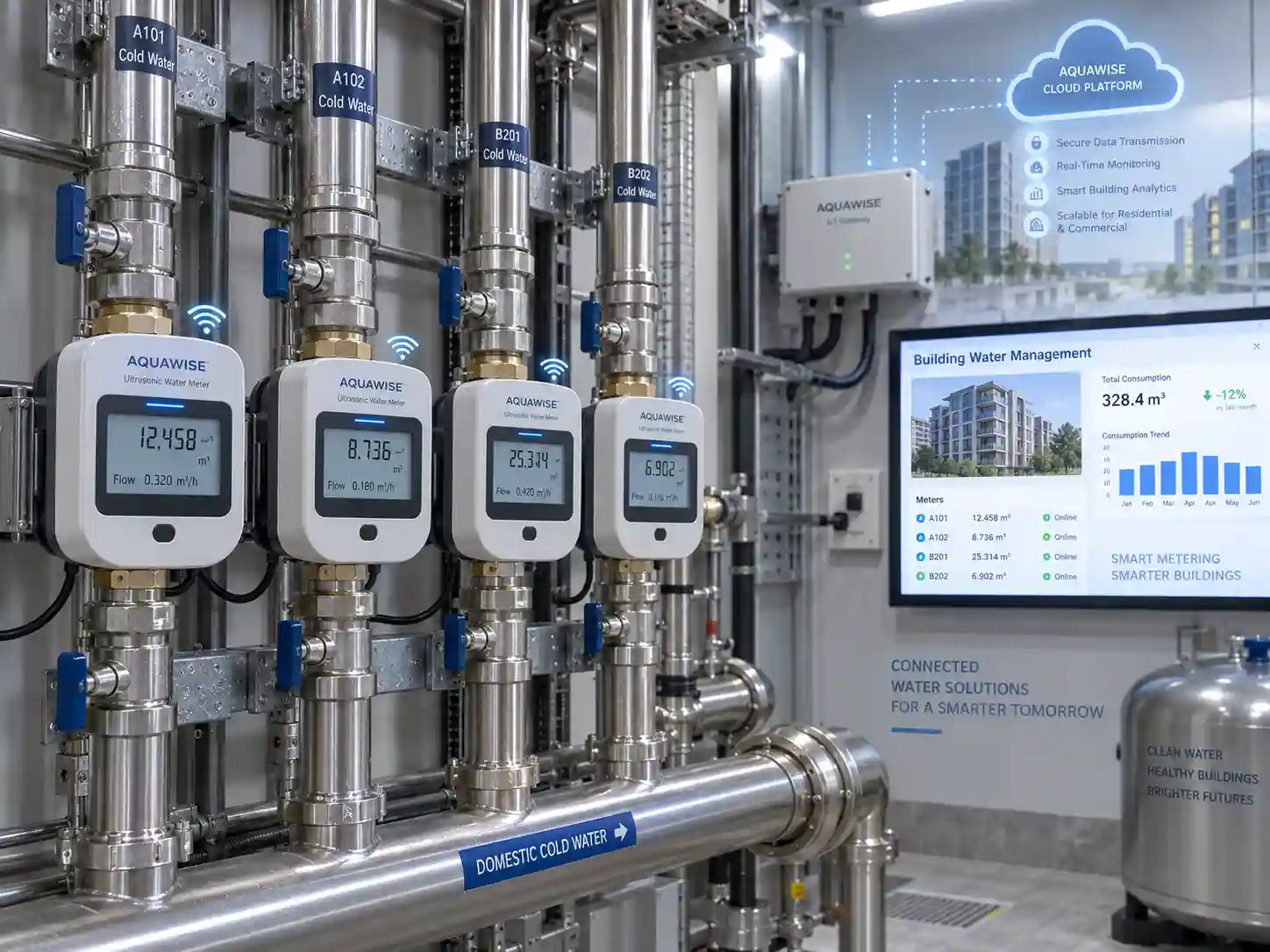
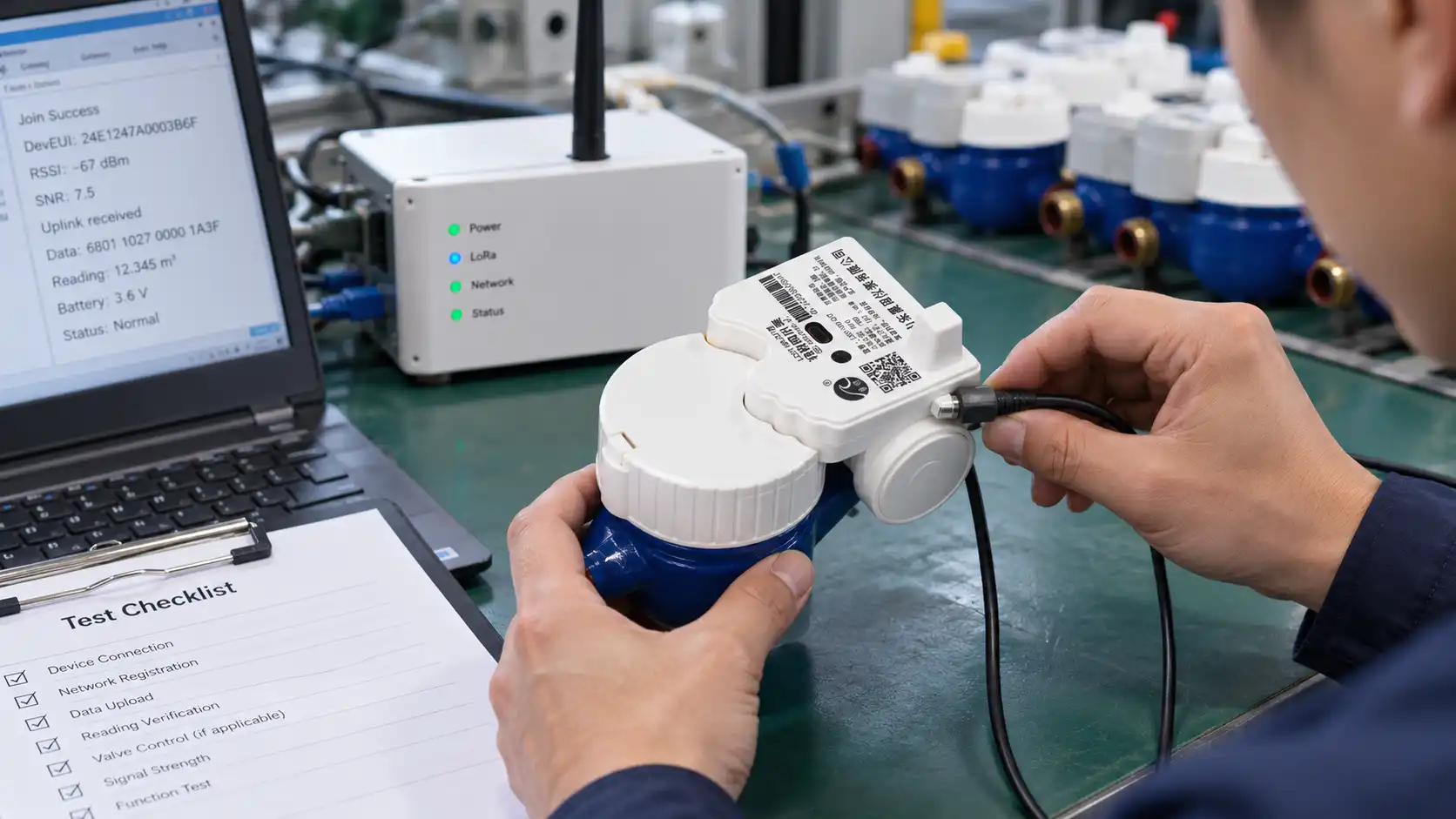
For connected meters, ask the supplier to describe the entire data path from the meter to your application. Identify any gateways, collectors, network services and software involved. Confirm who provides each component and who is responsible for configuration. A successful demonstration on the supplier’s platform does not establish compatibility with yours.
If evaluating a DN15 LoRaWAN water meter, request the supported regional settings, activation process, payload documentation and integration requirements for the offered device. Clarify whether remote commands are supported and under what conditions. Treat LoRa and LoRaWAN as distinct specifications rather than interchangeable labels in the quotation.
Test data completeness, timestamps, units, cumulative readings and recovery after communication interruptions. For a pilot, choose representative installation locations, including difficult ones. Agree on the reporting interval and acceptance thresholds before testing; avoid accepting a universal coverage-distance claim as proof of performance at your sites.
Ask which parts, settings and drawings are controlled after sample approval. Require advance notification of changes affecting the agreed specification, approvals or integration. If a supplier proposes an alternative component, request an explanation of the impact and the evidence needed to approve it. Quiet substitutions make later fault diagnosis much harder.
Define the batch inspection records you expect. Depending on the order, these may include serial lists, agreed test results, visual checks, labeling checks and packing records. Set the inspection method, sampling approach and rejection process in writing. The inspection plan should reflect the project’s risk and contractual requirements rather than an arbitrary percentage copied from another order.
For private-label orders, review OEM changes to meter labels and firmware before final approval. Confirm the artwork, language, serial format and mandatory information. Retain a signed specification and approved reference sample, with a clear process for authorizing revisions before production resumes.
Request a quotation with the meter configuration, quantity, accessories, packaging and commercial terms clearly identified. Separate one-time development or customization charges from recurring unit costs. For connected products, ask about platform access, integration work and any ongoing service charges. A low hardware price is difficult to compare when essential items remain unspecified.
Ask what triggers the production lead time: deposit receipt, artwork approval, sample approval or another milestone. Confirm the planned inspection date, dispatch date and shipping responsibilities. If delivery will be split across batches, establish whether the same specification and pricing apply throughout the schedule.
Agree on the documents required for dispatch and receipt. These may include the commercial invoice, packing list, serial records and order-specific conformity or inspection evidence. Ask the freight or import specialist to confirm destination documentation requirements. Keep the technical acceptance decision separate from the transport booking so shipment pressure does not leave unresolved defects hidden.
Ask for the warranty terms, exclusions, claim procedure and required evidence before ordering. Establish who handles first-line troubleshooting and when the manufacturer becomes involved. For a connected meter, distinguish measurement faults, installation problems and network issues so that a support case reaches the right team quickly.
Discuss repair or replacement logistics, spare parts and configuration support. Ask how an affected serial number will be traced to its production and inspection records. Written responsibilities are more useful than a general promise of “full after-sales service,” especially when the buyer and factory operate in different time zones.
Before committing, assemble a single approval file containing the specification, supporting documents, sample results, inspection plan, commercial terms and support agreement. Send Chenshuo your procurement requirements with the unresolved questions highlighted. That turns the final negotiation into a review of defined deliverables rather than another exchange of catalogue descriptions.
Compare equivalent configurations and included services first. Check accessories, testing, customization, integration and delivery terms. A price comparison is useful only when the quotations describe the same required outcome and make additional charges visible.
Samples are a practical way to resolve fit, operation and integration questions before committing to production. Define their purpose and acceptance criteria in advance. Sample approval should also create a controlled reference for the batch you later receive.
No. Management system certification and product conformity serve different purposes. Request evidence covering the specified meter and its intended destination. Check model schedules, manufacturer identity and the applicable documentation rather than accepting a certificate solely because its logo is familiar.
Include the mechanical specification, measurement requirements, communication protocol, regional settings, reporting needs and intended platform. Identify required commands and integration documents. State the pilot or acceptance process so the supplier understands how compatibility will be evaluated.
Use an approved configuration, documented sample results and a written inspection plan. Define how changes are approved and how nonconforming units will be handled. Clear records help both parties determine whether a problem concerns the agreed product, production consistency or installation conditions.
 Address: Xiao'anzi Industrial Park, Baishabu Town, Lanshan District, Linyi City, Shandong Province
 Call us now:+86 15562945993
 Email:info@sdchenshuo.cn


Shandong Chenshuo Instrument Co., Ltd.