

A reliable LoRaWAN Water Meter supplier should prove six capabilities: correct meter selection, regional radio compatibility, field durability, data integration, documented quality control, and project support. Start with your operating conditions, then request technical files, samples, and a pilot plan.
Pipe conditions, billing rules, communication architecture, and maintenance plans shape the meter configuration. A short project brief makes quotations easier to compare.
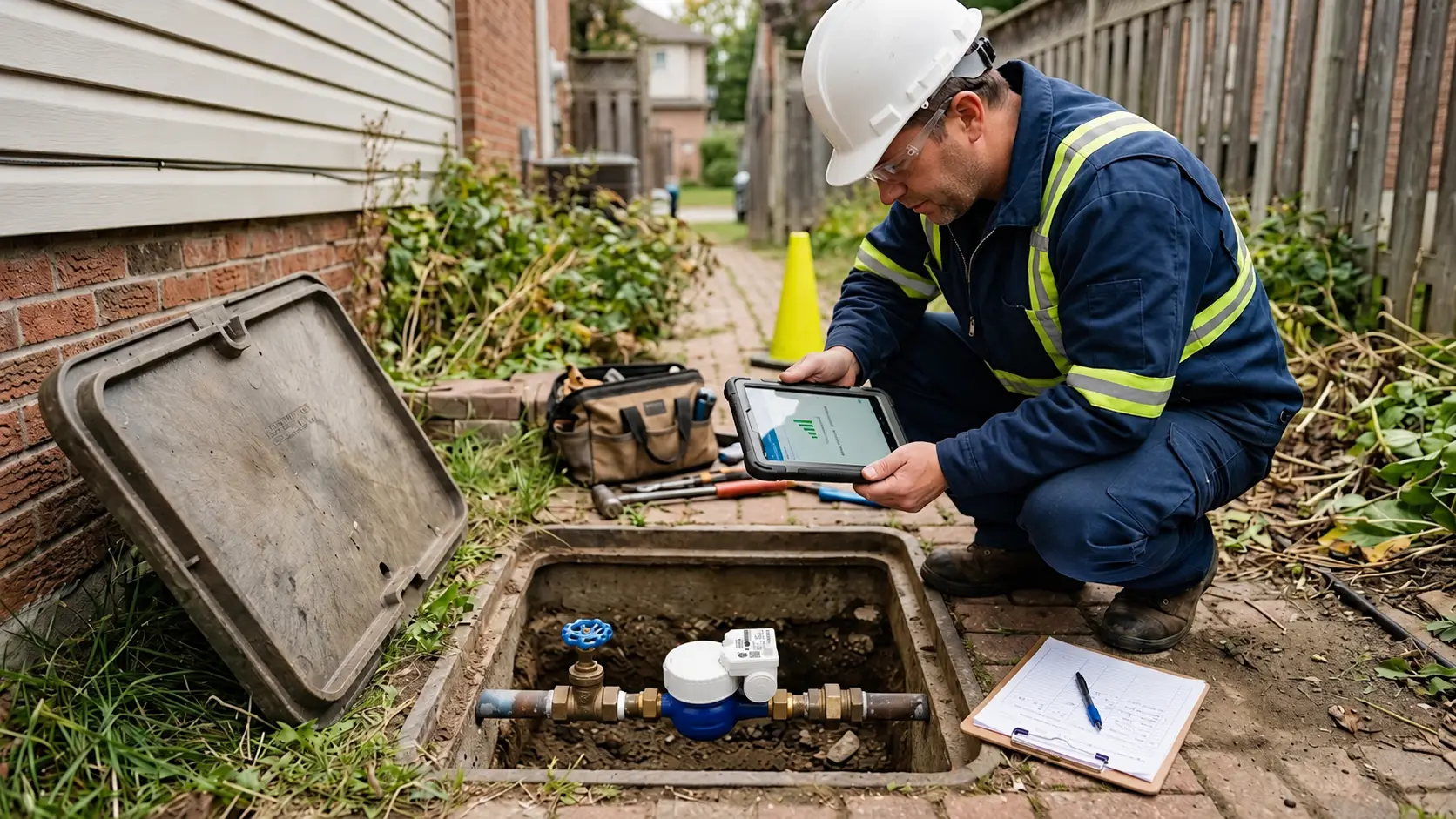
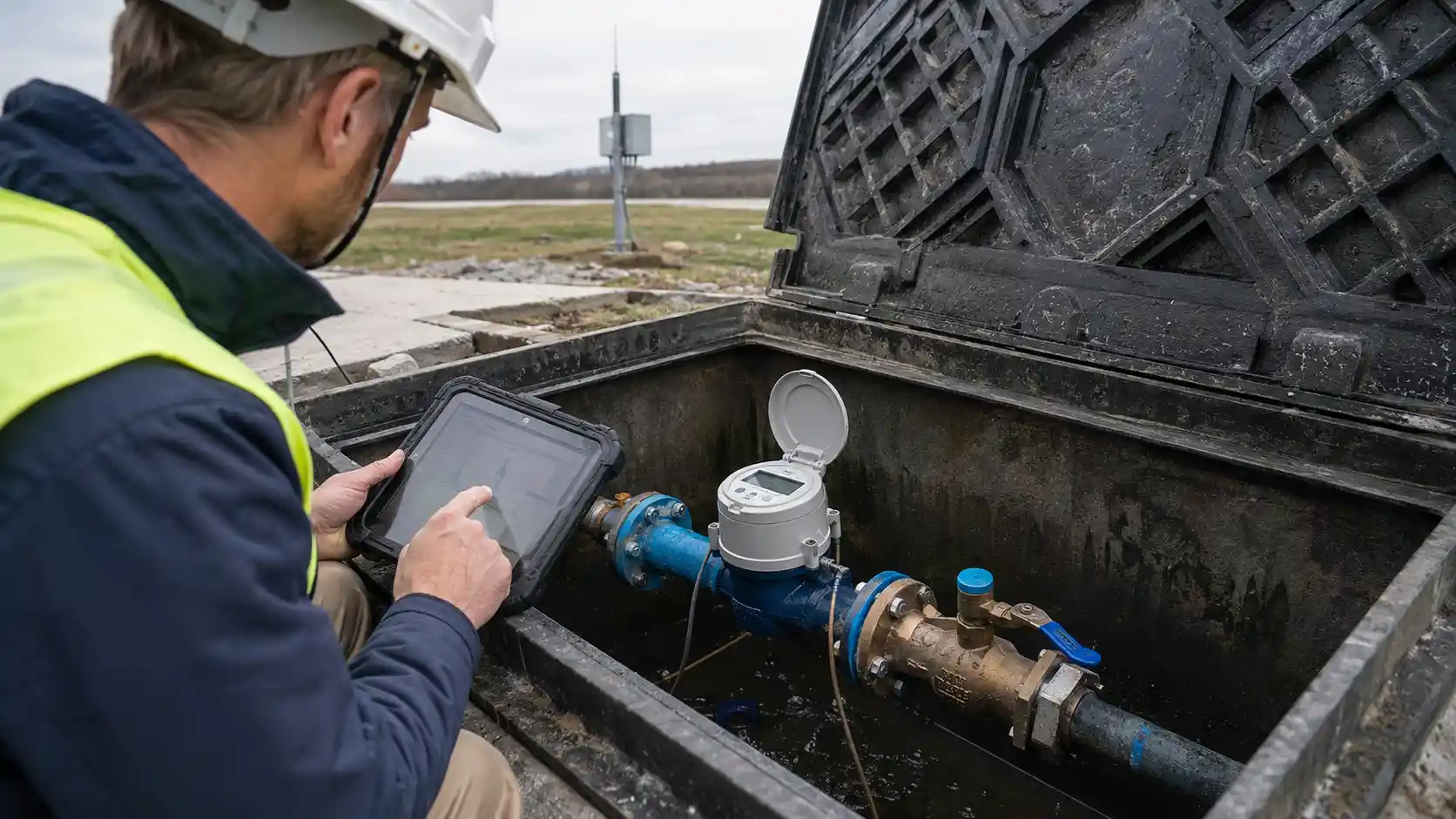
List pipe sizes, expected flow, water temperature, pressure, installation direction, water quality, and meter location. Soil, concrete, distance, and metal pit covers can weaken radio signals.
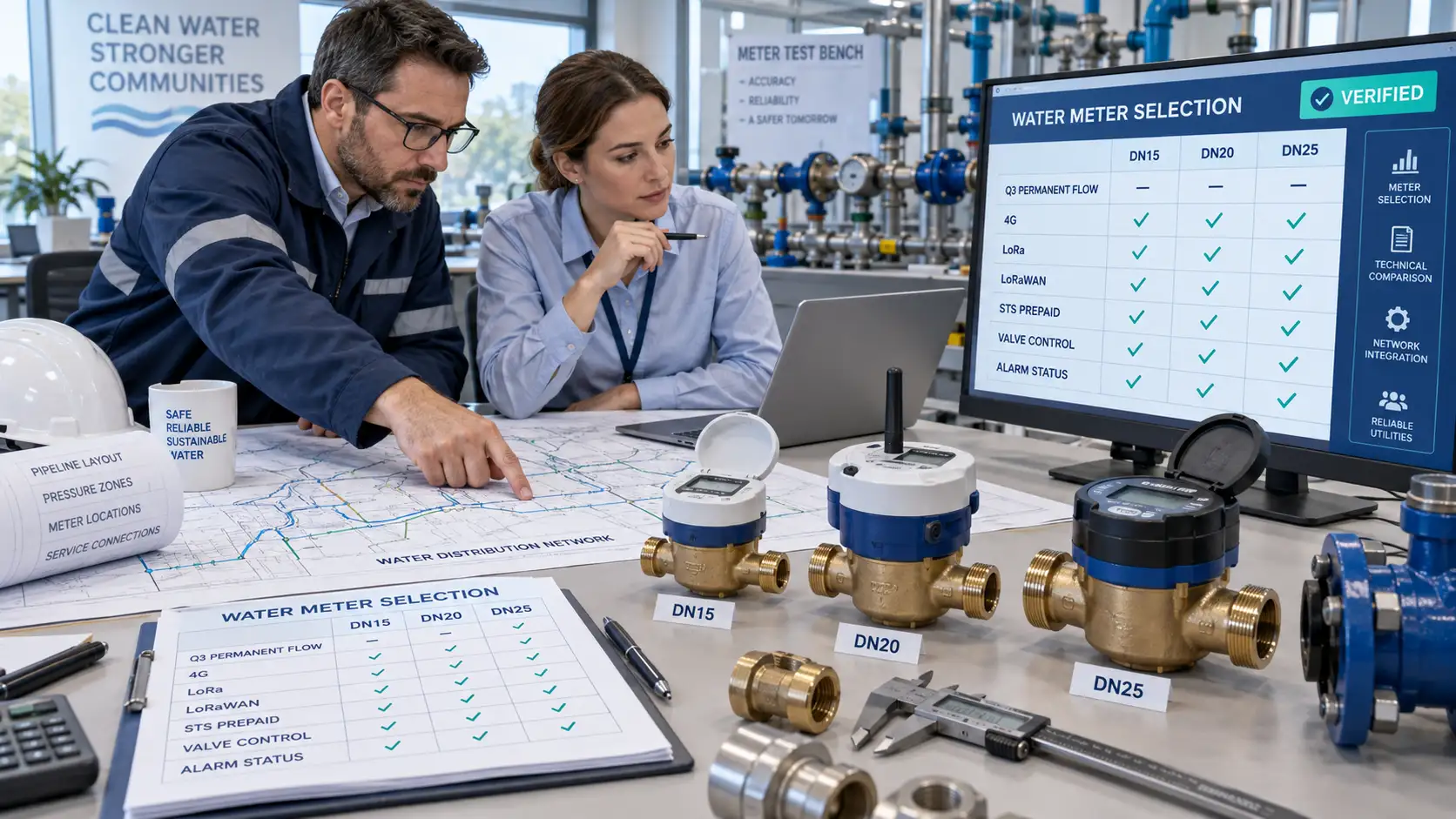
Match the range ratio to actual consumption. Household low flow and seasonal irrigation demand require different measurement ranges. Review LoRaWAN Water Meter options by diameter and metering method before requesting samples.
State whether the project uses postpaid billing, prepaid credit, or both. For STS projects, confirm IEC 62055 compatibility, 20-digit TOKEN handling, key management, recharge records, low-balance warnings, and valve actions. Define who may open or close the valve and how the system records each command.
State who supplies gateways, the network server, and the data platform. Provide the interface, reporting schedule, device count, alarm rules, and required data fields. Assign responsibility for device registration, keys, firmware, API documents, and commissioning.
A usable LoRaWAN specification names the regional frequency plan, network settings, payload structure, power assumptions, and installation limits.
Confirm the destination frequency plan and channel configuration. Public information for the LXS-15 to LXS-50 range lists 470-510 MHz and configurable 868-915 MHz options. Request written confirmation for the region, gateway, network server, and local radio rules.
Ask for the activation method, LoRaWAN version, device class, encryption process, and key-delivery procedure. Request a payload decoder and sample messages for consumption, battery, valve status, tamper events, leakage, and faults. Test them on your server.
Radio range changes with terrain, buildings, pit depth, antenna position, and covers. One Chenshuo product page lists a typical 1-6 km distance and ties the result to the test environment. Measure RSSI, SNR, packet delivery, and retries at representative sites. Match reporting intervals to the battery calculation.
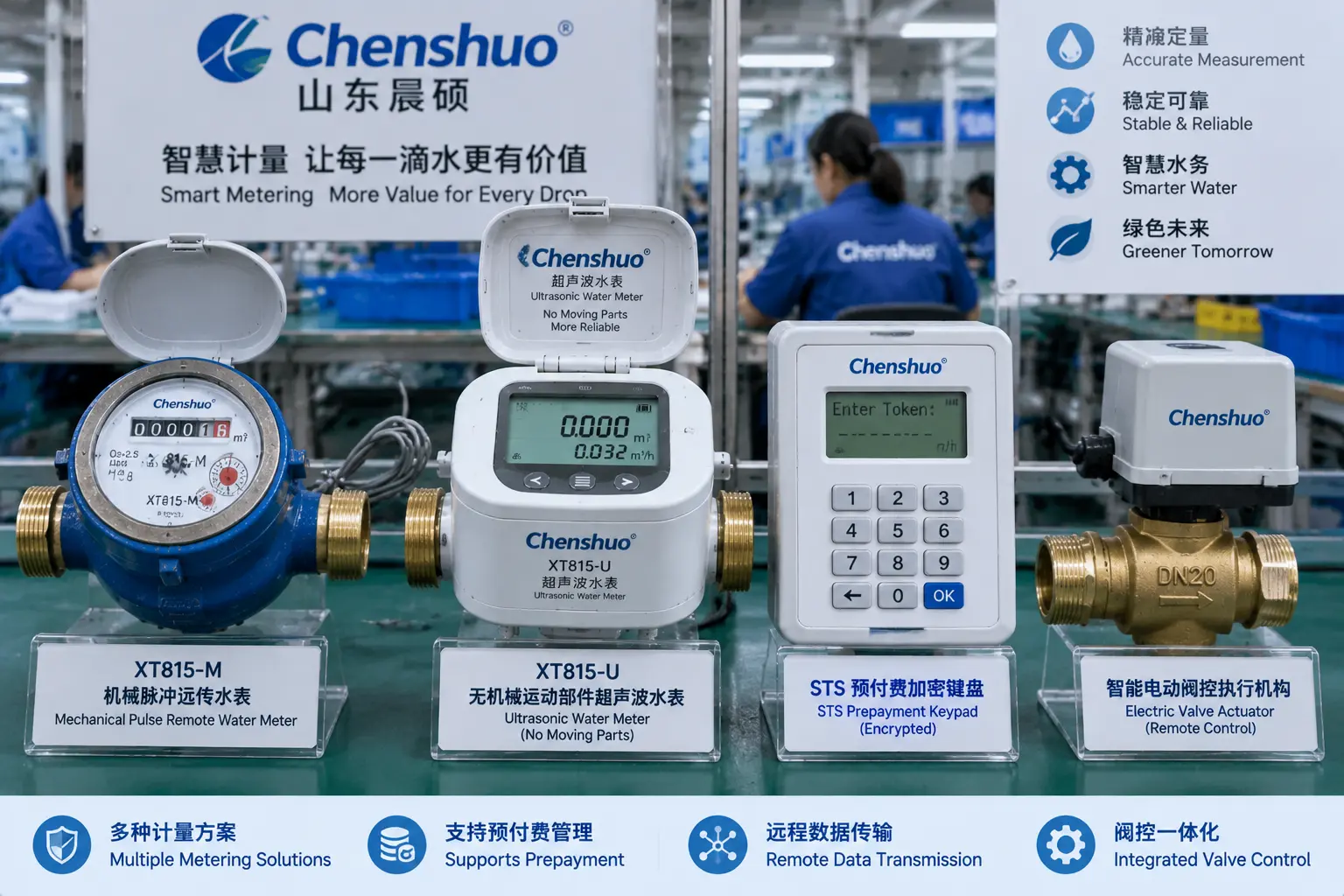
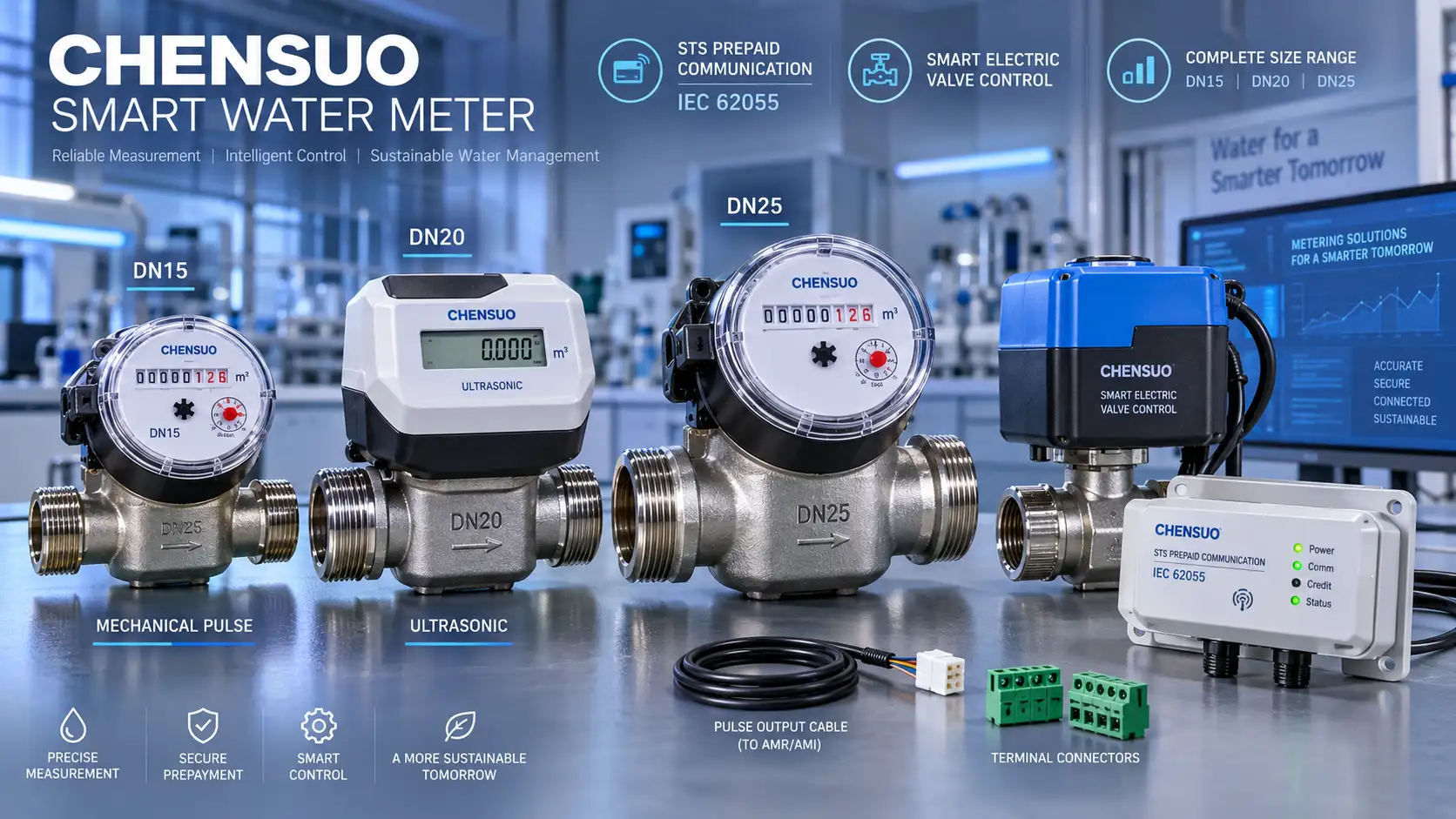
Metering technology affects sensitivity, installation, maintenance, and cost. The XT815 series provides two practical paths for residential and utility projects. Current commercial documents should confirm the final configuration.
| Item | XT815-M Mechanical Pulse Type | XT815-U Ultrasonic Type |
| Metering method | Mechanical impeller with pulse collection | Ultrasonic transit-time measurement |
| Range ratio | R100 | R250 |
| Common sizes | DN15, DN20, DN25 | DN15, DN20, DN25 |
| Q3 by size | 2.5, 4.0, 6.3 m³/h | 2.5, 4.0, 6.3 m³/h |
| Dedicated monitoring | Magnetic interference detection | Microflow, leakage, and empty-pipe detection |
| Typical fit | Residential programs and budget-led retrofits | Low-flow measurement and stricter water-loss control |
Both models use Class 2 metering, T30 temperature classification, 1.6 MPa rated pressure, IP68 protection, valve control, and 4G, LoRa, or LoRaWAN communication options. The listed lithium battery life is 6-10 years under the specified operating profile.
The mechanical model suits established residential applications, large replacement programs, and projects that value familiar construction. Its magnetic-interference function supports tamper monitoring. Standard installation guidance calls for at least 5DN upstream and 2DN downstream straight pipe, with longer sections near flow disturbances.
The ultrasonic model uses no moving measuring parts and supports microflow detection. It suits projects focused on low-flow capture, leakage alerts, scale resistance, and water-loss analysis. The pipe must remain full. Recommended installation includes upstream air removal, an outlet check valve, and at least 10DN upstream and 5DN downstream straight pipe under standard conditions.
For prepaid supply, test low-balance warnings, automatic closing, recharge opening, remote commands, valve-position feedback, and jam alarms. A field test should include poor signal, low battery, interrupted recharge, and repeated valve cycles. These events reveal how the complete system behaves during daily operation.
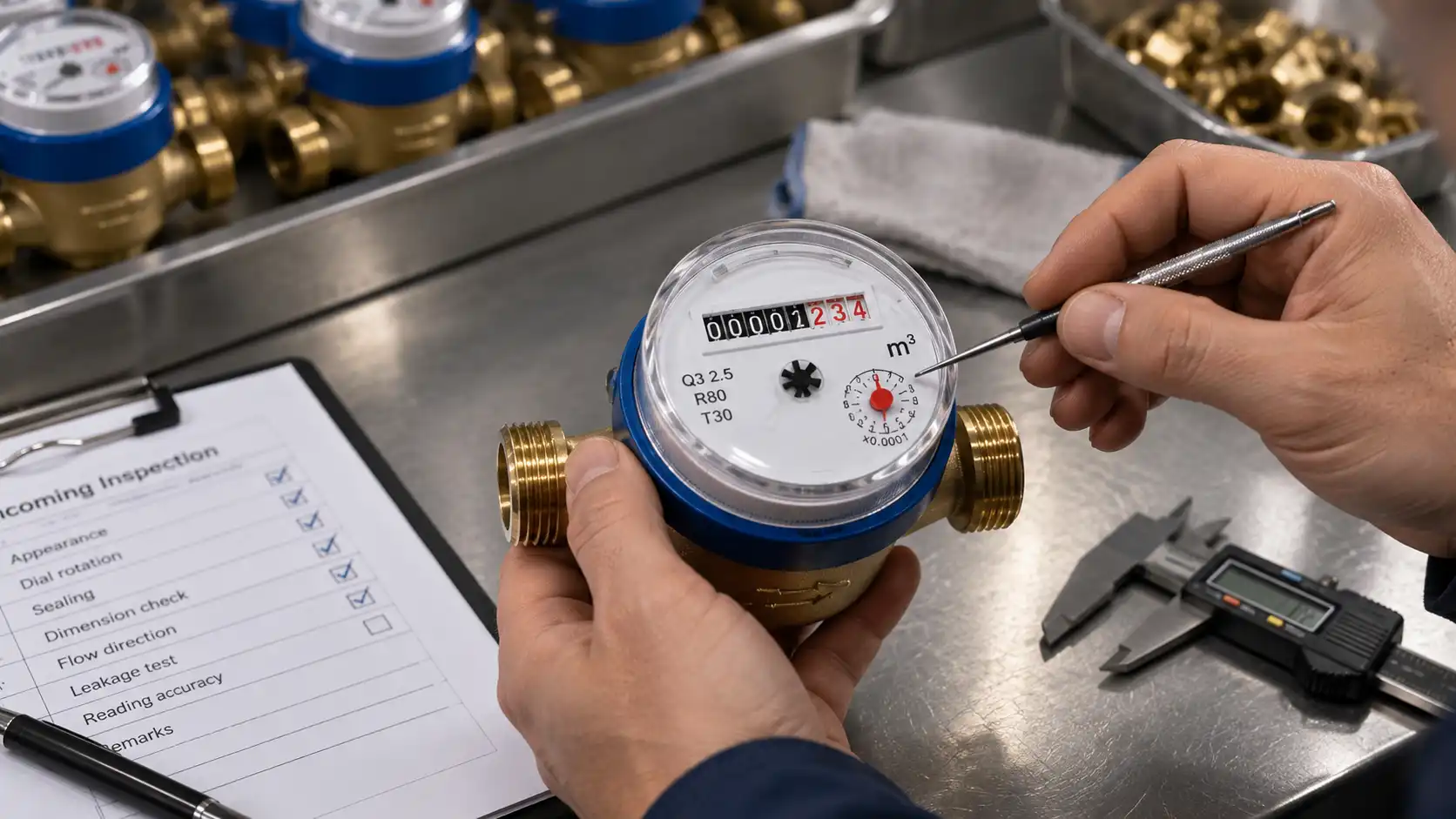
Quality review combines documents with physical tests. Ask the supplier to connect each claim to a model, batch, test method, and destination market.
Request the applicable metrology certificate, type-approval scope, calibration or verification record, STS evidence for prepaid models, and radio documents for the target country. Check model numbers, sizes, accuracy classes, and validity dates across every file.
IP68 claims need a stated test method and product configuration. Battery estimates should include reporting intervals, retries, valve operations, temperature, and alarm traffic. Confirm T30 suitability, 1.6 MPa pressure rating, enclosure materials, cable sealing, and storage conditions against the project brief.
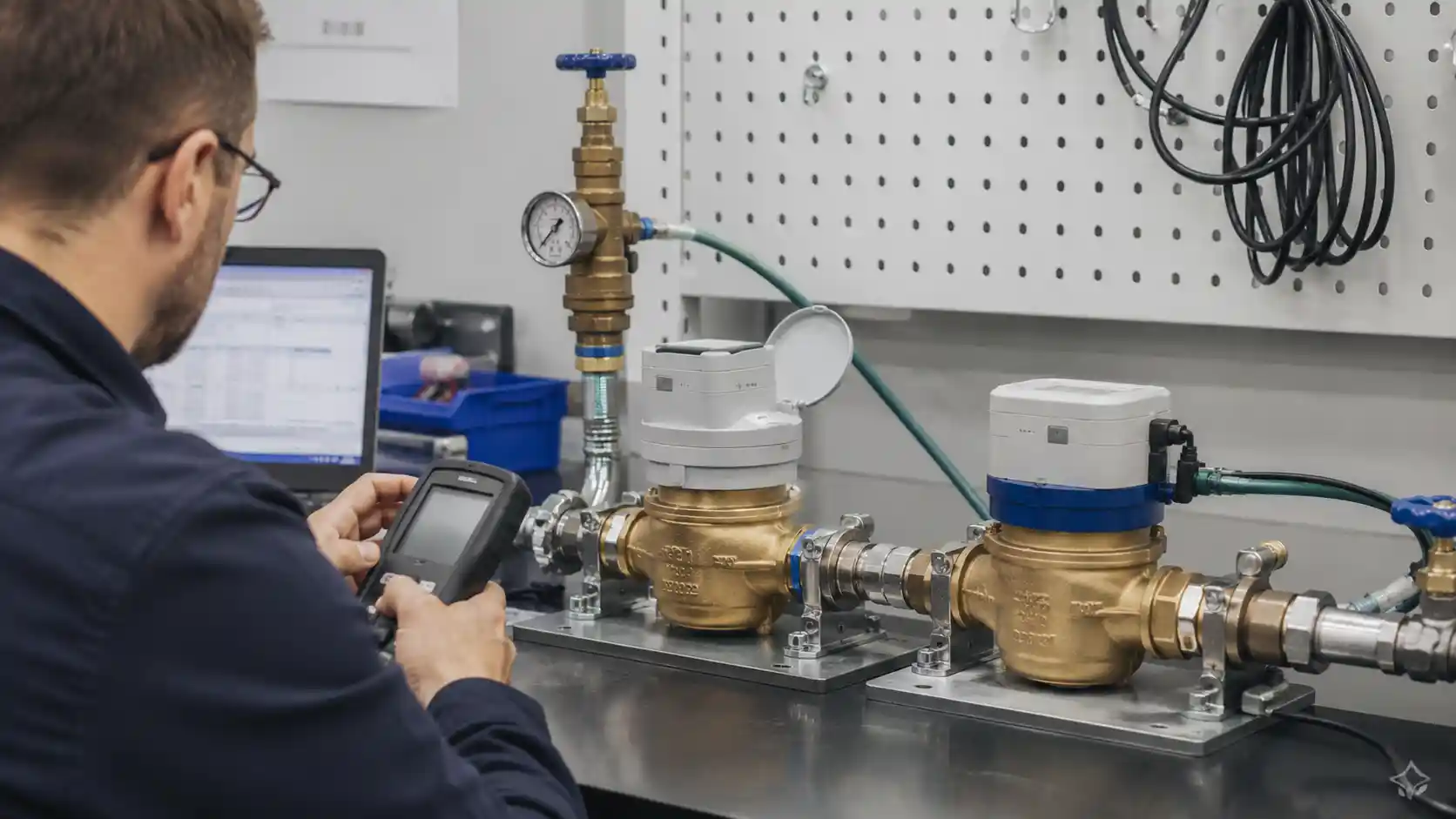
Ask how the factory checks measurement accuracy, leakage, valve operation, radio transmission, display, alarms, and sealing. Define serial-number traceability and agree on sampling levels for pre-shipment inspection. A golden sample gives both teams a physical reference for bulk production.
A pilot should copy the real deployment closely. Select easy, average, and difficult locations, then use written acceptance thresholds.
Include each planned diameter and technology in the sample set. Record measurement error, low-flow response, installation time, signal quality, successful uploads, valve behavior, alarms, and platform data. Set the test duration long enough to capture routine traffic and field variation.
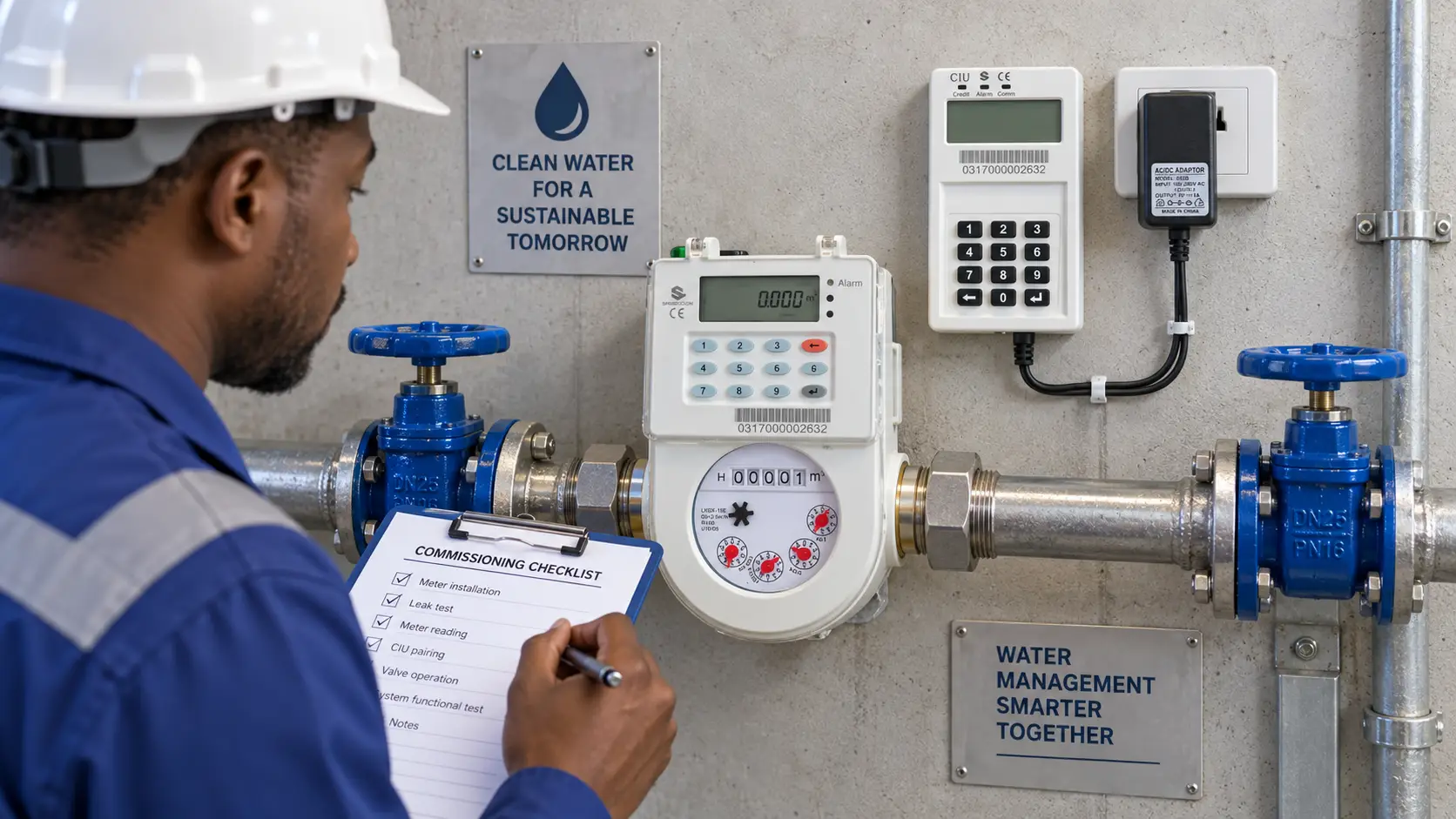
Agree on production lead time, firmware control, configuration records, spare units, batteries, valves, tools, training, and warranty handling. Name the team responsible for commissioning and fault analysis. A supplier’s response during the pilot provides useful evidence for the later rollout.
The purchase price covers one part of the project. Add gateways, network services, platform work, installation, training, inspections, replacement stock, field visits, battery service, and data support. Calculate costs per active endpoint over the planned service period. This figure gives procurement teams a cleaner comparison between proposals.
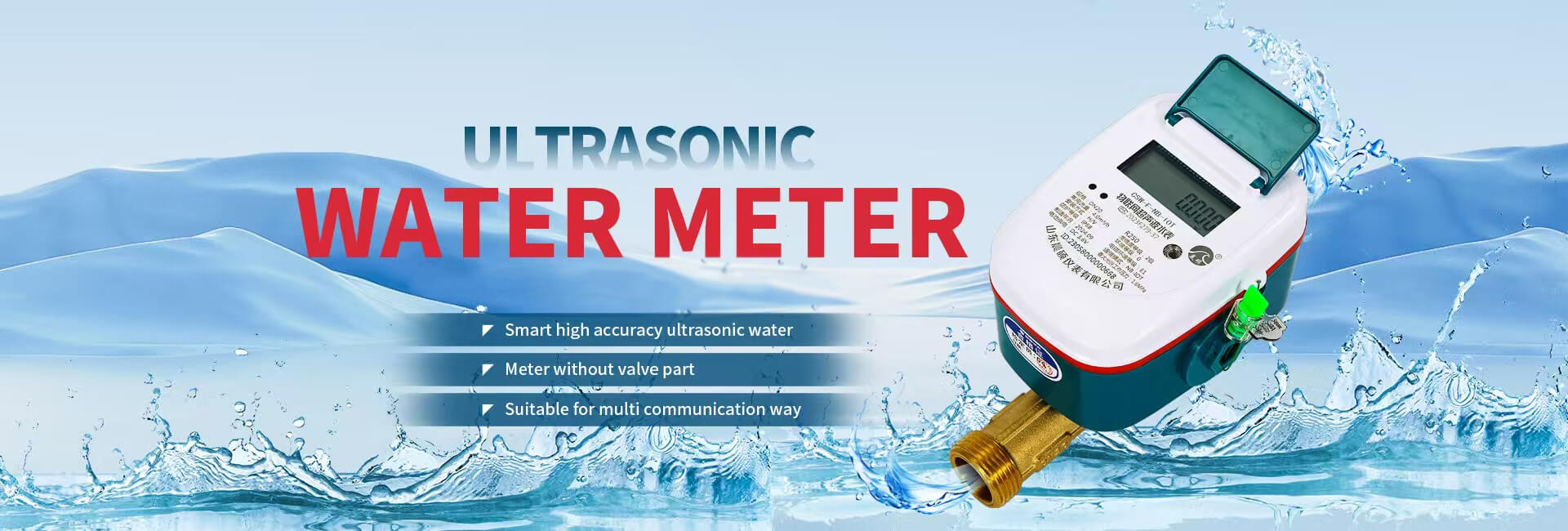
Chenshuo, formally Shandong Chenshuo Instrument Co., Ltd., develops and produces smart water meters and integrated metering systems. Its portfolio covers mechanical, ultrasonic, electromagnetic, NB-IoT, LoRaWAN, and prepaid products. The company website describes automated production lines, staged quality checks, OEM and ODM service, and product supply to more than 50 countries.
For a LoRaWAN project, buyers can discuss pipe size, regional frequency, STS billing, valve control, platform connection, samples, and pilot acceptance with one technical team. Review the company’s water meter manufacturing capabilities, then request current specifications and a project discussion.
Q1: What Should You Ask a LoRaWAN Water Meter Supplier before Buying? A: Ask for model-specific metrology documents, frequency settings, network compatibility, payload details, battery assumptions, IP test information, samples, pilot support, lead time, and warranty terms.
Q2: Which LoRaWAN Frequency Should a Water Meter Support? A: The meter should support the regional frequency plan used in the destination country and match the selected gateway and network server configuration.
Q3: Is a Mechanical or Ultrasonic LoRaWAN Water Meter Better? A: Mechanical meters suit familiar residential applications and cost-sensitive replacement programs. Ultrasonic meters suit low-flow measurement, leakage monitoring, and projects that value a wide range ratio.
Q4: How Long Should a LoRaWAN Water Meter Battery Last? A: Battery life depends on reporting intervals, signal retries, valve operations, alarms, and temperature. The XT815 series lists 6-10 years under its specified operating profile.
Q5: How Do You Test a LoRaWAN Water Meter before a Bulk Order? A: Run a field pilot across representative sites and measure accuracy, low-flow response, packet delivery, signal quality, platform data, alarms, valve behavior, and installation time.
 Address: Xiao'anzi Industrial Park, Baishabu Town, Lanshan District, Linyi City, Shandong Province
 Call us now:+86 15562945993
 Email:info@sdchenshuo.cn


Shandong Chenshuo Instrument Co., Ltd.