

An IP68 water meter can be suitable for a flooded meter pit when the specified immersion conditions cover the installation. The rating describes enclosure protection against dust and water ingress. It does not give every meter the same allowable depth, exposure time or chemical resistance, and it does not guarantee wireless communication underwater.
For a buyer, the task is to match a documented meter configuration to a documented site. A quotation that simply says IP68 leaves important questions unanswered. Ask what was tested, which components the rating covers, and whether the supplied assembly can operate under the proposed flooding conditions.

In the IEC 60529 IP code, the first digit 6 identifies dust-tight protection. The second digit 8 addresses continuous immersion under specified conditions. Those conditions need to be stated for the product; IP68 is not a universal promise of unlimited underwater service.
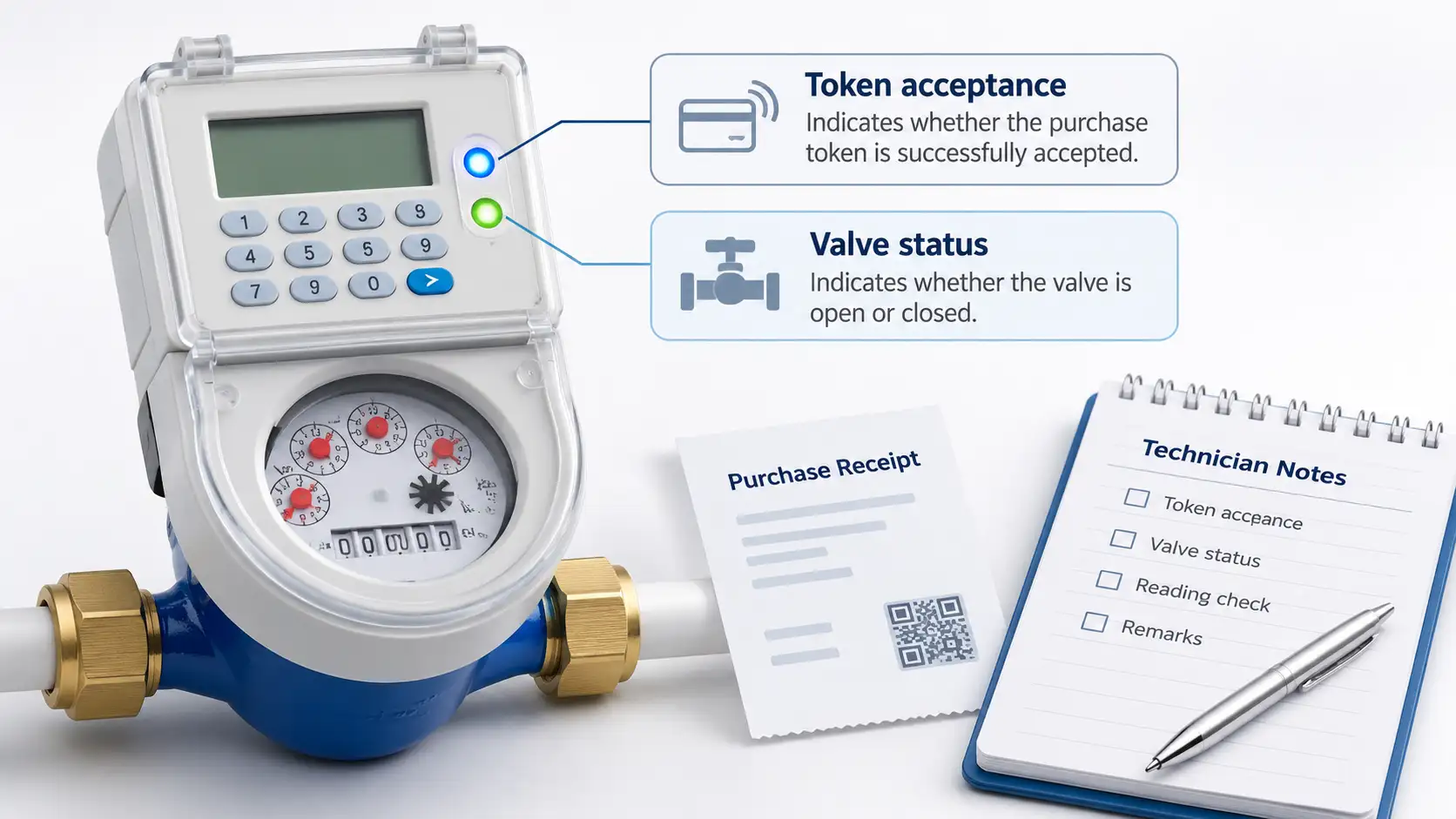
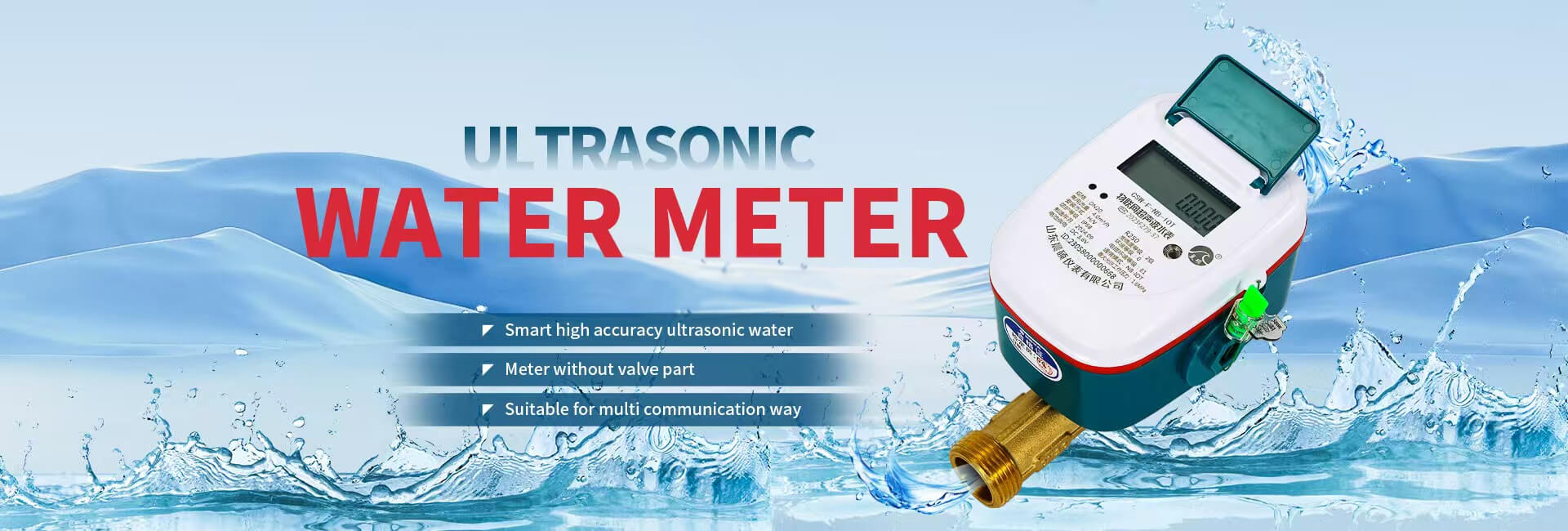
Check the scope of the claim before comparing offers. A DN15 LoRaWAN water meter with a separately sealed electronic cavity illustrates why enclosure construction matters. Its electronic unit and mechanical measuring body have different jobs. Confirm the protection of the ordered electronics, battery compartment, cable entries and any external accessories instead of assuming one rating covers everything connected to the meter.
An IP statement also needs to be distinguished from a test report or certification. Request the supporting document, its model reference and the configuration tested. If only a datasheet is available, record the missing evidence and resolve it before approving a demanding immersion application.
IP67 addresses temporary immersion under defined test conditions. IP68 addresses immersion under specified conditions that must be established for the equipment. The practical difference is therefore found in the supporting documentation, not just the higher final digit.
Ask for depth or equivalent water pressure, duration, temperature and the reference point used to measure depth. A test stated as a water column above the enclosure is not automatically the same as the total depth of a chamber. Draw the expected waterline relative to the installed meter so both parties assess the same exposure.
Also separate immersion from cleaning. Water jets and high-pressure washdown have different test requirements. Do not authorize pressure washing of the display, enclosure seam or cable gland solely because IP68 appears on the label. Follow the cleaning method allowed for that model.
Record whether water arrives after occasional storms, remains for days, or is normally present. Note the highest observed waterline and whether records cover the wet season. If the flood depth is unknown, label it unknown; a guessed number can become an unsupported acceptance condition later.
Water quality matters outside the pipe as well as inside it. Clean-water ingress testing does not establish compatibility with sewage, saline groundwater, oil or cleaning chemicals. Identify likely contaminants and ask for the relevant material and seal compatibility. Inspect the cable route too, because a dry meter chamber can connect to a wet junction box elsewhere.
| Site condition | Information to record | What the supplier must confirm |
| Occasional flooding | Waterline, duration and frequency | Applicable immersion limits and recovery procedure |
| Prolonged submersion | Expected continuous exposure and temperature | Suitability of the complete ordered assembly |
| Contaminated water | Known substances and cleaning agents | Material compatibility beyond the IP rating |
| Underground wireless reading | Pit depth, lid material and antenna position | A configuration to validate in a field trial |
| Restricted maintenance access | Safe access and isolation arrangements | Service method and replaceable components |
Photographs and a section drawing make these conditions easier to review than a description such as outdoor installation. Include space for reading the display and reaching valves. A protected enclosure still needs a workable maintenance arrangement.
Water surrounding the enclosure and water filling the measuring tube are different conditions. An ultrasonic meter may sit in a flooded chamber while air remains trapped inside the pipe. External immersion does not establish that the measurement path is full.
Il Contatore dell'acqua prepagato a ultrasuoni XT815-U includes empty-pipe detection and can suspend measurement when the measuring tube is empty. Check flow direction, approved mounting position and the model’s pipe arrangement separately from its enclosure rating. A zero reading accompanied by an empty-pipe indication needs investigation before it is accepted as zero consumption.
Similarly, a water-pressure rating describes the meter’s internal hydraulic duty. It does not state the allowable external immersion pressure. Keep these requirements on separate lines in the purchase specification, alongside the flow range and temperature limits.
A sealed housing can be connected to an unsuitable cable joint. Ask whether connectors must be mated, capped, tightened to a specified torque or protected with an approved sealing system. Include antenna connections and power leads where fitted. A field splice should have a documented installation method suitable for its location.
Define who may open the enclosure and what happens afterward. Some assemblies are intended for replacement as a unit; others have a prescribed service process. Do not assume a battery change leaves the original protection intact without inspecting seals and following the required closure procedure.
For batch procurement, retain the approved connector and cable part numbers. A substitution during installation may change the assembled condition even when the meter model remains unchanged. Require review of such changes rather than treating the initial sample as approval for any later accessory.
Read the warranty separately from the enclosure specification. Ask how the supplier handles water-ingress claims, which installation records are required and whether unauthorized opening affects coverage. A stated IP rating does not, on its own, describe the commercial remedy for a failed unit or the cost of a site visit.
IP68 does not measure radio performance. Water, the pit structure, a metal lid and antenna placement can change the communication path. A successful transmission while a technician holds the meter above an open chamber tells little about the finished installation.
Include representative wet locations in LoRaWAN coverage and data-quality testing. Record the installed antenna arrangement, normal lid position, water condition and reporting schedule. Judge delivery over the agreed observation window, using valid application records rather than a single signal-strength reading.
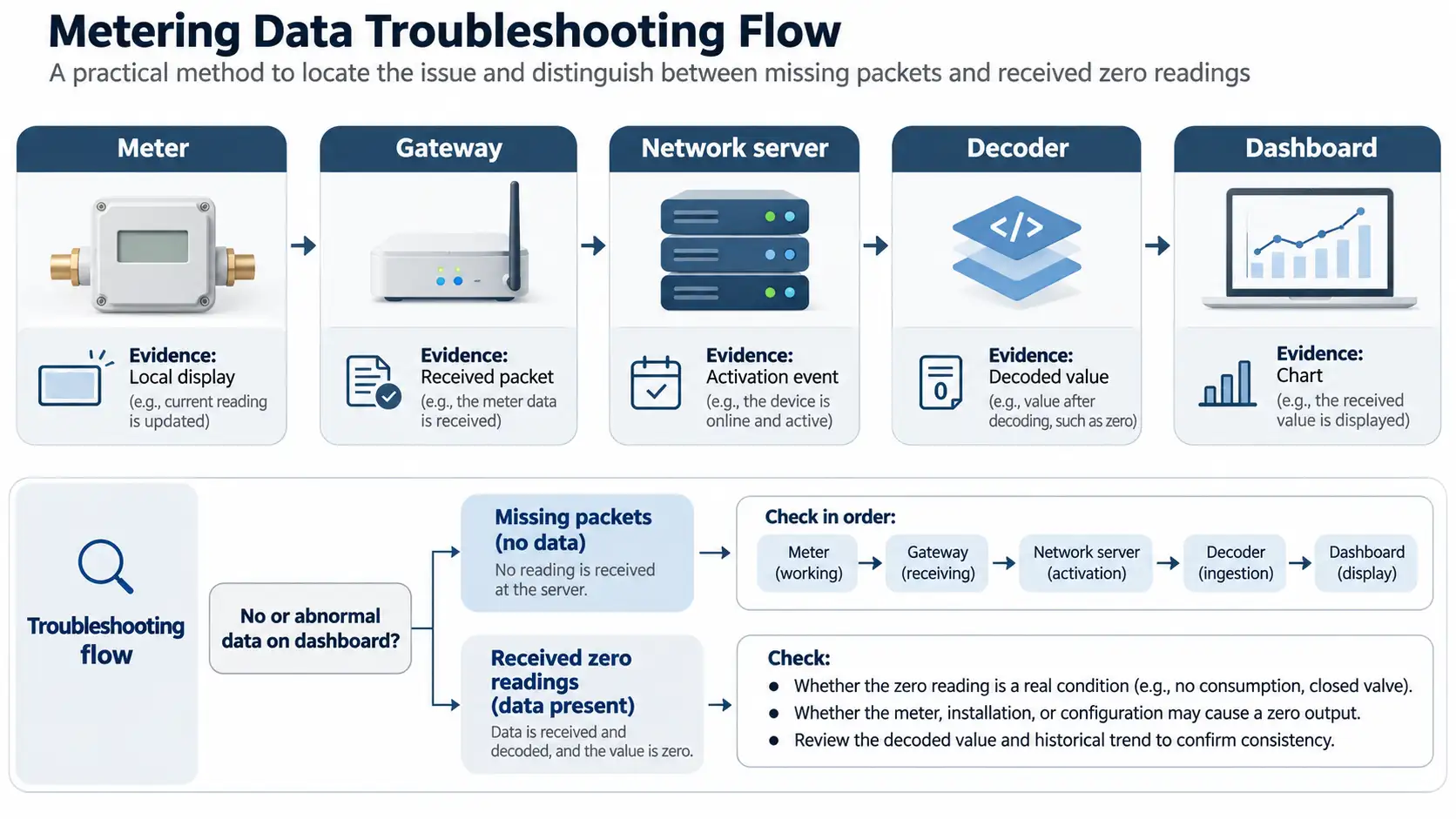
If the application loses contact, compare its last received value with the local register when safe access is available. The meter may still be measuring while communication is interrupted. Confirm the available storage and recovery functions for the selected configuration; do not assume every missed interval will be replayed.

Use three evidence stages: document review, sample verification and site commissioning. Each answers a different question. The test report establishes the tested protection conditions, the sample confirms the ordered assembly, and the field trial checks that the installation delivers useful measurements and readings.
Before placing the order, agree these items:
Arrange any deliberate immersion test with the manufacturer or test facility under an agreed procedure. A short bucket demonstration cannot establish long-term pit suitability. Keep the configuration and exposure record with the results so a later purchasing team can see exactly what was accepted.
No. Confirm the product’s declared immersion conditions and whether its complete assembly is approved for the intended continuous exposure. The rating alone does not supply an unlimited service-life or depth guarantee.
No. Enclosure protection and radio delivery are separate requirements. Test the selected meter and antenna in representative installed conditions, including the normal lid position and relevant water levels.
Not by itself. Verify compatibility with the actual contaminants, including the housing, seals, cable jackets and connectors. Clean-water ingress performance does not establish resistance to every substance found in a flooded pit.
Yes. The alarm concerns the water inside the measuring section. A flooded enclosure does not remove trapped air from the pipeline or ensure that the measuring tube remains full.
Include flood depth and duration, external water conditions, pipe duty, installation drawings, communication requirements and the proposed acceptance checks. Identify the exact accessories and ask how protection is maintained after authorized servicing.
Send Chenshuo those site details and the required reading functions to request a configuration review for flooded meter pits. Ask for confirmation of the applicable immersion evidence and assembly details before approving the sample for deployment.
 Indirizzo: Xiao'anzi Industrial Park, Baishabu Town, Lanshan District, Linyi City, Provincia di Shandong
 Chiamaci ora:+86 15562945993
 E-mail:info@sdchenshuo.cn


Shandong Chenshuo Instrument Co., Ltd.