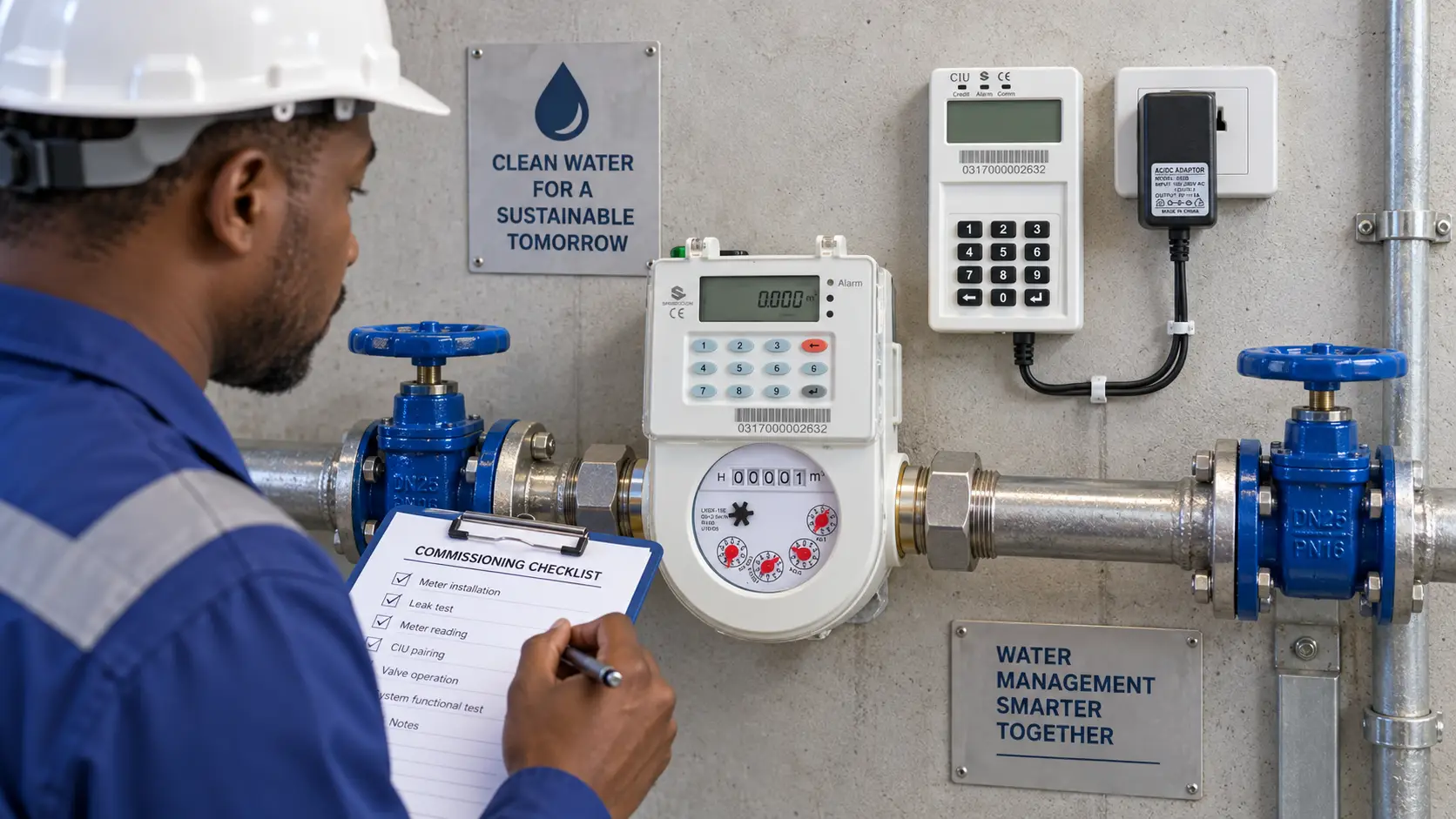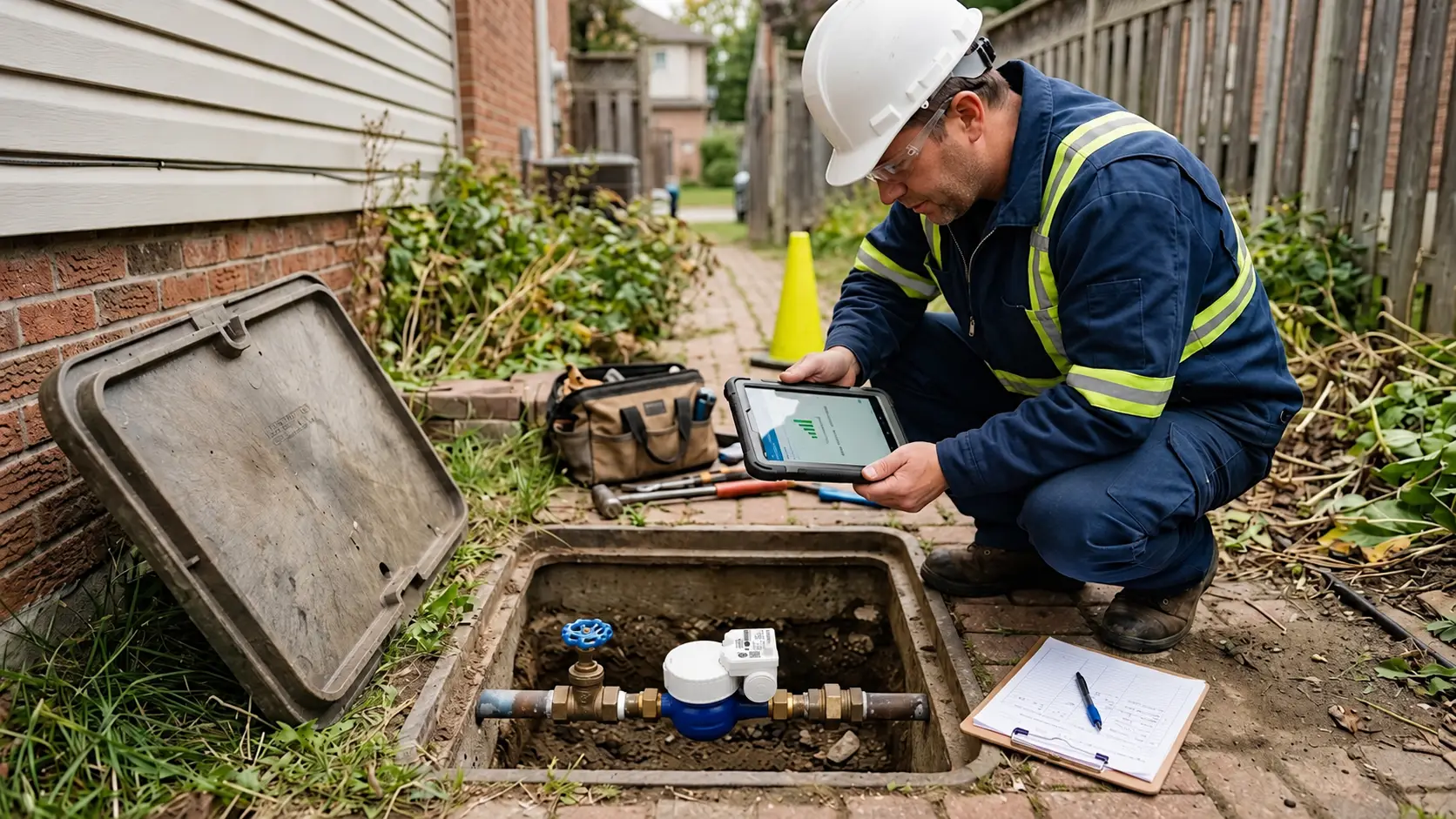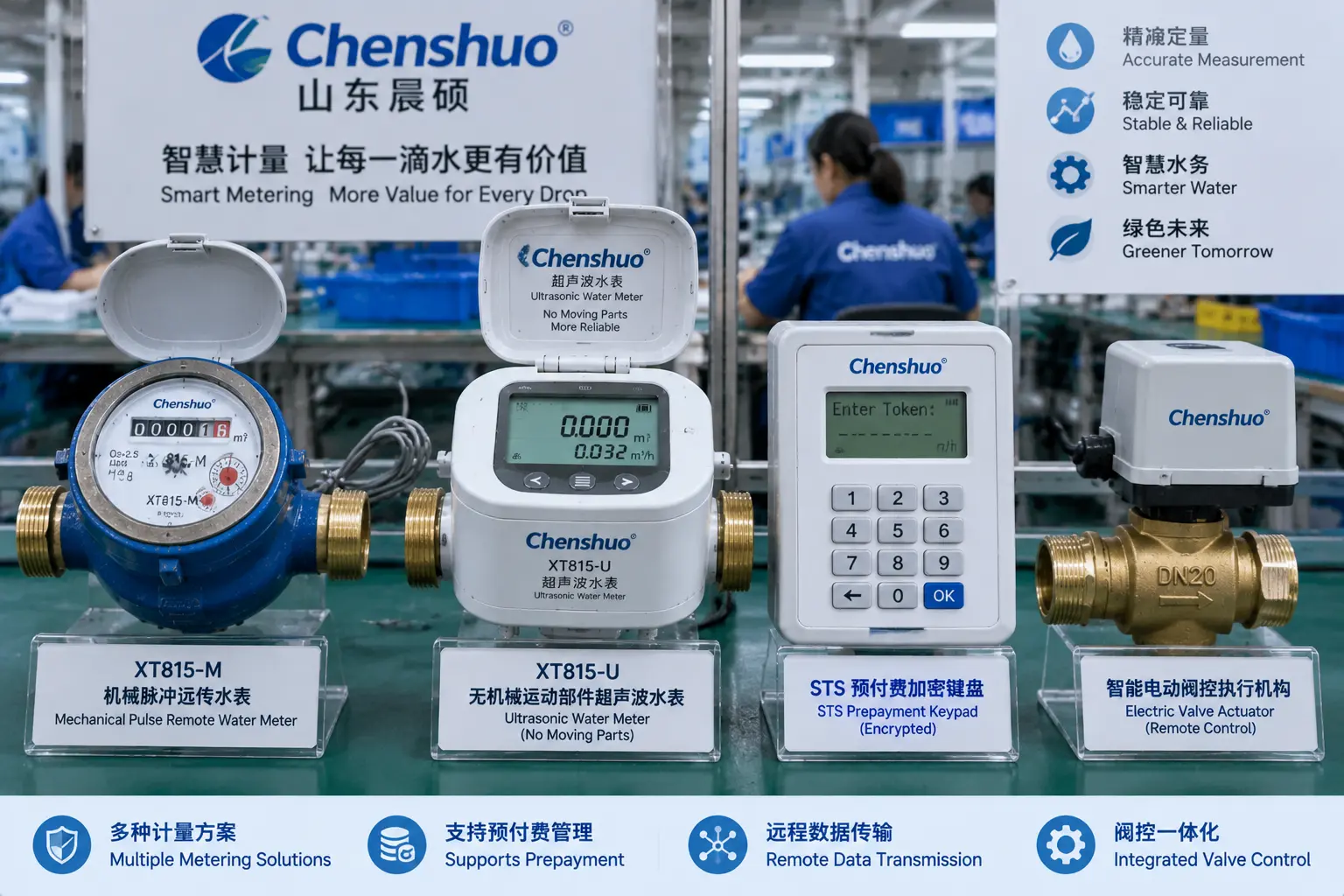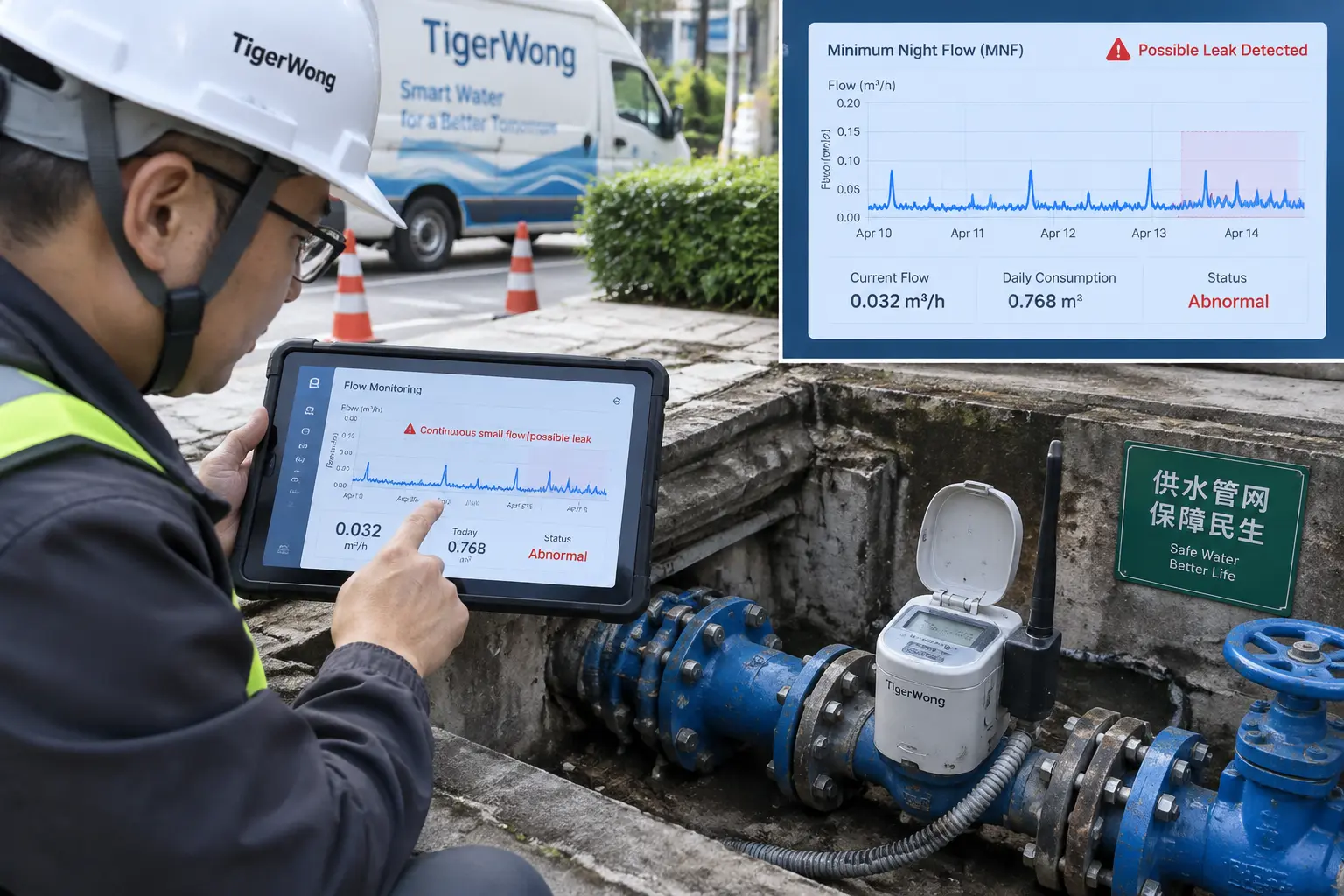


Choose between DN15, DN20, DN25 and DN32 by comparing the actual demand with each candidate’s flow ratings and pressure loss, then checking the physical connection. Matching the pipe label is only part of the job. A meter that fits can still be too large for small flows or too restrictive during a busy period.
The useful question is what passes through this particular measuring point. An apartment inlet, a shared building supply and the feed to a storage tank can behave quite differently. Start with that distinction before assigning a diameter from the building’s name or number of occupants.
DN is a nominal size designation. It is not the measured bore, the thread’s outside diameter or the meter’s hourly capacity. For replacement work, record the existing connection standard and installation length as well as DN. An adapter that makes two parts connect does not establish that the resulting installation is suitable.
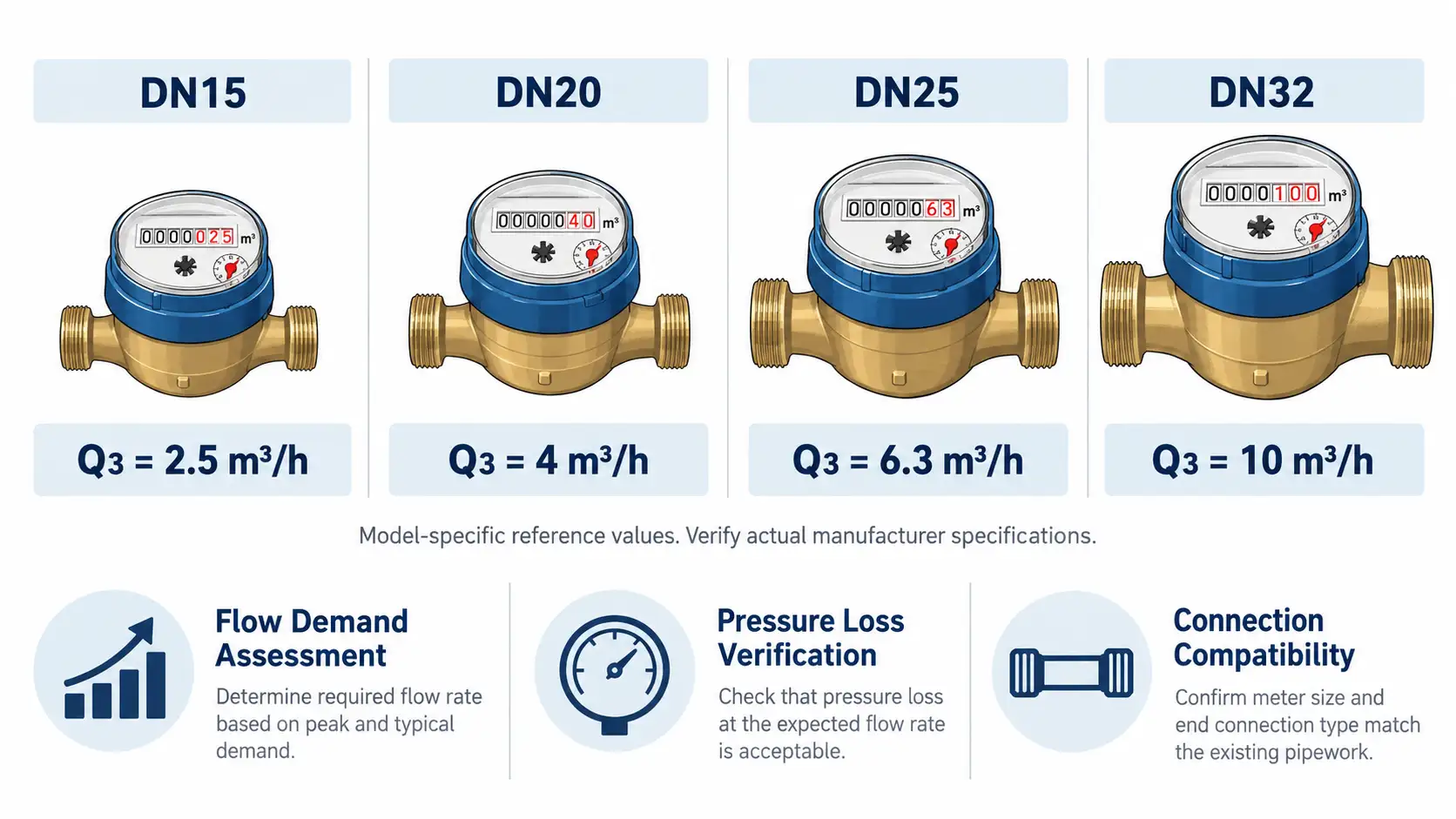
Il LXS-32BRASS mechanical water meter provides a useful reference for comparing size and flow designations. Its listed comparison associates DN15, DN20, DN25 and DN32 with Q3 values of 2.5, 4, 6.3 and 10 m³/h respectively. Treat those as a starting point for that selection, not universal capacities assigned to every meter of those diameters.
Another model can have a different approved range or installation condition. Put the proposed model number next to the nominal size in the buying sheet. Without it, a substitution described as equivalent DN20 may leave important performance differences unresolved.
A monthly water total can help describe consumption, but it hides the rate at which the water passed. Dividing it by every hour in the month smooths out the very peaks that may decide the size. Look for representative measurements, or have a qualified designer estimate demand using the applicable method for the building.
The record needs three useful views: the smallest flow worth measuring, ordinary demand and peak demand with its duration. Include periods when several fixtures operate together. For a tank-fed system, establish whether the meter sees individual users’ consumption or the tank’s refill flow. The same daily volume can reach those two locations in quite different patterns.
Mark planned growth separately from current demand. A genuine additional process or occupancy change belongs in the review. An unexplained instruction to buy one size larger does not. Excess capacity has consequences at low flow, so make the future allowance visible rather than burying it in the diameter choice.
DN15 is a reasonable candidate for an individual low-demand connection when its approved range covers the duty. An apartment or modest household supply may belong in this comparison. The word household is not enough to approve it, especially if several outlets frequently run together.
DN20 becomes worth comparing when the sustained or simultaneous demand challenges the smaller candidate. The LXS-20BRASS mechanical meter lists Q3 at 4 m³/h. Before accepting that option, check its actual low-flow rating and pressure-loss information as well. Extra capacity is useful only if the rest of the duty remains covered.
DN25 may enter the shortlist for a shared residential branch or a small commercial installation with greater coincident use. An office with intermittent handwashing and a premises with equipment filling water continuously need different assessments, even if both are called commercial. Record the operating pattern behind the proposed upgrade.
DN32 can be appropriate to a larger shared supply or a more demanding commercial duty, subject to the same checks. It is not a default upgrade whenever there is uncertainty. If most water passes at very low rates, a larger meter may move important consumption below its specified measuring boundary.
These are candidate scenarios, not a table of guaranteed applications. The decision comes from matching an identified model to the measured or designed flow, available pressure and installation requirements. No fixed number of apartments selects a size reliably without information about how they use water.
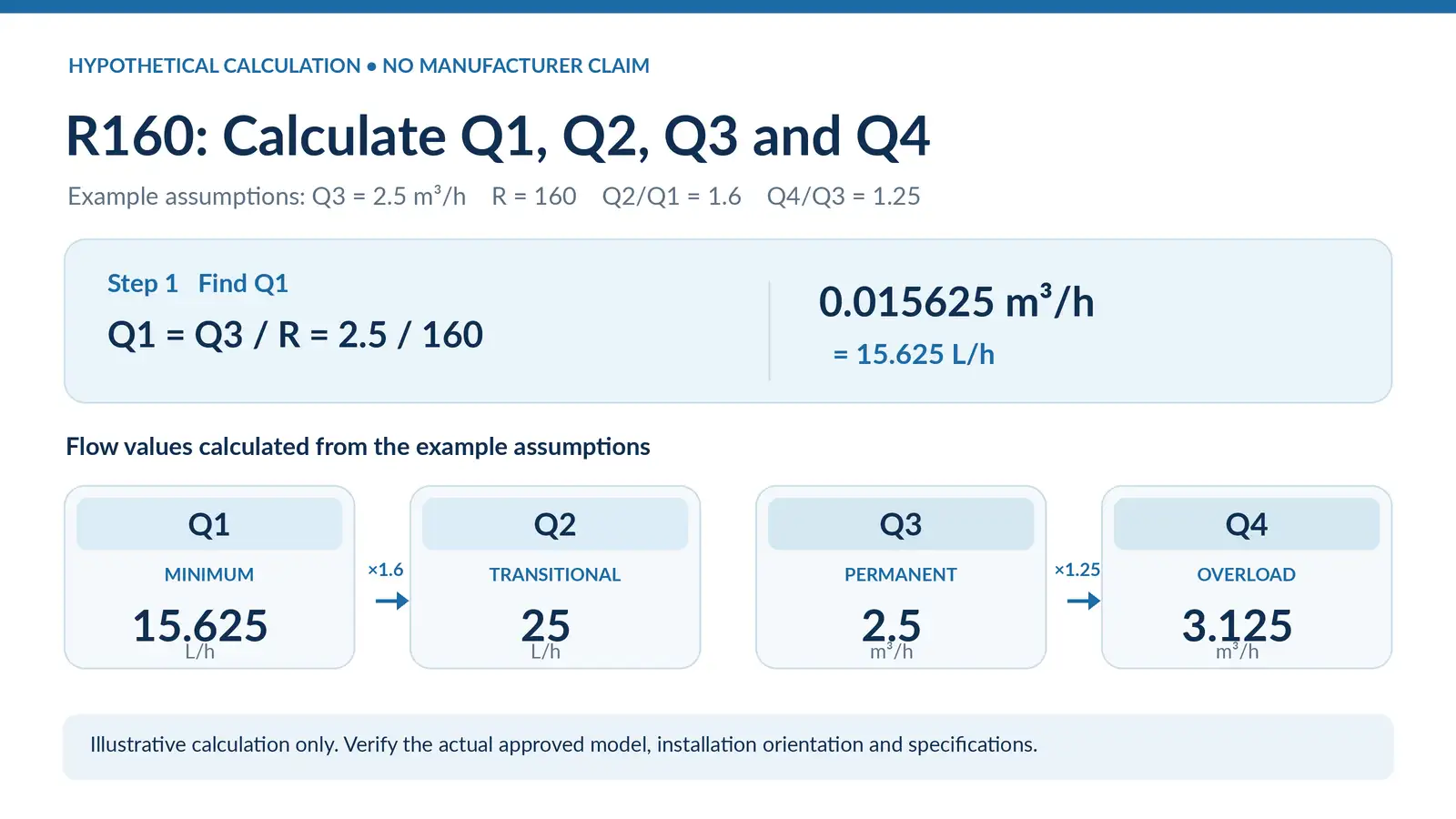
Q3 is the permanent flow rating. Q4 is the overload rating for short periods, with the allowed duty confirmed for the model. If the ordinary working flow exceeds Q3, having a higher Q4 does not fix the mismatch. Record how long peaks last and how often they occur before deciding whether overload operation is acceptable.
Consider a hypothetical duty of 3.2 m³/h during ordinary use and brief excursions to 4.6 m³/h. A candidate rated Q3 = 4 and Q4 = 5 m³/h is worth reviewing further. It is not yet selected: the overload duration, pressure loss and low-flow needs still have to pass. If 4.6 m³/h becomes sustained demand, the same candidate needs reconsideration.
Write that reasoning into the selection record. Simply choosing the next DN after a peak number makes it difficult for anyone else to see which assumption drove the purchase. It also makes later changes harder to assess when the operating hours or equipment duty change.
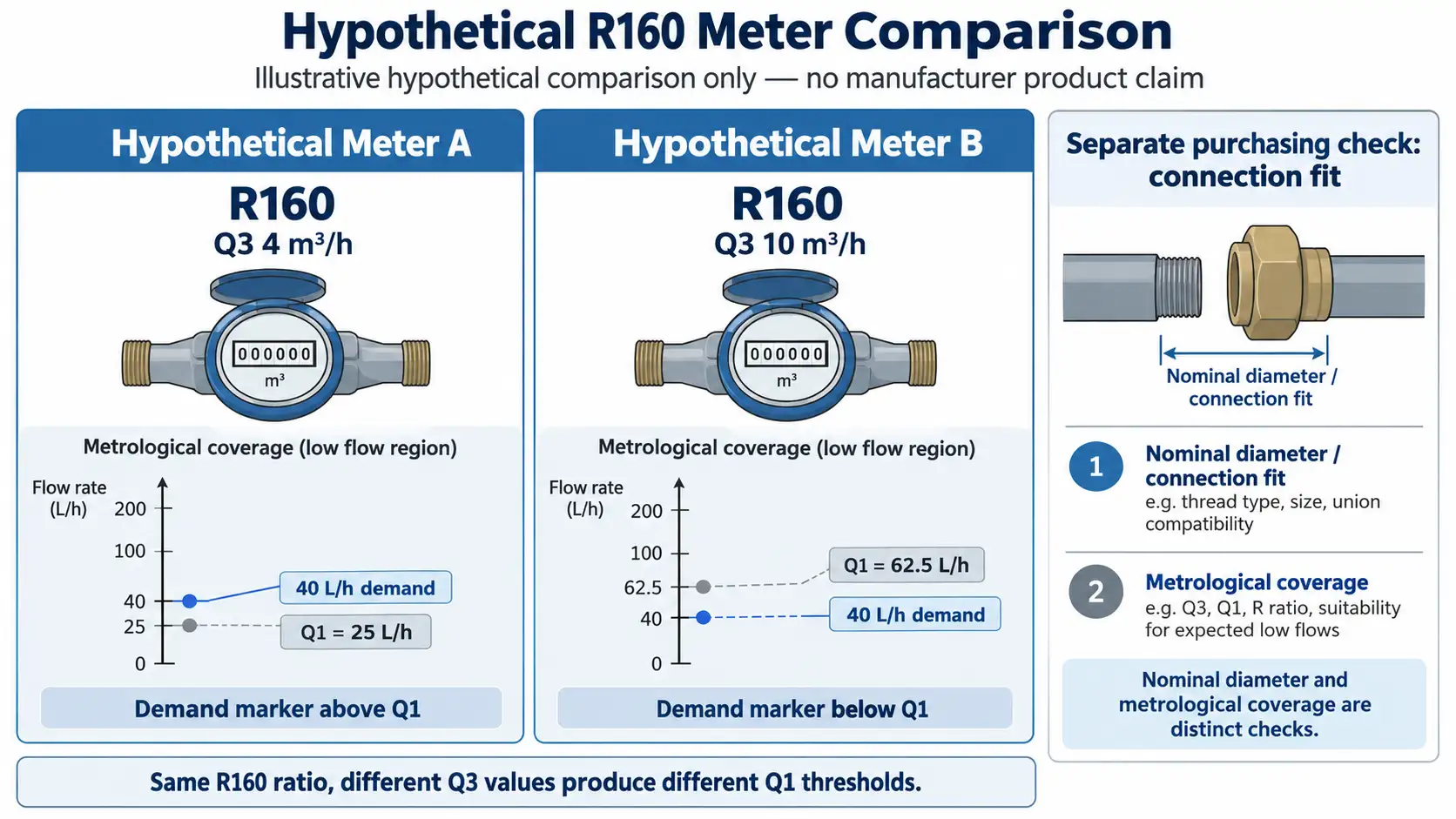
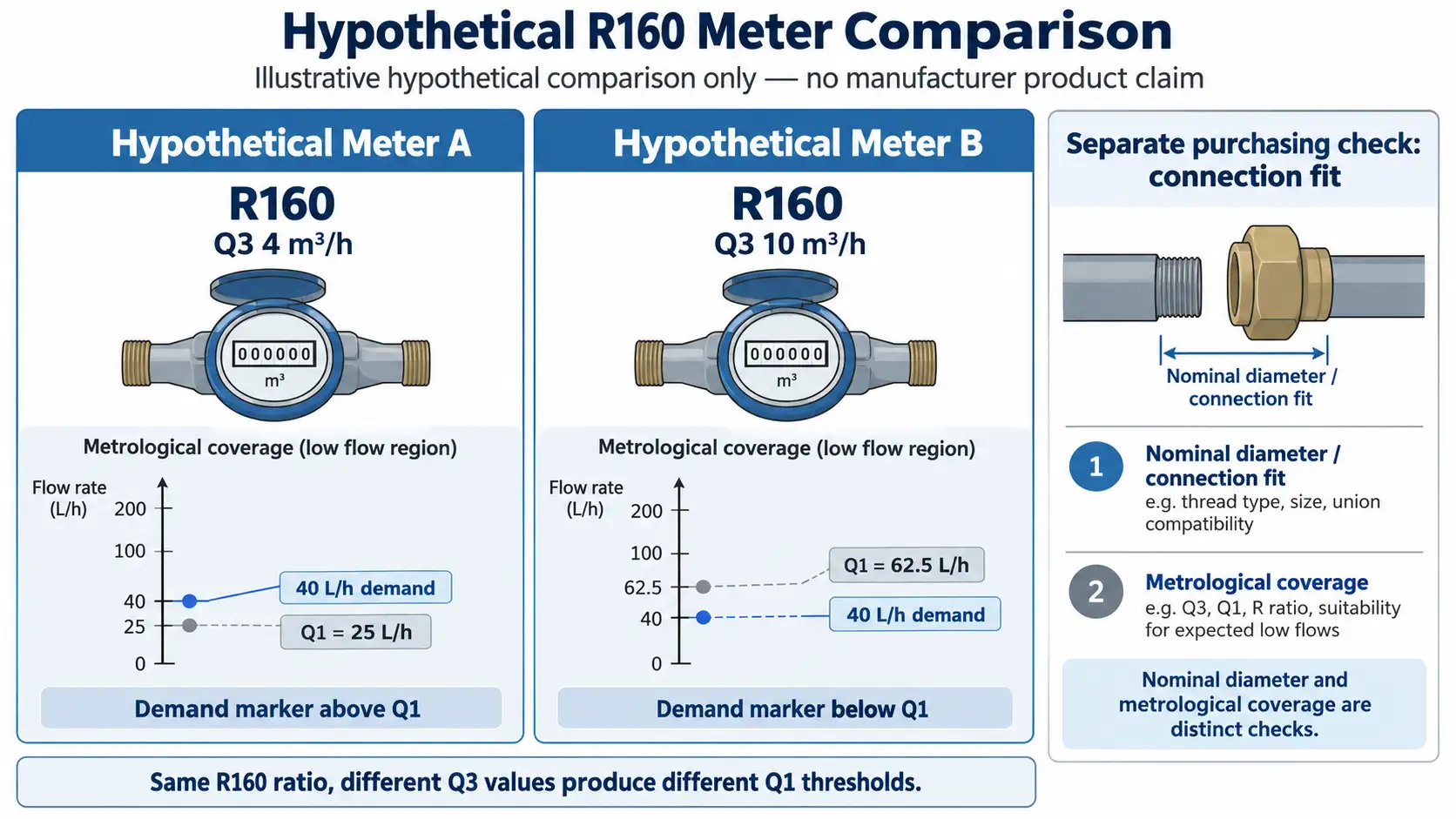
Q1 is the minimum flow at which the specified permissible-error requirements apply. R equals Q3 / Q1. At the same R, increasing Q3 raises Q1, which is why an apparently generous larger meter can be a poorer match for a quiet connection.
For a hypothetical comparison, take two R160 candidates with Q3 values of 4 and 10 m³/h. Their Q1 values are 25 and 62.5 L/h respectively. A 40 L/h flow falls above the first candidate’s Q1 and below the second’s. That does not prove exactly what the larger meter would register; it shows why its rated low-flow coverage needs attention.
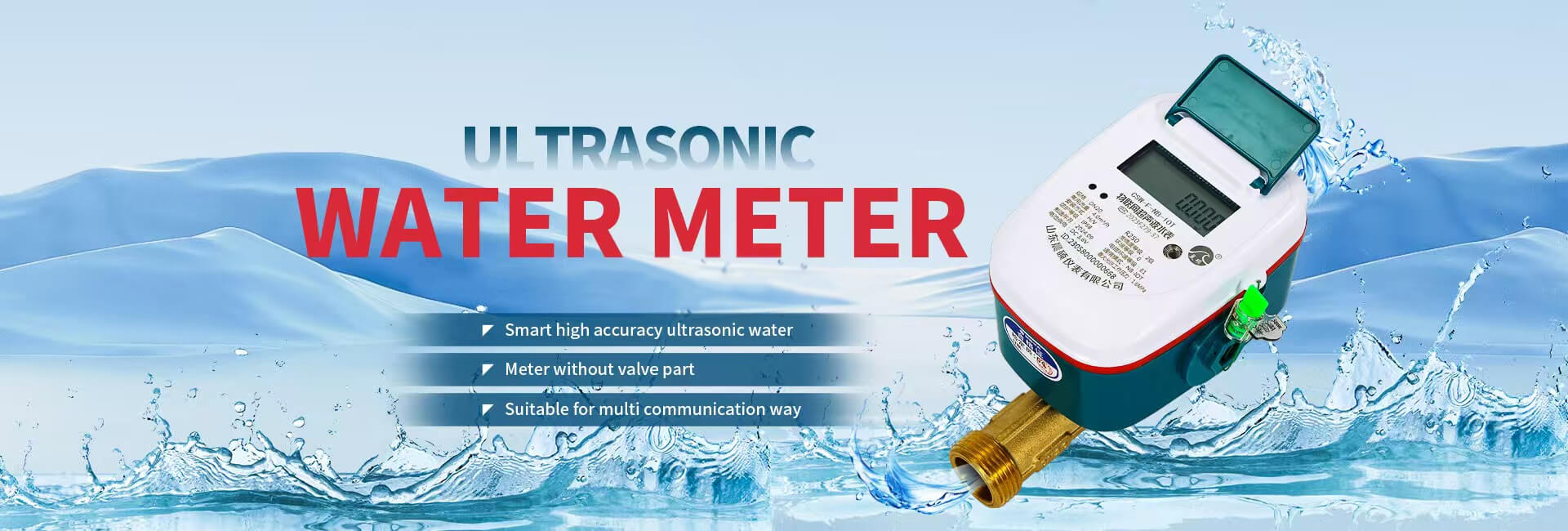
If you need both greater capacity and lower-flow coverage, compare approved measuring ranges rather than assuming diameter will solve both. A DN20 ultrasonic water meter is one technology option to investigate. Ask for its exact Q3, Q1, orientation and pressure-loss data before drawing a comparison with a mechanical model.
An undersized meter can impose an unacceptable pressure drop at the required flow or spend too much time above its intended duty. An oversized one can compromise coverage of small flows. These are different failure mechanisms, so a single instruction to choose bigger cannot resolve them both.
Ask for pressure-loss data at the flow you expect, not just the maximum pressure the housing tolerates. Maximum allowable pressure and pressure loss are different quantities. The installation must retain enough pressure for downstream use after allowing for the meter, pipework and other components.
Before ordering, check the connection drawing, thread standard, installation length, mounting position and service access. Confirm straight-pipe or flow-conditioning requirements from the actual instructions. If reducers are proposed, include them in the hydraulic and installation review. Don’t assume a connection change leaves the approved installation conditions unaffected.
An RFQ that asks only for DN25 and a quantity invites assumptions. Add the measuring location, low and ordinary flow, peaks with their duration, available pressure, water temperature and installation drawing. State whether the meter is for billing or internal monitoring and identify the applicable acceptance requirements.
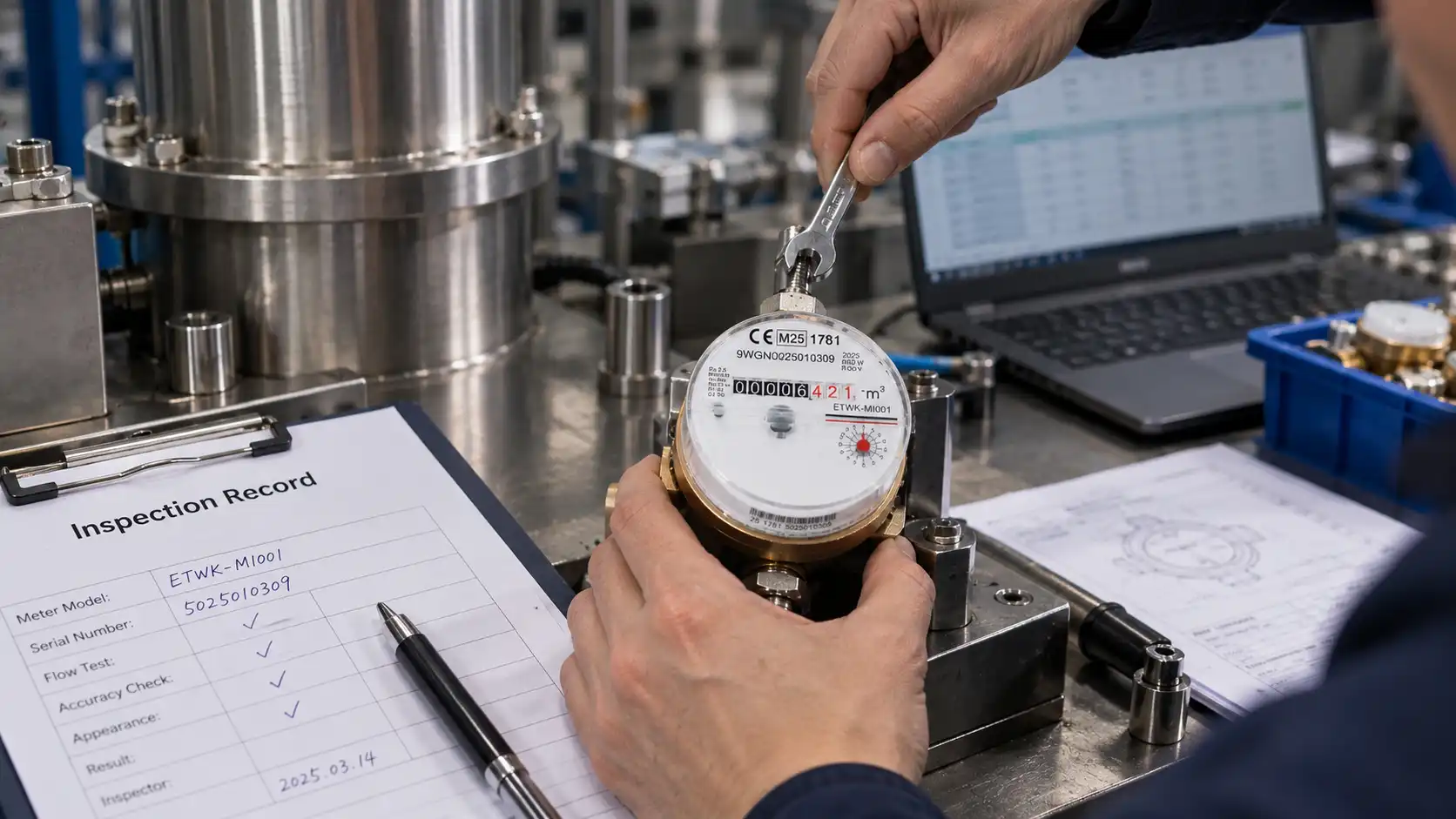
Ask the manufacturer to return the proposed model, Q1–Q4, R, accuracy class, pressure-loss data and installation limits. Required approvals and batch test evidence should match that model. Keep reading or communication preferences in the brief, but don’t let them substitute for the hydraulic selection.
Puoi send Chenshuo your water meter sizing requirements with the demand record and connection details. Request the reason for the recommended size, including any assumption about future demand. A written explanation is easier to review than a quotation that merely repeats the requested DN.
Not necessarily, but any difference needs an approved connection arrangement and hydraulic review. Matching DN helps with fit; it does not establish flow suitability. Check local utility requirements as well as the manufacturer’s installation instructions.
No. The larger candidate may help with greater demand or pressure loss, but its low-flow rating still matters. Compare the actual duty and model specifications. A lightly used connection does not benefit automatically from added capacity.
Not by itself. The total does not reveal simultaneous demand, refill cycles or peak duration. Use representative flow records or a documented design assessment, then retain the total as supporting information rather than the sizing rule.
Q4 is useful for assessing permitted short overloads. It should not be treated as the continuous rating. Review ordinary duty against Q3 and have the proposed peak duration and frequency accepted for the selected model.
Confirm the reason for replacement as well as DN, connections and length. Review demand, pressure loss, orientation and approval requirements. Copying the old size can repeat an earlier sizing error, particularly if water use has changed.
 Indirizzo: Xiao'anzi Industrial Park, Baishabu Town, Lanshan District, Linyi City, Provincia di Shandong
 Chiamaci ora:+86 15562945993
 E-mail:info@sdchenshuo.cn


Shandong Chenshuo Instrument Co., Ltd.