

A water meter quotation may carry several familiar logos, yet leave the buyer’s main question unanswered: can this exact meter be accepted for the intended installation? ISO, CE and MID refer to different forms of evidence. Understanding those differences helps procurement teams avoid approving a supplier on paperwork that does not cover the ordered product.
Start with the destination, application and model configuration. Then request documents that connect those requirements to the meter being purchased. A factory management certificate, a product test report and a declaration of conformity each answer a different question. None should be accepted as a substitute for the complete approval package your project requires.
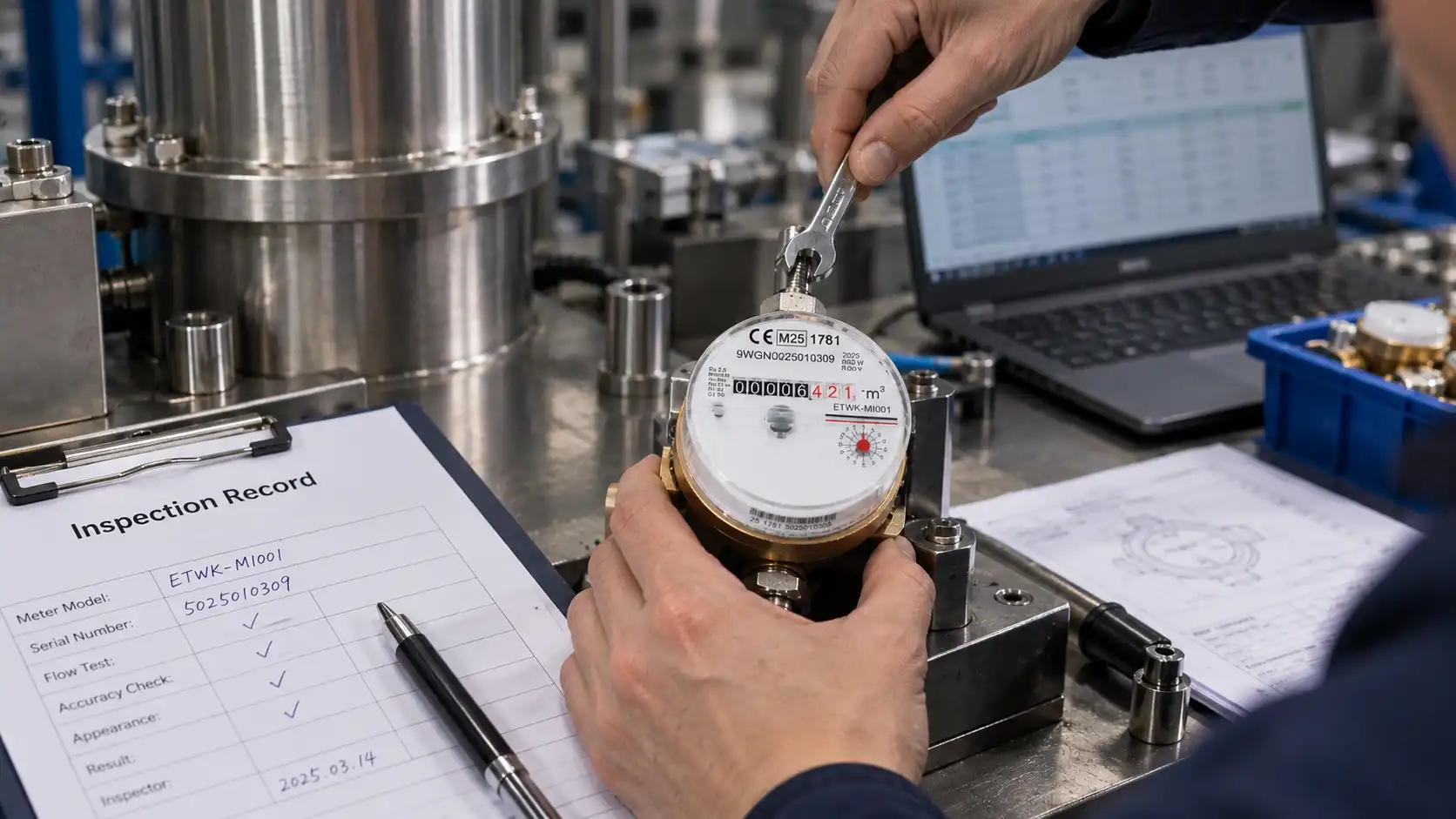
ISO publishes standards. In water meter procurement, an ISO reference may concern a manufacturer’s management system or the meter’s technical performance. Always ask for the standard number before interpreting the claim. A statement such as “ISO certified” is too broad to support a purchasing decision.
CE marking indicates that the manufacturer declares conformity with applicable EU legislation requiring that marking. MID, the Measuring Instruments Directive, establishes requirements for specified measuring instruments. Its water meter provisions are identified as MI-001. These terms overlap in EU conformity work, but they are not three interchangeable grades of product quality.
For a practical introduction to the technical standards, review Chenshuo’s comparison of ISO 4064 and OIML R49 requirements. Use the comparison to prepare questions, then verify the actual supporting documents for the proposed model.
ISO 9001 addresses quality management processes, including process control, audits and continual improvement. For buyers, a relevant certificate can support confidence in how an organization manages production and corrective action. It does not, by itself, certify the accuracy of an individual water meter or authorize that meter for regulated billing.
Check the certified legal entity, manufacturing address, scope, issuing body and certificate status. If the quotation comes from a trading company while the certificate names another organization, ask how the seller, manufacturer and production site are connected. The issue is traceability: you need to know which organization and activities the certificate actually covers.
ISO does not issue these certificates itself. Its guidance on certification explains independent certification and accreditation. Verify questionable documents through the issuer or relevant accreditation channel. A logo pasted into a catalogue gives you neither the certificate’s scope nor evidence that it remains valid.
ISO 4064 is a water meter standards series. Part 1 addresses metrological and technical requirements; Part 2 addresses test methods. A supplier’s reference to the series should therefore lead to a more specific request: which part, edition, model and test scope support the claim?
The R ratio equals Q3 divided by Q1. Q3 denotes permanent flow, while Q1 denotes minimum flow. These parameters help buyers compare the meter’s stated measuring capability. They should be checked alongside nominal diameter, installation orientation, temperature class and pressure conditions rather than reduced to a single headline accuracy claim.
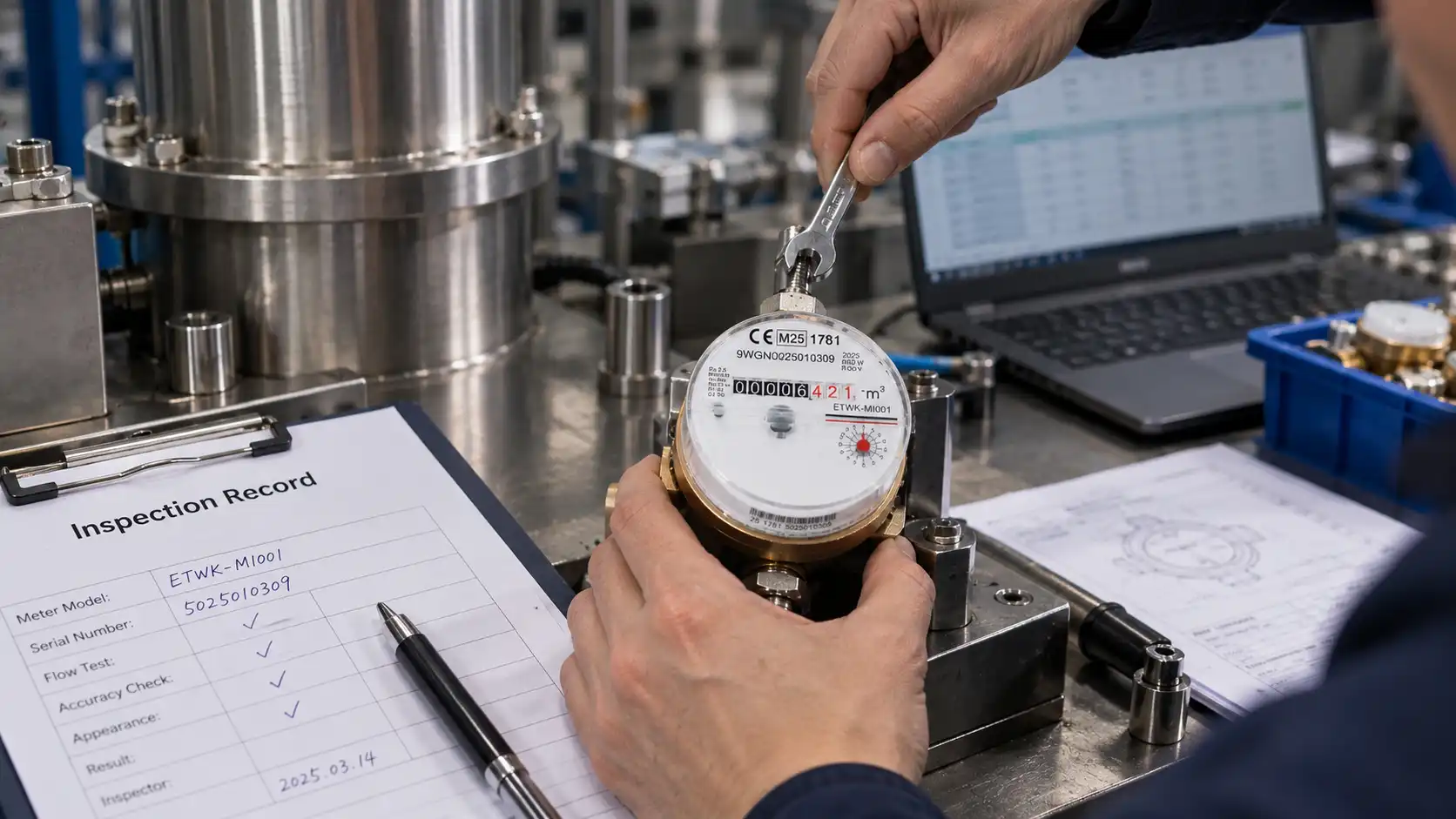
Ask whether the evidence is a laboratory report, a product approval or a manufacturer’s declaration. Confirm the tested model, sample identification and reported results. A report for one diameter or configuration does not automatically establish coverage for every product sharing the same housing or sales name.
The official ISO 4064-1 standard description is a useful starting point for identifying the subject of the standard. Your contract should still specify the required edition and acceptance evidence. “Designed to ISO 4064” and “tested against specified ISO 4064 requirements” describe different levels of supporting evidence.
When a supplier offers a CE-marked meter, request its EU declaration of conformity and identify the legislation listed. The European Commission’s CE guidance for manufacturers explains the manufacturer’s responsibilities, including conformity assessment, technical documentation and the declaration. CE marking is not a general quality award issued by an EU authority.
Read the declaration against the actual product. Check the model designation, manufacturer identity, applicable legislation and authorized signature. For meters with electronics or radio communication, ask the supplier to identify all applicable obligations for that configuration. A document covering one aspect of the electronics does not establish metrological conformity under MID.
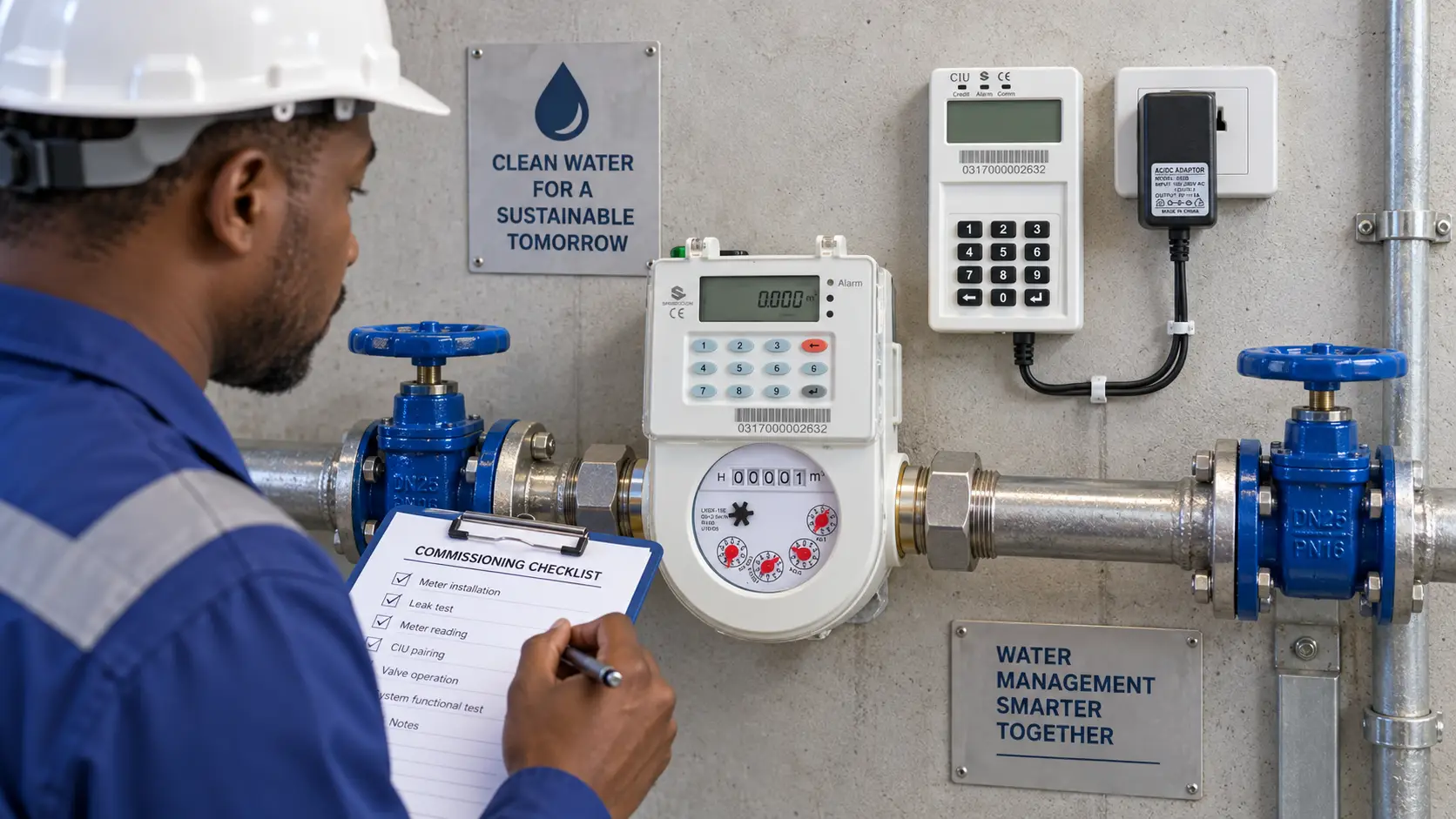
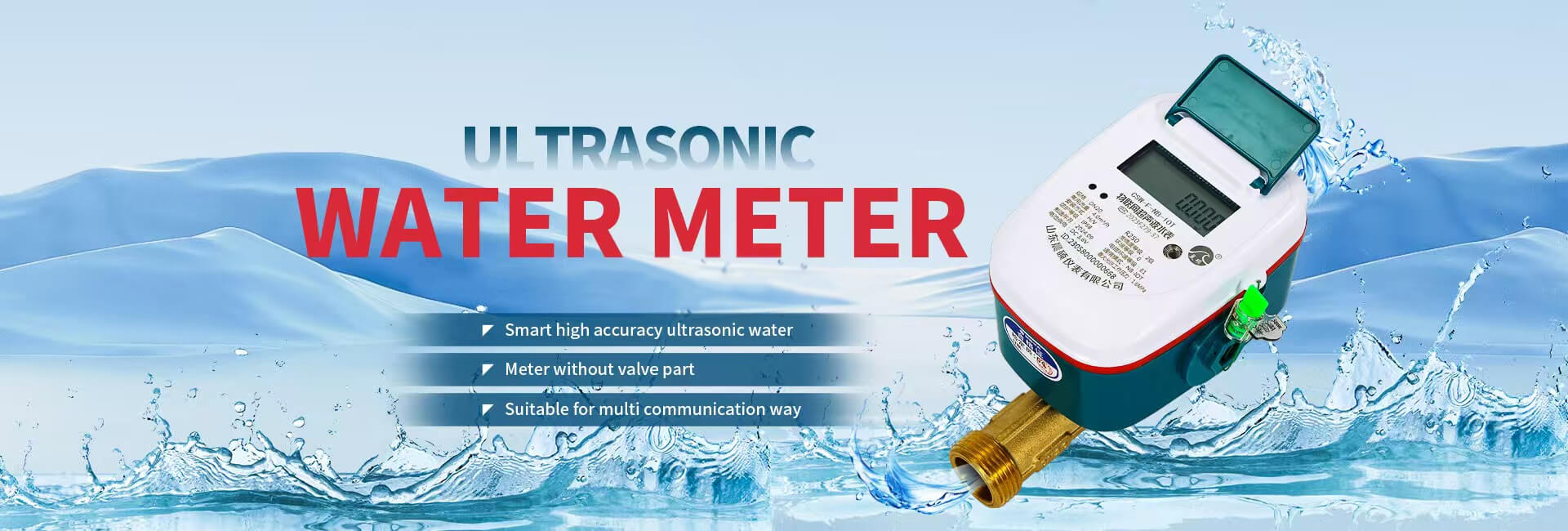
For example, a product page for the XT815-U ultrasonic prepaid water meter describes prepaid operation and available communication options. Those features help define a purchasing specification. The page itself is not evidence that a particular ordered configuration holds MID approval or satisfies every destination requirement.

Directive 2014/32/EU includes water meters under MI-001, with requirements addressing meters for clean cold or heated water in residential, commercial and light industrial use. Determine the rules applicable in the destination and intended use before deciding whether MID conformity is required. Do not assume that every water measurement application has identical legal obligations.
For water meters, the directive provides conformity assessment routes B plus F, B plus D, or H1. The practical purchasing point is to obtain evidence for the complete applicable route. Where Module B is used, an EU-type examination certificate addresses the type; it does not alone demonstrate completion of the production conformity stage.
Ask for the relevant certificates, declaration, approved model schedule and marking photographs. Check that any notified body involved is authorized for the relevant work through the Commission’s notified body information and NANDO directory. The body’s name alone is insufficient; its notified scope matters.
Keep separate requirements visible. Metrological conformity does not settle every question about drinking-water contact, installation acceptance, radio use or contractual performance. Ask the project owner to identify additional destination requirements early, so these checks can be included in the specification rather than discovered after shipment.
Build a short document register for the order. Record the required evidence, issuer, model coverage, status and reviewer. Include the quotation model, drawing revision, approved configuration and sample identification. Resolve inconsistencies before releasing production, especially when branding, communication modules or firmware differ from the original sample.
Chenshuo’s guide to OEM water meter configuration provides useful procurement context for controlling those changes. Ask the supplier to explain whether each proposed change affects existing approval coverage. A new label may be straightforward commercially while still requiring careful treatment of the legal manufacturer’s identity and mandatory markings.
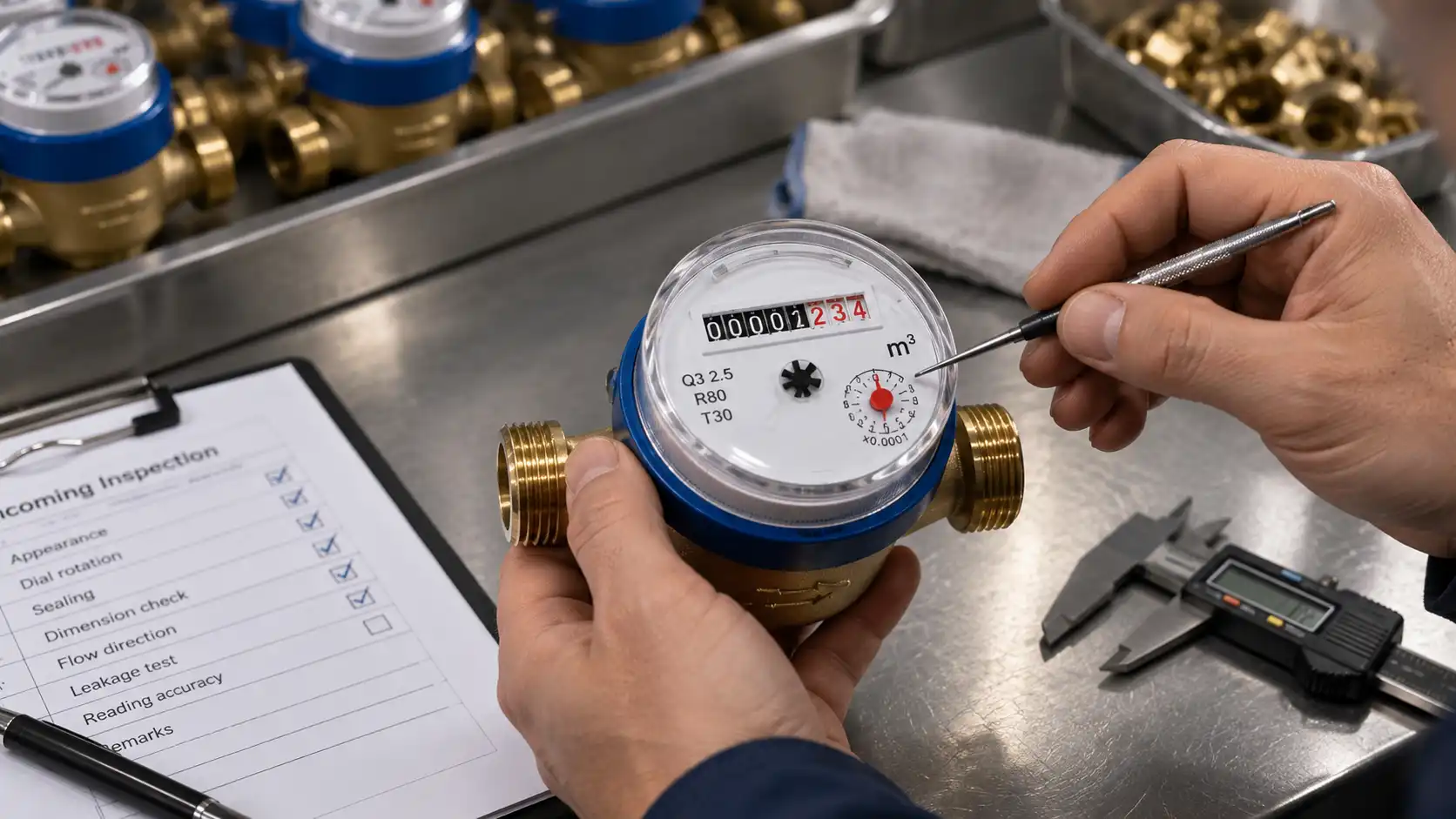
At shipment, compare the approved specification with labels, serial records and agreed inspection results. Keep evidence accessible to the receiving and installation teams. If the supplier cannot connect the certificates to the delivered configuration, hold acceptance until the discrepancy is resolved. Familiar logos should never replace that connection.
Suppose a quotation specifies a meter with radio communication, but the supplied schedule lists a different configuration. The correct response is to request clarification and supporting coverage before approval. Do not assume that an identical enclosure means the configurations are equivalent, or that adding a communication module has no effect on the assessment.
Record the supplier’s explanation alongside the relevant document revision. If the certificate genuinely covers the proposed option, retain the page or schedule that establishes that connection. If additional assessment is needed, agree on the responsible party and completion date before committing to a delivery schedule that depends on approval.
This approach also helps purchasing and engineering teams work together. Purchasing can track whether documents have arrived, while the technical reviewer checks whether they answer the specification. Marking a file as received should remain separate from marking its contents as accepted.
No. It concerns the organization’s quality management system. You still need evidence for the meter’s technical specification and any applicable product conformity requirements. Check the certificate scope, but assess product suitability through separate, model-specific documentation.
No. ISO 4064 provides water meter technical requirements and test methods. MID is EU legislation with conformity assessment requirements for covered instruments. Evidence of testing against a standard does not automatically demonstrate completion of the required MID conformity route.
The logo alone does not establish what was assessed. Read the EU declaration of conformity, examine the relevant MID documentation and match the approved configuration to the meter. Ask for clarification if the supplier only provides unrelated electrical or radio test reports.
It may, when the approval and its schedules explicitly include those sizes and configurations. Check the actual coverage rather than assuming that a shared model family covers every diameter, flow specification, orientation or communication option offered in the quotation.
Provide the destination, intended application, diameter, flow requirements, installation conditions and communication needs. Then send Chenshuo your meter specification and request the current evidence for the exact proposed configuration. That gives both teams a concrete basis for checking suitability before purchase.
 Endereço: Parque Industrial Xiao'anzi, cidade de Baishabu, distrito de Lanshan, cidade de Linyi, província de Shandong
 Chame-nos agora:+86 15562945993
 Email:info@sdchenshuo.cn


Shandong Chenshuo Instrument Co., Ltd.