

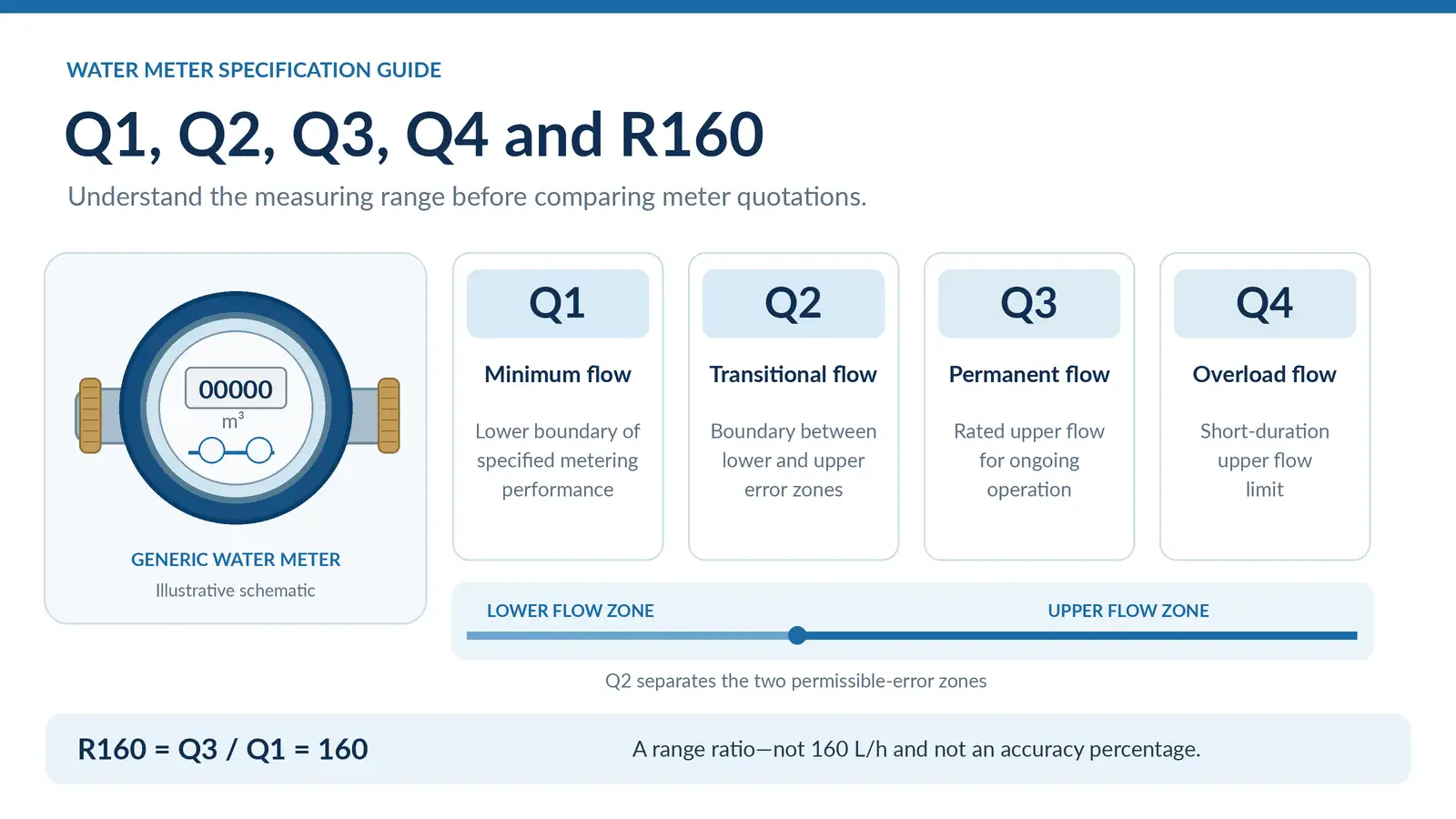
Q1, Q2, Q3 and Q4 describe a water meter’s measuring envelope. They mean minimum, transitional, permanent and overload flow respectively. R160 tells you that Q3 divided by Q1 equals 160. It does not mean 160 liters per hour, and it is not an accuracy percentage.
Those distinctions matter when comparing quotations. Two meters marked R160 can have different Q1 values because their Q3 values differ. Before choosing the larger ratio or connection size, put the proposed meter beside the flow it will actually encounter. A useful specification has to cover quiet periods as well as busy ones.
The broader job of choosing a water flow meter includes water conditions, installation and measuring technology. Here, the question is narrower: what do the numbers on the offer tell you about metering performance? Keep the model, Q3, R value and mounting position together when reviewing an offer. Separating them can make an attractive ratio misleading.
Flow is a rate, usually expressed in m³/h. The register records accumulated volume in m³. Consuming four cubic meters in a day does not mean the installation needs a Q3 of 4 m³/h; that volume could pass slowly over many hours or in a much shorter burst. The time pattern is what makes the ratings useful.
| Marking | Meaning | What the buyer should take from it |
| Q1 | Minimum flow | Lower boundary of the specified permissible-error range |
| Q2 | Transitional flow | Boundary between the lower and upper error zones |
| Q3 | Permanent flow | Upper flow rating for operation under rated conditions |
| Q4 | Overload flow | Short-duration upper flow limit, not a continuous duty target |
A meter may indicate some water below Q1. That does not establish that those indications meet the error limits specified for its rated measuring range. Starting flow and Q1 answer different questions: one concerns the onset of registration, while the other concerns the lower boundary of specified metrological performance.
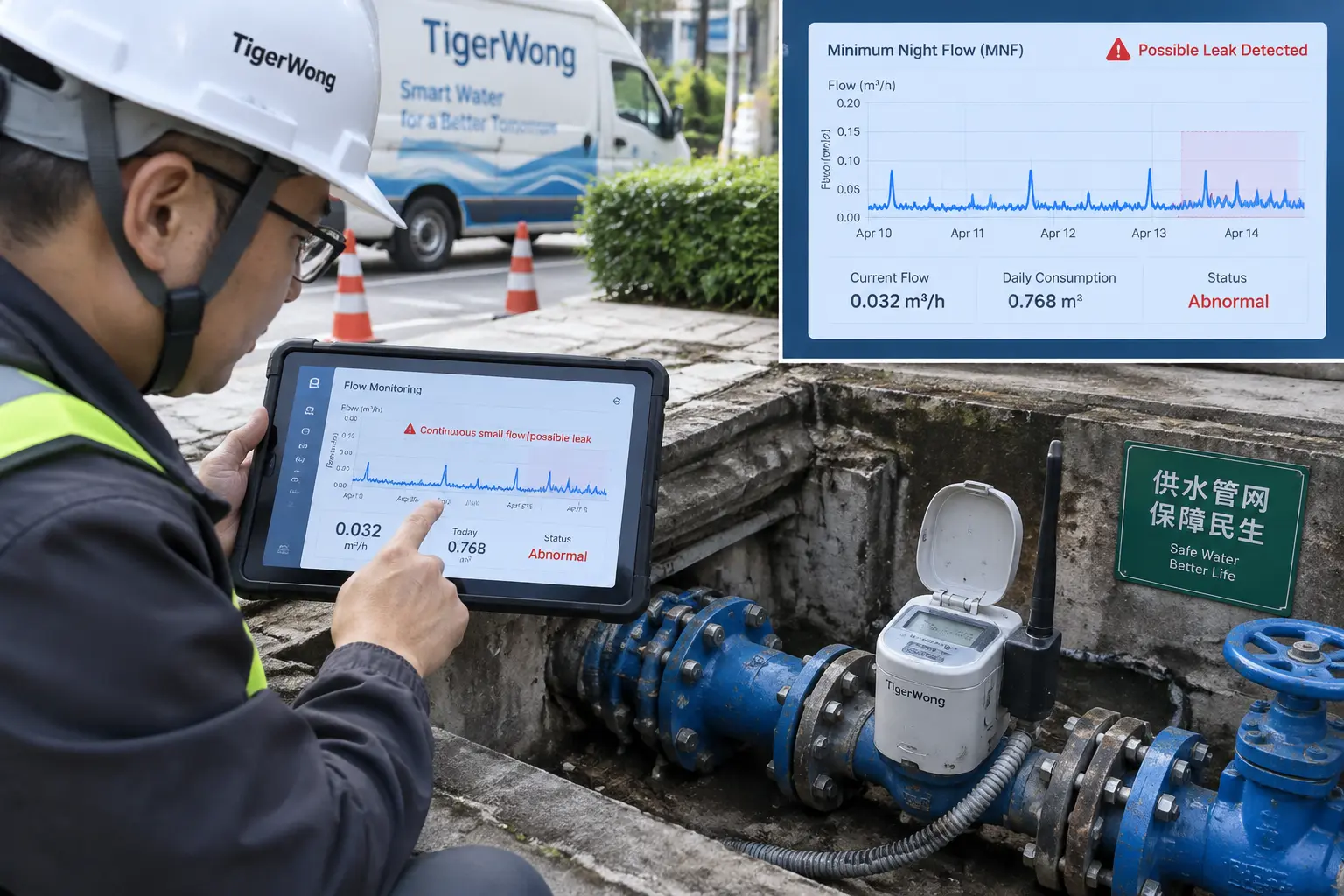
This is worth pausing over when a supplier mentions drip detection. Ask for the actual flow and the supporting test conditions. A moving indicator or changing display demonstrates a response, but not necessarily compliant measurement at that flow. For a buyer interested in small overnight consumption, a documented Q1 is more useful than an unqualified sensitivity claim.
There is no need to guess how much water is missed below that boundary. The answer depends on the particular meter and flow conditions. Avoid turning every hour below Q1 into an assumed unregistered volume; below-range behavior needs evidence of its own.
Between Q1 and Q2, the meter is in its lower flow zone. From Q2 upward to Q4, it is in the upper zone, subject to Q4’s short-duration limitation. Q2 itself belongs to the upper zone. The boundary matters because the permissible error is not necessarily the same on both sides.
For a Class 2 meter under OIML R49:2024 rated conditions, the lower-zone limit is ±5%. In the upper zone it is ±2% for water from 0.1°C to 30°C, and ±3% above 30°C within the approved temperature range. These are permissible-error limits, not a claim that every reading carries that exact error. In-service rules also need separate checking.
R160 does not replace the accuracy class. You could widen a measuring range without changing its permitted error bands. When reading an offer for a DN20 ultrasonic water meter, ask for the chosen configuration’s Q values and class together. The measuring technology alone cannot supply the missing figures.
Q3 identifies the highest flow for rated operation within the specified error limits. Q4 allows a higher flow for a short period while preserving metrological performance afterward. An installation that repeatedly needs overload flow as its ordinary working condition deserves a sizing review, not a more optimistic reading of the brochure.
Ask what duration and frequency are allowed for the proposed meter and application. Do not assume that every supplier uses the same meaning of a short period. A test covering a brief excursion cannot justify leaving the meter near Q4 for a full shift.
Pressure loss is another part of the decision. Staying below Q3 does not by itself prove that downstream equipment will receive enough pressure. The meter’s loss at the actual operating flow has to fit the installation’s pressure budget. Likewise, Q4 says nothing about permissible system pressure; those limits are specified separately.
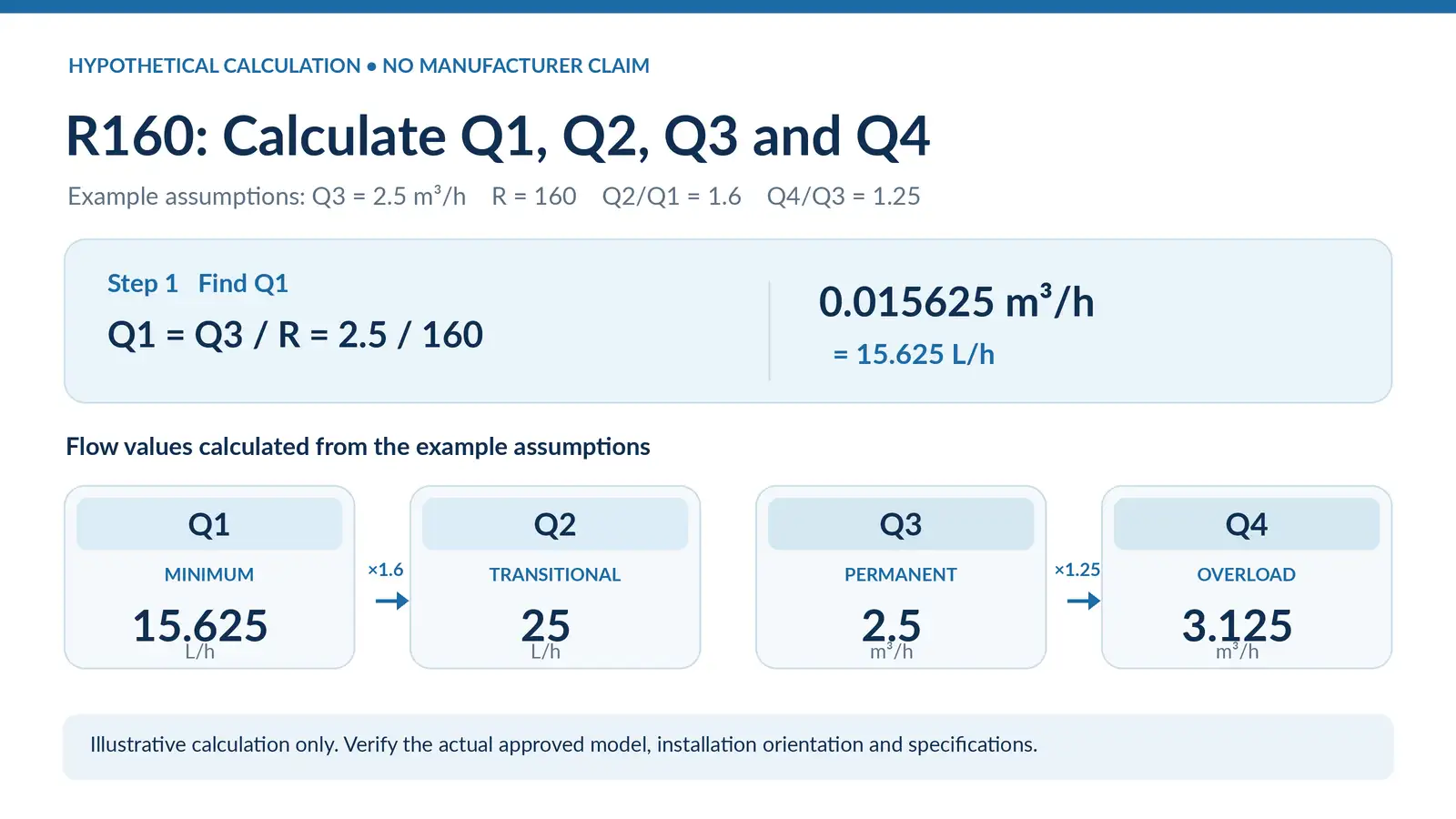
The calculation is simple: R = Q3 / Q1, so Q1 = Q3 / R. Under OIML R49:2024, Q2 / Q1 is 1.6 and Q4 / Q3 is 1.25. Use one set of units before dividing. One cubic meter per hour equals 1,000 liters per hour.
Take a hypothetical Q3 = 2.5 m³/h, R160 meter. Its calculated Q1 is 2.5 / 160 = 0.015625 m³/h, or 15.625 L/h. Q2 is 0.025 m³/h, or 25 L/h. Q4 is 3.125 m³/h. These are worked values for the stated assumptions, not a declaration of a particular Chenshuo model’s approval.
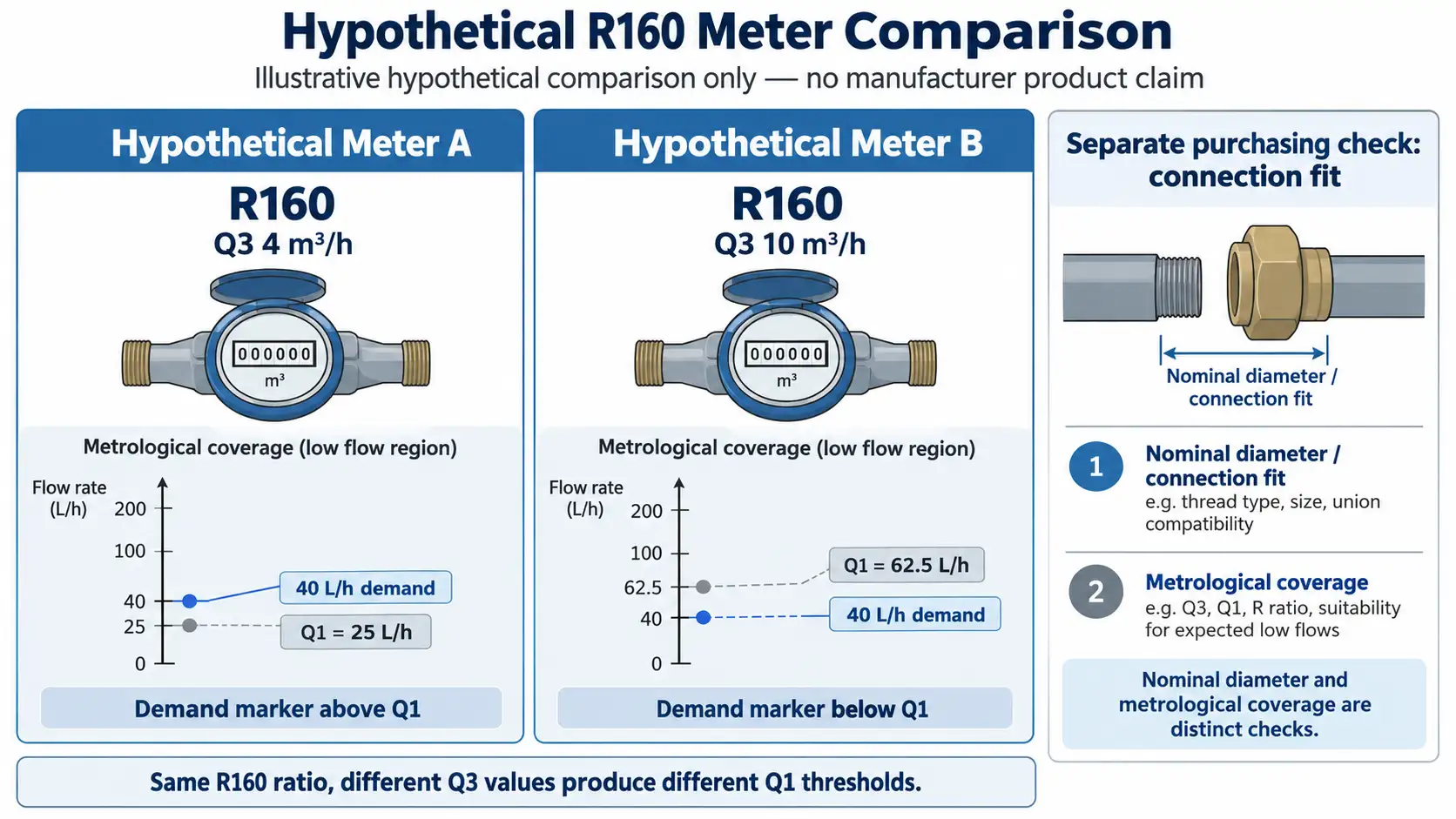
At the same Q3, an R80 version would have Q1 = 31.25 L/h. Moving to R160 halves that lower boundary; it does not double accuracy or guarantee that every leak will be measured. If the flow of interest is below 15.625 L/h, the hypothetical R160 meter still does not bring it inside its specified range.
Now change Q3 to 4 m³/h but retain R160. Q1 becomes 25 L/h. Both meters carry the same ratio, yet the first reaches a lower absolute flow. This is why a purchasing comparison should show Q1 in L/h beside Q3, rather than ranking offers by R alone.
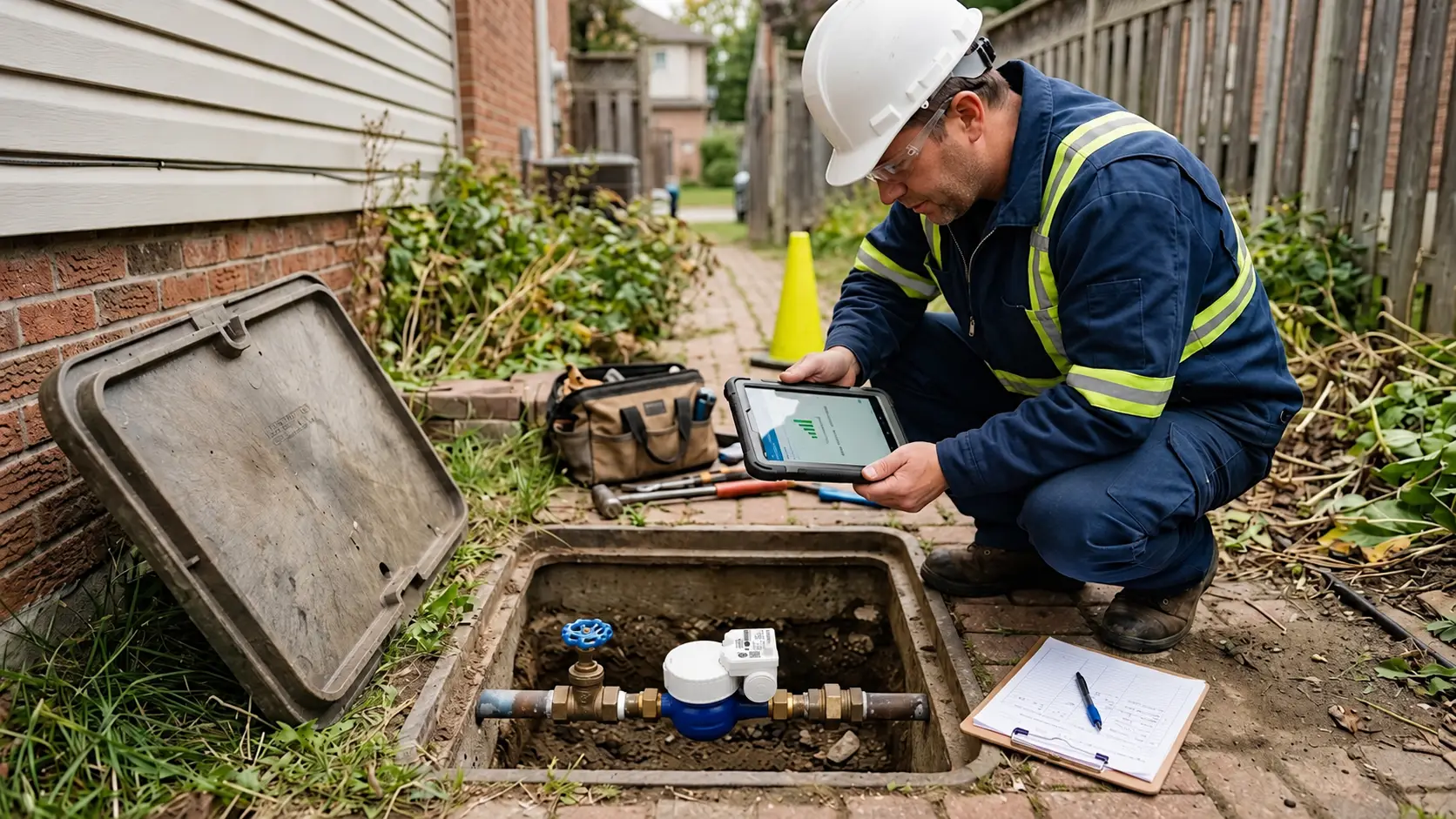
A ratio quoted for horizontal installation may not be the approved ratio for vertical mounting. Match the declared value to the position on your drawing, including any H or V markings and installation restrictions. The meter should remain full of water, and the manufacturer’s specified flow-conditioning requirements belong in the installation plan.
The distinction between ISO 4064, OIML R49 and MID requirements also matters here. A correct calculation proves arithmetic, not approval. The model, size, orientation and claimed range need to match the applicable technical documents and the project’s acceptance requirements.
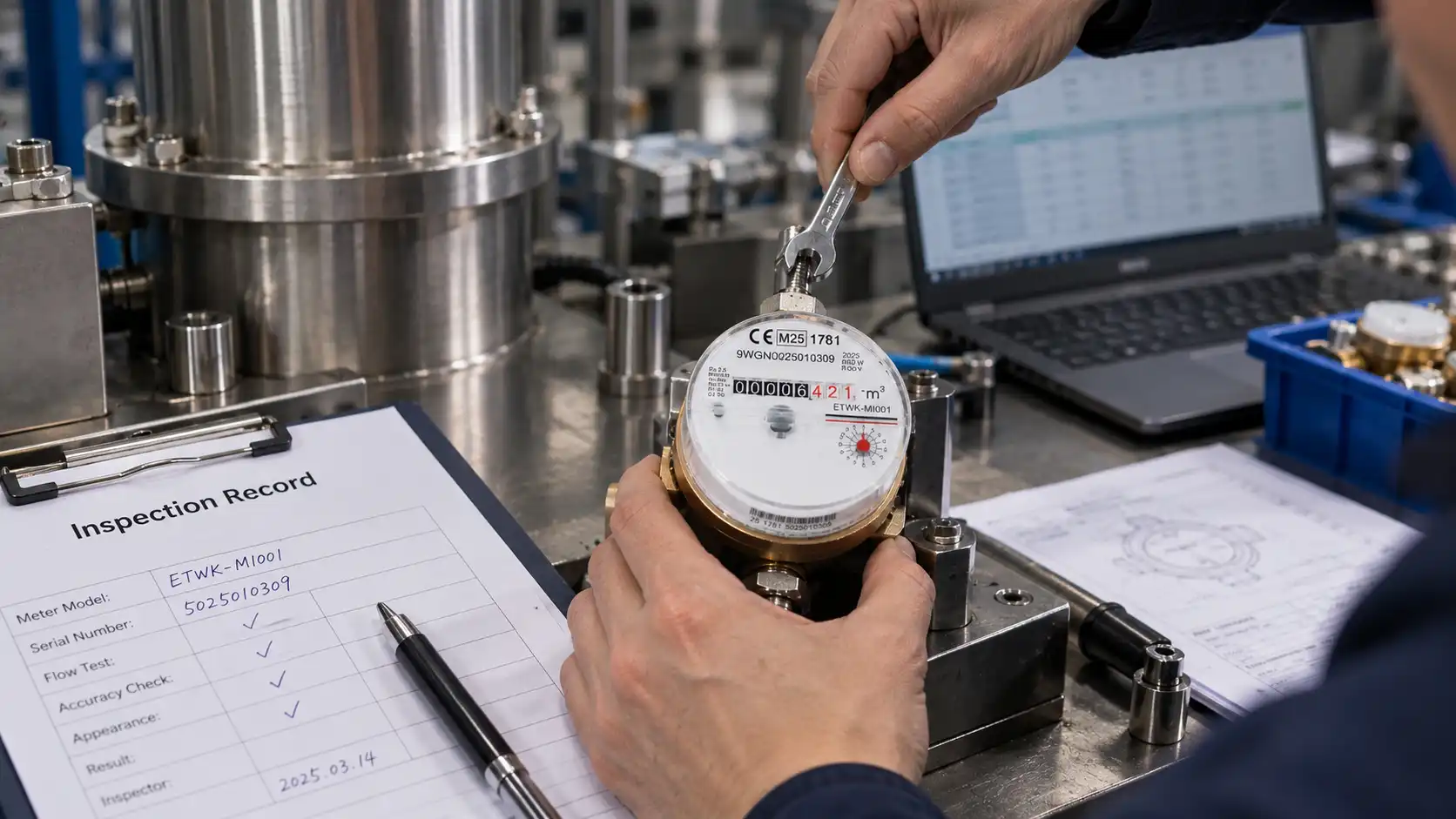
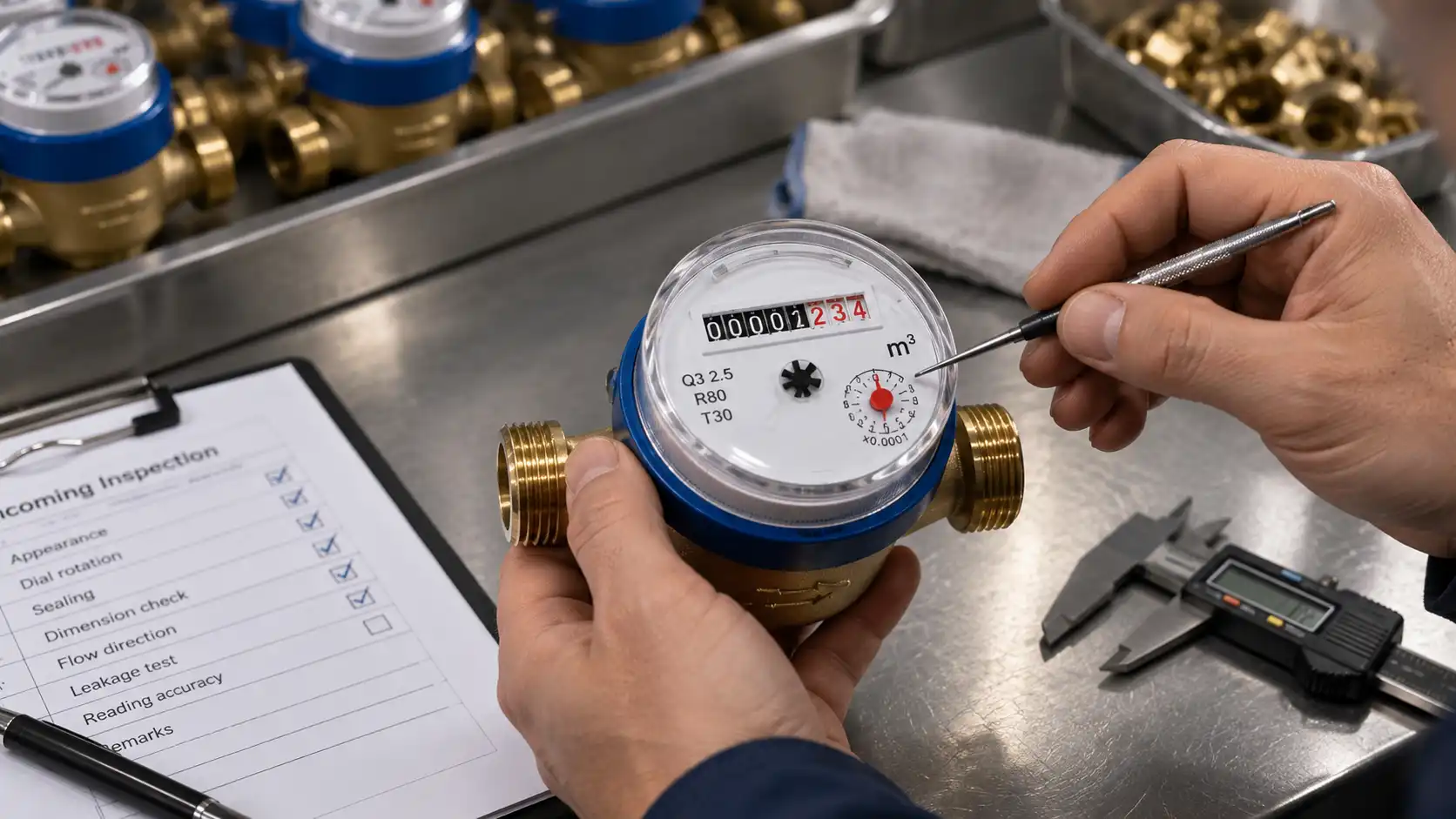
Before approving a sample, request the following in one coherent set:
Check internal consistency. If Q3 / Q1 does not equal the offered R value, ask for an explanation before accepting the quotation. It may be a transcription problem or a different configuration, but neither should be silently carried into an order.
Zu discuss a water meter specification with Chenshuo, send the lowest important flow, ordinary demand and peak duration alongside the pipe layout. Ask for a model-specific recommendation with its supporting documents. That gives both sides a better starting point than requesting R160 with no description of the duty.
No. It means Q3 / Q1 = 160. Accuracy class and the applicable error limits are separate. Read both, with the installation position and temperature conditions, before comparing performance.
At equal Q3, it lowers Q1 and may suit a wider spread of demand. Different Q3 values complicate that comparison. Check the absolute minimum flow, pressure loss and approved configuration before paying for a larger ratio.
It may register something, but that alone does not establish performance within its specified error limits. Request evidence for any below-Q1 claim. Starting flow is not a substitute for an approved minimum flow rating.
Q4 is an overload rating for short periods. Continuous demand should be assessed against Q3 and the full operating specification. Get the permissible overload duty clarified for the actual model rather than inferring it from Q4 alone.
No. R160 is a measuring-range designation. Billing suitability depends on the applicable approval and local acceptance requirements for the exact meter. A ratio on a quotation cannot replace that documentation.
 Adresse: Xiao'anzi Industrial Park, Stadt Baishabu, Lanshan District, Linyi City, Provinz Shandong
 Rufen Sie uns jetzt an:+86 15562945993
 E-Mail:info@sdchenshuo.cn


Shandong Chenshuo Instrument Co., Ltd.